Research Planning With AI
Research planning with AI helps teams explore methods, refine questions, find prior evidence, and build stronger plans while humans retain control.

Research planning with AI uses artificial intelligence to create, refine, and evaluate study plans without handing over strategic control. It helps researchers retrieve prior evidence, organize questions, propose hypotheses and methods, compare options, and flag constraints. The output is a structured starting point that researchers must adapt using organizational, ethical, practical, and methodological judgment.
Good planning turns uncertain questions into investigations with clear objectives, appropriate methods, and realistic execution paths. AI can reduce repetitive work and broaden the options considered before a team commits resources, but the value comes from stronger researcher decisions rather than automated decisions. The two-minute video above walks through the core ideas.
What is research planning with AI?
Research planning with AI means using artificial intelligence to support the creation, refinement, and evaluation of a research plan. The researcher remains responsible for the plan’s purpose, feasibility, ethics, and methodological quality.
The process begins with the same foundations as conventional planning: a meaningful problem, clear objectives, answerable research questions, suitable methods, and an execution path. AI supports these tasks by organizing available information and generating options for consideration. It does not remove the need for careful research problem and objective definition.
Typical uses include:
- Finding relevant previous studies and existing evidence.
- Identifying unanswered questions or gaps in current knowledge.
- Organizing broad questions into a logical research structure.
- Drafting initial hypotheses or assumptions to test.
- Suggesting possible methods, samples, or analytical approaches.
- Highlighting constraints that may affect execution.
These contributions make AI useful during exploration, when researchers need to consider several possible paths before selecting one.
How can AI improve research planning?
AI can improve planning by expanding the range of options researchers can examine and reducing repetitive synthesis work. This gives the team more time to compare approaches, identify overlooked issues, and evaluate tradeoffs before committing resources.
A practical workflow has four stages:
- Review existing evidence. Use AI to locate relevant studies, summarize known findings, and surface open questions.
- Structure the problem. Organize research questions, clarify relationships among them, and generate initial hypotheses where appropriate.
- Compare possible approaches. Explore alternative methods and identify practical constraints associated with each option.
- Refine through human review. Assess whether the proposed plan fits the decision, organization, participants, timeline, and available resources.
This process treats AI-generated research plans as drafts to interrogate rather than instructions to follow. The main benefit is not faster document production; it is broader and more disciplined consideration of what the research could do.

What information and judgment does AI-assisted planning require?
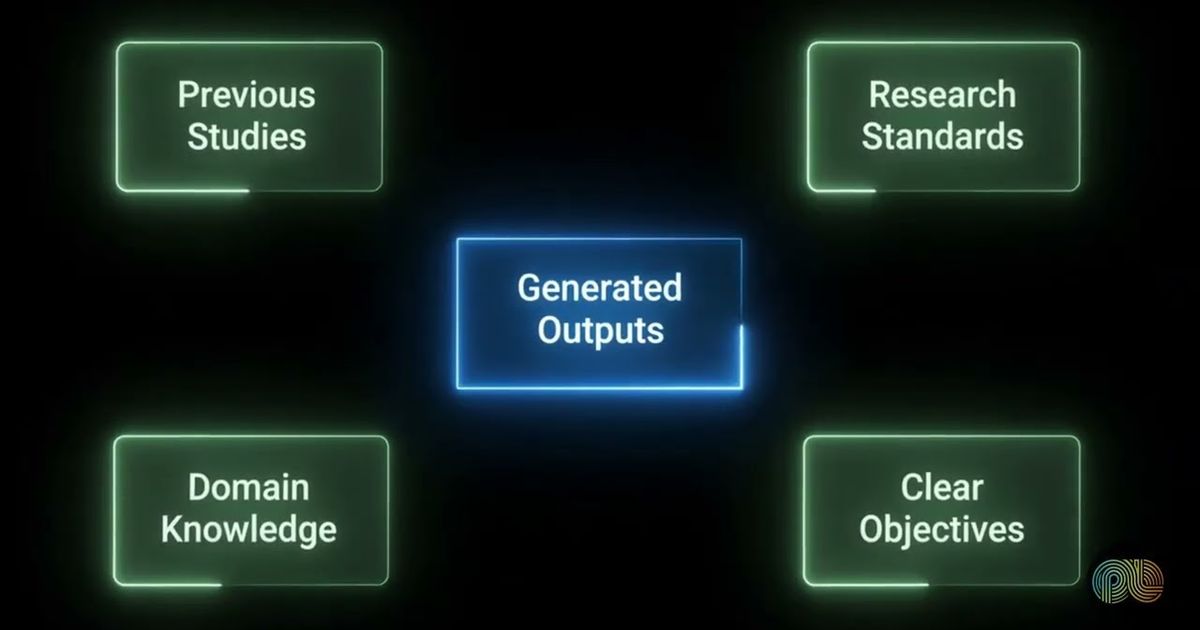
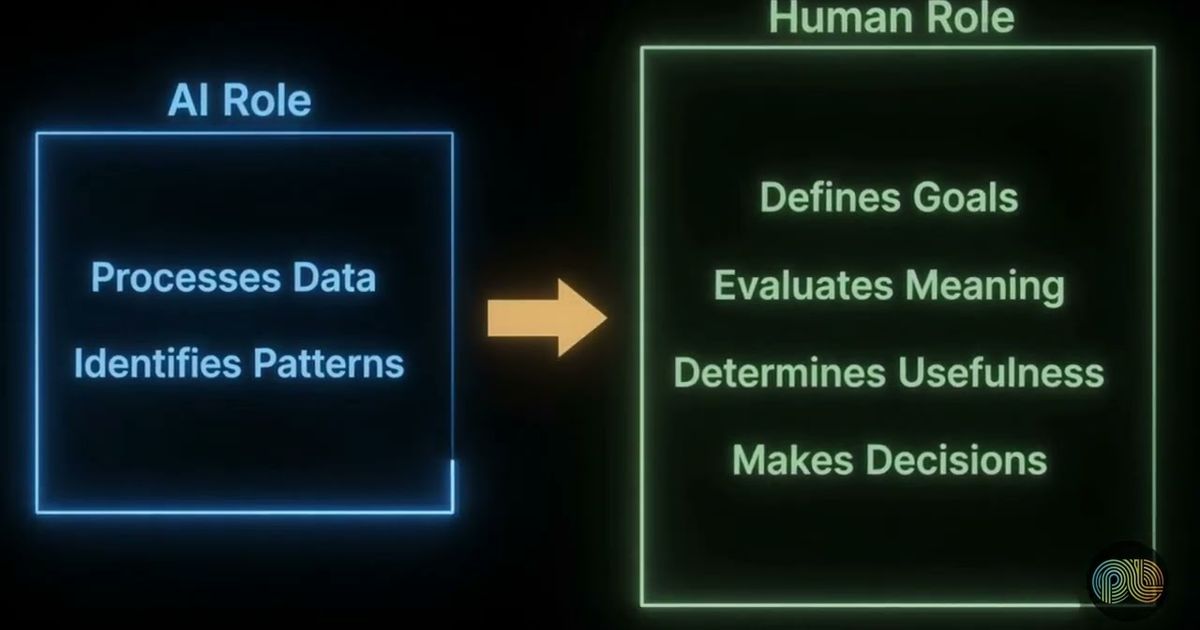
Useful AI-assisted planning depends on both strong context and expert human judgment. AI needs reliable information to produce relevant options, while researchers must decide which options are meaningful, responsible, and feasible.
Helpful inputs include connected research repositories, structured evidence, previous study records, clear organizational goals, and established terminology. This context allows an AI system to distinguish between questions already answered, questions that remain unresolved, and methods that fit the organization’s actual circumstances.
Without those foundations, an AI-generated plan may sound reasonable while missing critical context. It might repeat earlier work, overlook participant constraints, recommend an impractical method, or optimize for the wrong decision.
Human review must account for factors that cannot be resolved by pattern generation alone:
- The business or organizational goal behind the study.
- Ethical requirements and possible consequences for participants.
- Budget, timing, recruitment, skills, and operational constraints.
- Participant realities that affect access, burden, or response quality.
- Methodological tradeoffs and the standard of evidence required.
AI can retrieve evidence, expand the option set, and flag possible constraints. Researchers must define meaningful questions, judge tradeoffs, and ensure that the final plan can produce trustworthy evidence.

What mistakes should researchers avoid?
The main mistake is treating an AI-generated plan as a finished decision. Even a polished plan may rest on incomplete evidence, unstated assumptions, or a weak understanding of the organization and its participants.
Researchers should avoid:
- Starting without sufficient context. Generic inputs usually produce generic plans that may not fit the decision.
- Accepting the first method suggested. Several approaches may answer the question, each with different costs and limitations.
- Ignoring participant realities. Recruitment, accessibility, burden, privacy, and ethical considerations affect whether a plan is workable.
- Skipping evidence checks. Claims about prior knowledge should be traceable to actual studies or records.
- Automating strategic choices. AI can frame alternatives, but researchers should choose objectives, methods, and acceptable tradeoffs.
Responsible use positions AI as a planning partner. It helps researchers think more broadly and work more efficiently while preserving the reasoning and accountability required for effective research design.
Key takeaways
- Research planning with AI uses artificial intelligence to develop and evaluate options, not to replace researcher judgment.
- AI can retrieve prior work, organize questions, draft hypotheses, suggest methods, and identify constraints.
- Connected evidence and organizational context make AI-generated suggestions more relevant and reliable.
- Researchers remain accountable for goals, ethics, participant realities, methodological tradeoffs, and evidence quality.
- AI-generated plans should always be reviewed and refined before resources are committed.
How PulseLake helps
PulseLake keeps objectives, methodology, evidence, and decisions in a persistent study context, supported by cross-study search and a research knowledge graph. Specialized agents can assist with research design and deep research while researchers retain judgment and approvals. To discuss how these capabilities can support your planning process, talk to our team.
Frequently asked questions
Can AI replace a research planner?
AI cannot replace the judgment required to create a responsible research plan. It can find prior evidence, organize questions, suggest methods, and expose alternatives, but a researcher must interpret organizational goals, assess ethics and participant realities, evaluate tradeoffs, and approve the final design.
What should be included in an AI research planning prompt?
A useful prompt should describe the decision to be informed, research objectives, existing evidence, target participants, operational constraints, and the expected standard of evidence. It should also ask the system to state assumptions, identify missing information, compare alternative methods, and flag issues that require human review.
How can a team evaluate whether an AI-generated plan is trustworthy?
The team should verify that the plan addresses the actual objective, uses traceable evidence, acknowledges assumptions, considers realistic alternatives, and fits available resources. Reviewers should also examine ethical implications, participant burden, methodological limitations, and whether the proposed evidence will be strong enough to support the intended decision.