 PulseLake
AI Research Orchestration: A Practical Framework
AI research orchestration coordinates tools, agents, evidence, workflows, and human review to make research more reliable, transparent, and efficient.

AI research orchestration is the coordinated management of AI tools, agents, workflows, data sources, and human decisions across a research process. It assigns clear roles, controls how evidence and context move between tasks, and defines where automation stops and researcher judgment begins, producing more reliable, transparent, and accountable research.
Research now spans question development, evidence collection, analysis, evaluation, documentation, and knowledge sharing. Coordinating those activities matters because disconnected AI systems can duplicate work, generate conflicting outputs, lose context, and obscure responsibility. The two-minute video above walks through the core ideas.
What is AI research orchestration?
AI research orchestration is the structure that coordinates multiple research components rather than treating each AI tool as an isolated assistant. It determines what each component does, how work passes between components, and who approves important decisions.
A coordinated research environment may include AI tools or agents for different activities:
- Developing or refining research questions.
- Retrieving evidence from approved data sources.
- Organizing documents, responses, and observations.
- Supporting qualitative or quantitative analysis.
- Evaluating outputs against defined standards.
- Documenting findings and sharing knowledge.
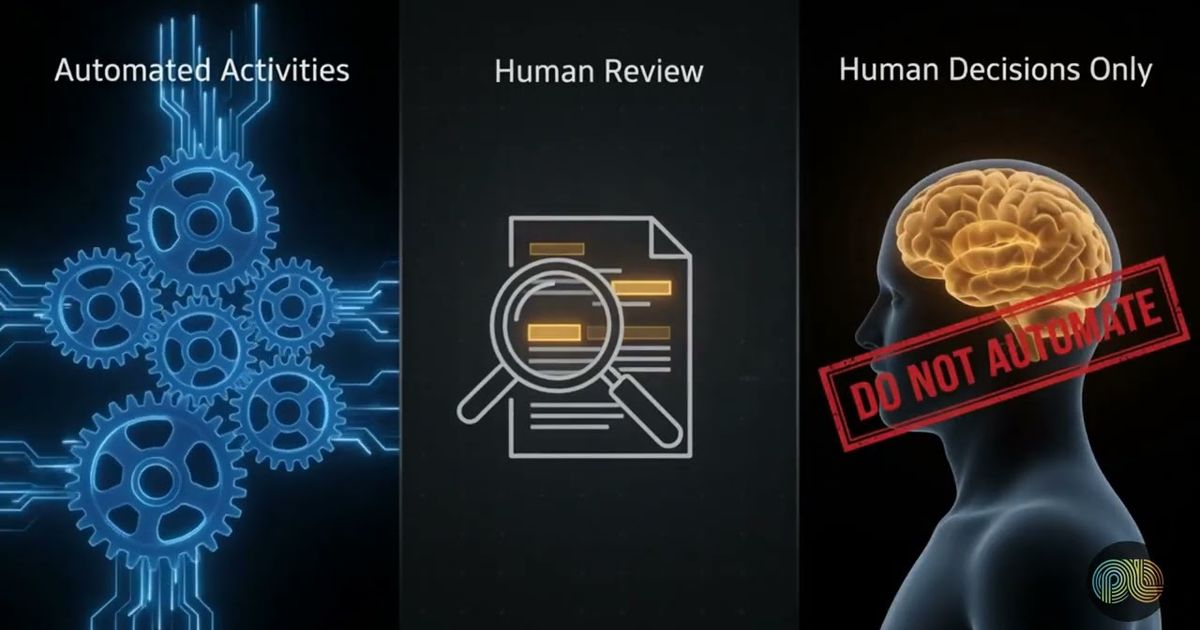
Orchestration connects these activities through explicit roles, inputs, outputs, and handoffs. It also establishes decision rights: which tasks can run automatically, which require validation, and which must remain under direct researcher control.
This is broader than deploying individual AI agents for research. An agent may complete a particular assignment, while orchestration governs how that assignment fits into the wider research process and interacts with other systems and people.
How does an AI research orchestration workflow work?
An orchestrated workflow routes a research objective through a controlled sequence of evidence collection, organization, analysis, review, and delivery. Each stage receives defined inputs, performs a specific role, and produces an output that the next stage can use.
A typical workflow might operate as follows:
- Frame the objective. Researchers define the question, intended decision, methodology, constraints, and evidence requirements.
- Retrieve evidence. A system searches approved sources and returns relevant material with enough provenance to inspect where it came from.
- Organize and analyze. Other tools or agents structure the evidence, identify patterns, perform calculations, or develop interpretations within the study context.
- Review and share. Researchers assess important conclusions, resolve uncertainty, document decisions, and approve outputs for their intended audience.
The value comes from coordination, not from the number of AI components. Clear handoffs prevent two systems from unknowingly repeating the same task. Shared context also reduces the risk that an analysis tool interprets evidence without understanding the original question, method, or limitations.
Orchestration should make responsibilities visible. Researchers need to know which component produced an output, what evidence informed it, whether another system transformed it, and where human review occurred.

What foundations make AI research orchestration reliable?
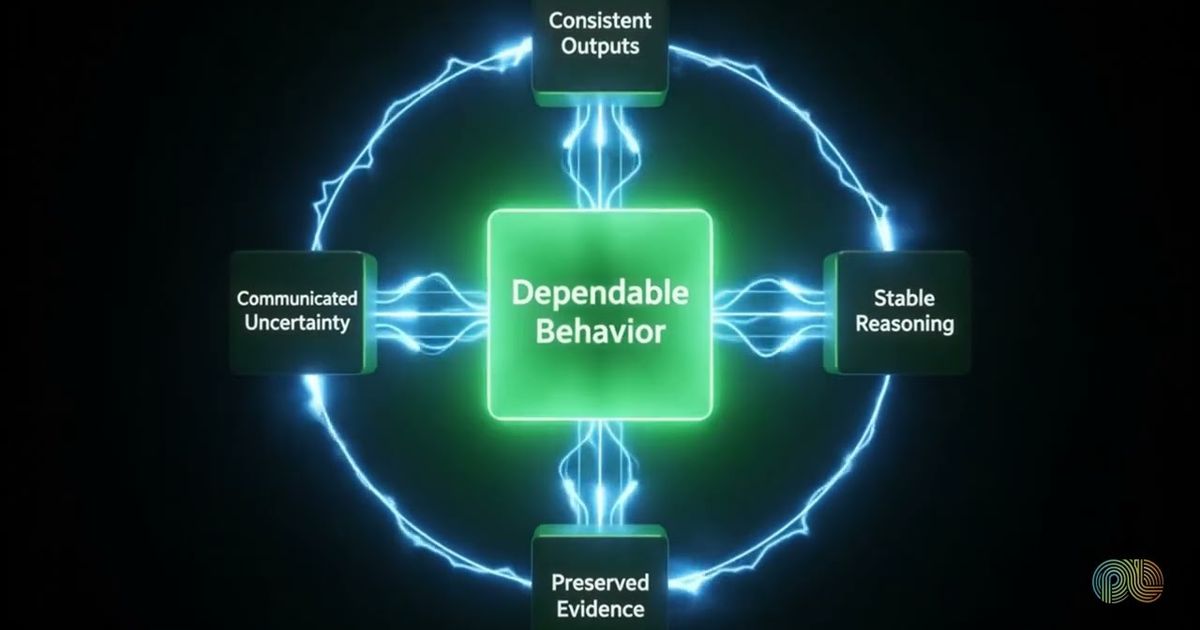
Reliable orchestration requires clear objectives, quality standards, evaluation methods, evidence traceability, and preserved context. Without these foundations, a workflow may become faster while still producing inconsistent or unsupported conclusions.
The essential foundations include:
- Clear objectives: Every component should work toward a defined research question and decision need.
- Quality standards: Teams should specify what acceptable evidence, analysis, and documentation look like.
- Evaluation methods: Outputs need checks for accuracy, completeness, relevance, and consistency with the underlying evidence.
- Evidence traceability: Researchers should be able to follow a conclusion back to its sources and intermediate transformations.
- Persistent context: Objectives, assumptions, methodology, evidence, limitations, and decisions should remain connected throughout the workflow.
- Clear accountability: Named people should own approvals, exceptions, and consequential research judgments.
These foundations turn a collection of tools into a controlled research system. They also support an AI-native research architecture in which evidence, workflows, governance, and delivery share context rather than operating as disconnected layers.
Evaluation must apply to both individual outputs and the complete workflow. A strong analysis component cannot compensate for irrelevant evidence, unclear objectives, or a broken handoff earlier in the process. Teams therefore need to inspect how errors or missing context can move between stages.

Where should humans stay involved in AI-orchestrated research?
Human oversight should remain central wherever research requires judgment about importance, interpretation, uncertainty, ethics, or consequences. Orchestration should make researchers more effective without transferring responsibility for conclusions to AI systems.
AI can support repeatable and bounded activities such as retrieval, organization, classification, initial analysis, and documentation. Researchers should retain authority over decisions such as whether the evidence is sufficient, whether an interpretation is reasonable, how limitations affect a conclusion, and whether a proposed action is ethically appropriate.
Human involvement should be designed into the workflow rather than added as a final sign-off. Review points are especially important after evidence selection, before accepting major interpretations, and before delivering conclusions that could influence consequential decisions.
Not every automated action needs the same degree of scrutiny. Teams can apply stronger review to higher-risk, more uncertain, or more consequential outputs while allowing low-risk administrative steps to proceed under established rules. The goal is a transparent division of labor in which automation improves efficiency and people preserve rigor and accountability.
Key takeaways
- AI research orchestration coordinates tools, agents, data sources, workflows, and human decisions within one structured process.
- Defined roles and handoffs reduce duplicated effort, inconsistent outputs, lost context, and unclear responsibility.
- Clear objectives, quality standards, evaluation methods, and evidence traceability are necessary for reliable orchestration.
- Human researchers remain responsible for interpretation, ethical judgment, and important conclusions.
- Effective orchestration combines automation with human expertise rather than simply adding more AI capabilities.
How PulseLake helps
PulseLake provides persistent study context across research design, evidence collection, analysis, reporting, and delivery. Its specialized agents, workflow automation, research knowledge graph, evidence provenance, governance, and approval capabilities support coordinated research while keeping researchers responsible for judgment. To discuss how this operating model could fit your research environment, talk to our team.
Frequently asked questions
Is AI research orchestration the same as research automation?
No. Research automation uses technology to perform particular tasks with less manual effort, while AI research orchestration coordinates multiple automated and human activities across a complete process. Orchestration defines roles, handoffs, shared context, quality controls, and approval points so that separate tasks contribute to a coherent and accountable research outcome.
Can a small research team use AI research orchestration?
Yes. A small team can begin with a simple workflow that defines the research objective, assigns a few bounded AI tasks, preserves evidence provenance, and requires human review for conclusions. Orchestration does not require many agents or complex infrastructure; it requires clarity about responsibilities, inputs, outputs, and decision authority.
How should teams evaluate an orchestrated AI research workflow?
Teams should evaluate both individual outputs and the connections between workflow stages. They should check whether evidence is relevant and traceable, whether context survives each handoff, whether analysis follows the intended method, and whether human approvals occur at the right points. Evaluation should also reveal where errors, unsupported assumptions, or duplicated work enter the process.
Does AI research orchestration remove the need for researchers?
No. AI systems can retrieve, organize, transform, and analyze evidence, but researchers still determine what matters, interpret ambiguity, assess limitations, consider ethical implications, and approve consequential conclusions. Effective orchestration clarifies this division of labor so that AI improves execution without replacing human accountability.