Multi-Agent Research Systems Explained
Multi-agent research systems coordinate specialized AI agents to collect evidence, analyze patterns, review quality, and produce transparent research outputs.

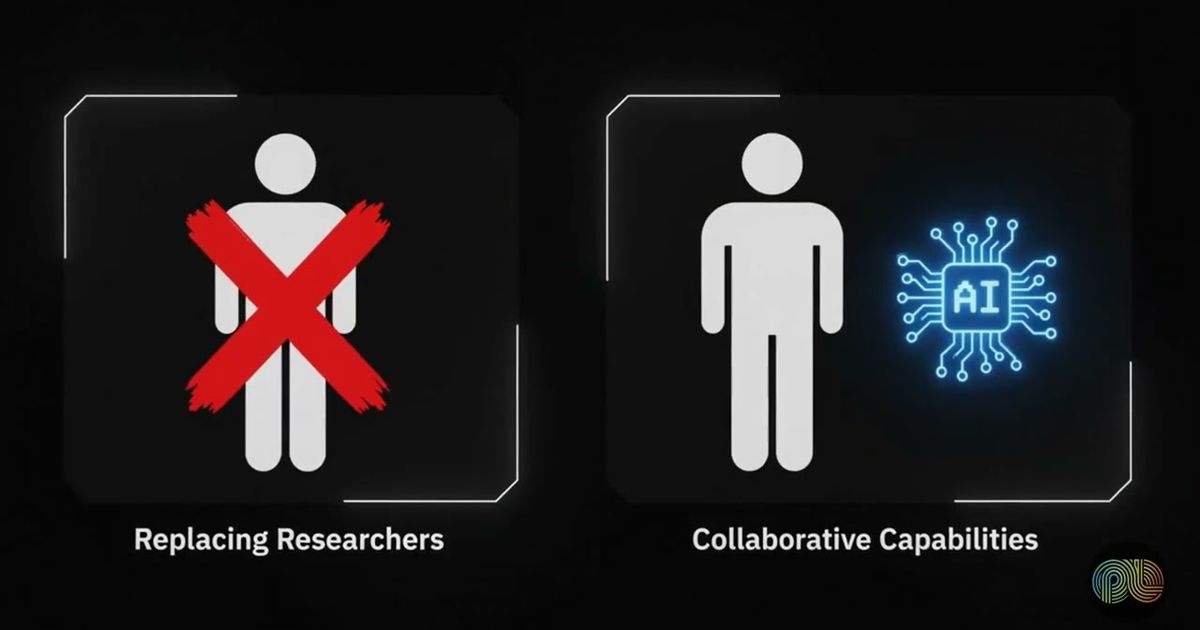
Multi-agent research systems coordinate multiple specialized AI agents to pursue one research objective. Rather than asking a single model to handle everything, they divide work such as planning, evidence retrieval, pattern analysis, synthesis, and quality review, then share results through a coordinated workflow with human oversight.
This approach matters because complex research often requires distinct skills, multiple perspectives, and checks between stages. Well-designed coordination can make those capabilities work together, while poor coordination can spread mistakes and create unnecessary complexity. The two-minute video above walks through the core ideas.
What is a multi-agent research system?
A multi-agent research system is a workflow in which several AI agents perform defined research roles and contribute their outputs to a shared objective. Each agent may operate independently on its assigned task, but its work must connect to the larger process.
For example, one agent might retrieve relevant evidence, another might identify patterns in that evidence, and a third might review the analysis for quality or consistency. Their combined output can then support synthesis or a research decision.
This structure resembles a human research team in which people contribute different skills and perspectives. The important distinction is that agents need explicit operating rules. They do not automatically understand who owns a task, when to exchange information, or how disagreements should be resolved.
Multi-agent systems are therefore more than collections of prompts or models. They are designed systems of roles, handoffs, shared context, evaluation, and approvals. They are one way to organize an AI agent workforce for research around a common problem.
How do multiple research agents work together?
Multiple research agents work together by dividing a research objective into tasks, completing those tasks through specialized roles, sharing relevant information, and combining results under defined coordination rules. Human researchers set the objective and retain responsibility for important judgments and approvals.
A typical workflow may include four broad stages:
- Define the objective. The team specifies the question, expected output, evidence standards, and constraints.
- Assign specialized roles. Agents receive bounded responsibilities such as planning, evidence collection, analysis, synthesis, or review.
- Coordinate information. Outputs move between agents through shared context, structured handoffs, or an orchestration layer.
- Evaluate the result. Agents and human reviewers check consistency, evidence support, and fitness for the research objective.
Coordination can be sequential, with one agent handing work to the next, or iterative, with agents revising outputs after review. In either case, the workflow should preserve the reasoning context and evidence required to understand the final conclusion. This is closely related to AI research orchestration, which focuses on managing tasks, dependencies, approvals, and information flows across a research process.

What are the benefits of specialized research agents?
Specialized research agents can focus different capabilities on different parts of a complex problem. Their value comes from specialization and coordination, not simply from increasing the number of agents in a workflow.
A retrieval agent can concentrate on finding relevant evidence without also carrying the full burden of interpretation. An analysis agent can look for themes, relationships, or contradictions. A review agent can examine whether the analysis is consistent and whether important claims remain connected to evidence.
This separation can make responsibilities easier to inspect. It can also support broader workflows that include research planning, evidence collection, analysis, synthesis, reporting, and quality assurance. Different agents may reason independently within their roles while contributing to a coordinated decision process.
The approach is especially useful when a research problem contains distinct tasks that need different methods or checks. For a simple, bounded question, however, a single well-designed agent and human reviewer may be clearer and more efficient.
What mistakes should you avoid when designing a multi-agent system?
The main mistake is assuming that more agents automatically produce better research. Every added role creates another handoff, possible misunderstanding, and point where an unsupported claim can enter or spread through the workflow.
Common design failures include:
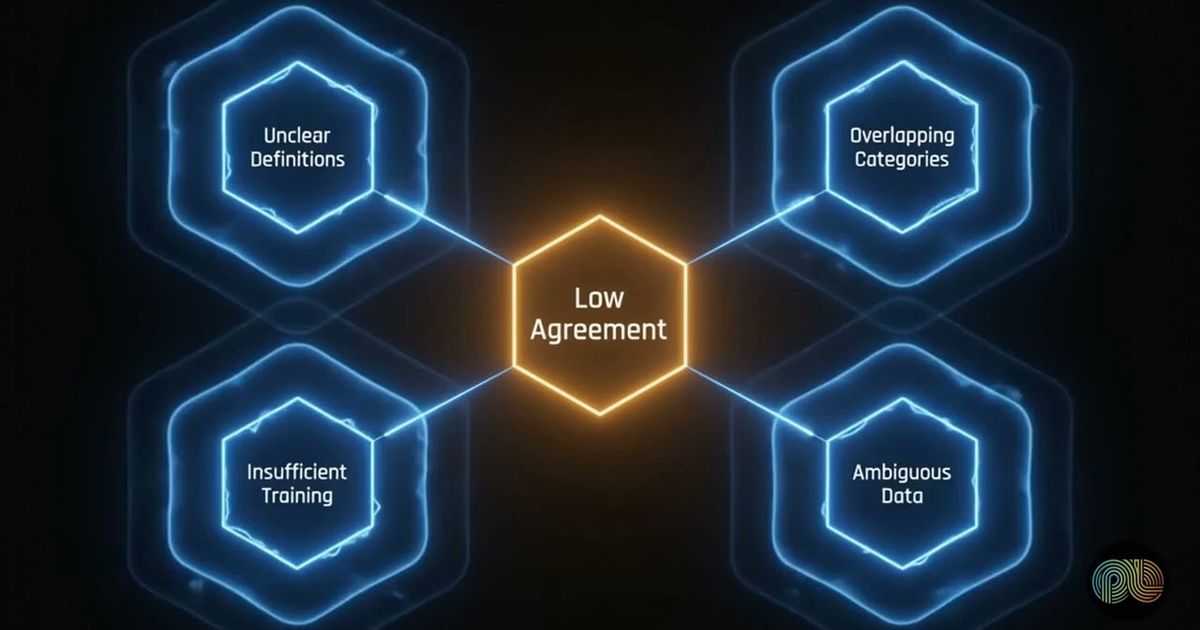
- Unclear objectives: Agents optimize for different interpretations of the research question.
- Overlapping responsibilities: Multiple agents repeat work or assume another agent owns a necessary task.
- Weak communication: Important evidence, caveats, or assumptions disappear during handoffs.
- Poor evaluation: Plausible outputs pass through the system without checks for consistency or evidence support.
- Missing provenance: Researchers cannot determine which evidence supports a conclusion or how it was produced.
- Insufficient human oversight: Automation makes consequential judgments without appropriate review or approval.
Effective systems counter these risks with explicit objectives, defined roles, communication mechanisms, evaluation criteria, and human control. Researchers should be able to inspect how agents reached conclusions and verify that important claims remain grounded in reliable evidence. The best design balances independent reasoning with coordinated decision-making rather than maximizing autonomous behavior.

Key takeaways
- Multi-agent research systems divide a shared research objective among specialized AI agents.
- Specialization creates value only when roles, handoffs, and communication are clearly designed.
- Evidence retrieval, pattern analysis, synthesis, and quality review can be assigned to different agents.
- More agents can increase complexity and amplify errors when evaluation and provenance are weak.
- Human researchers must retain oversight, verify important claims, and approve consequential decisions.
How PulseLake helps
PulseLake provides specialized agents for research design, interviewing, qualitative analysis, deep research, reporting, and client Q&A within a persistent study context. Its research knowledge graph, evidence provenance, workflow automation, approvals, and QA capabilities help connect agent outputs to the evidence and decisions around a study. Researchers retain judgment and approvals throughout the process; to discuss your research workflow, talk to our team.
Frequently asked questions
Can multi-agent research systems operate without human review?
Multi-agent research systems can automate substantial parts of planning, evidence collection, analysis, review, and synthesis, but important outputs still require human oversight. Researchers should evaluate assumptions, inspect evidence, resolve ambiguous findings, and approve consequential conclusions. Automation does not remove accountability for research quality or decisions.
How many agents should a research workflow use?
A research workflow should use only as many agents as needed to create meaningful specialization or independent checks. A new agent is justified when it has a clear responsibility, receives appropriate context, and produces an output another part of the process can evaluate. Adding agents without distinct roles usually increases coordination costs and failure points.
How can researchers trace conclusions across multiple agents?
Researchers need preserved evidence, assumptions, intermediate outputs, and handoff records across the workflow. Each important claim should remain connected to its supporting evidence and the analysis that produced it. This lineage allows reviewers to identify where an error entered the process instead of treating the final answer as an unexplained result.
Which research tasks are suitable for multi-agent workflows?
Multi-agent workflows are most suitable for complex objectives that contain separable tasks, such as research planning, evidence retrieval, pattern analysis, synthesis, and quality review. They are less useful when the question is simple or the cost of coordinating several roles exceeds the value of specialization. The workflow should match the complexity of the problem.