Multi-Document Analysis for Connected Research Evidence
Multi-document analysis connects evidence across transcripts, surveys, reports, and studies to reveal patterns while preserving each source's context.

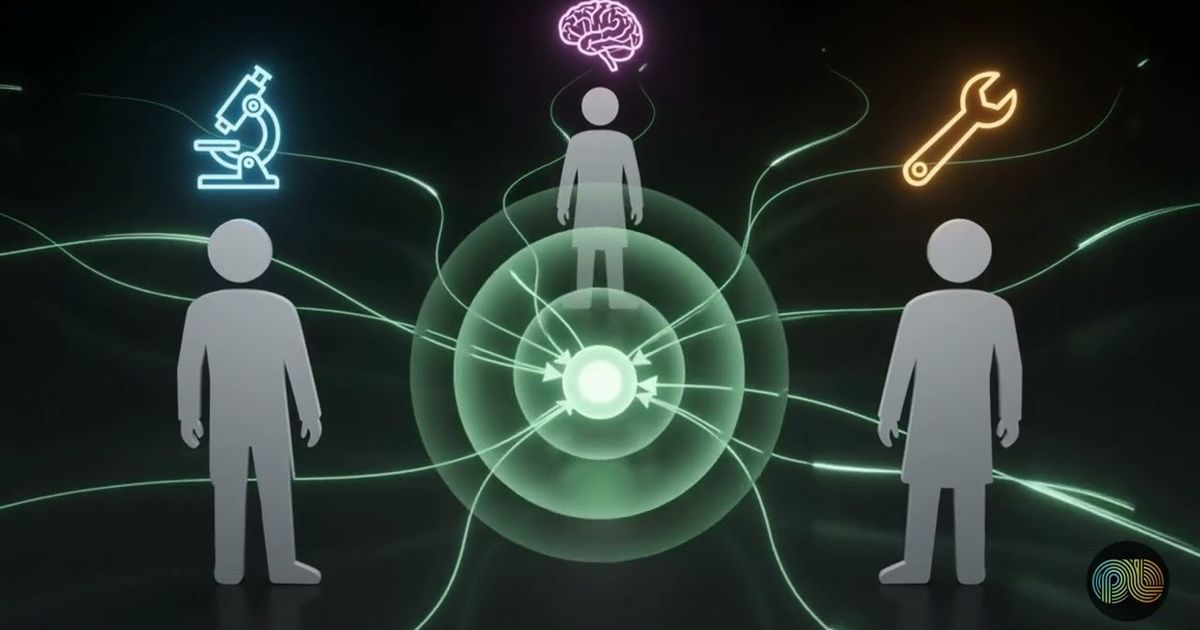
Multi-document analysis examines multiple research documents as one connected evidence set. It helps researchers identify recurring themes, changing expectations, contradictions, and relationships across sources while preserving the context and provenance of each document. The method turns fragmented research materials into a broader, evidence-grounded view of a question.
This matters because important research questions often draw on evidence created at different times, through different methods, and by different teams. The two-minute video above walks through the core ideas.
What is multi-document analysis?
Multi-document analysis is the systematic examination of information across a collection of documents rather than a series of isolated document reviews. The collection might include interview transcripts, survey responses, research reports, experiment results, field observations, support conversations, and previous studies.
The purpose is not simply to summarize every document. Researchers analyze how findings, themes, ideas, and observations relate across the full evidence set. That can involve finding agreement, explaining disagreement, tracing a theme over time, or connecting observations from different stages of a customer experience.
Each source must retain its own context. A statement from one interview, a pattern in a survey, and a conclusion from an experiment carry different evidentiary weight. Multi-document analysis connects them without erasing those distinctions.
How does multi-document analysis reveal broader patterns?
It reveals broader patterns by comparing evidence across sources, methods, populations, and time periods. Relationships that remain invisible within individual documents can become clear when researchers examine the collection as a connected landscape.
For example, a team investigating customer retention might review years of feedback, usability studies, support conversations, and product research. Separate reviews may surface useful observations, but combined analysis can reveal:
- Problems that recur across multiple customer touchpoints.
- Expectations that change as the product or market evolves.
- Links between usability friction, support needs, and customer sentiment.
- Findings that appear consistent across qualitative and quantitative evidence.
The process typically moves from defining the research question to retrieving relevant materials, comparing concepts, and validating an evidence-based synthesis. This overlaps with cross-study synthesis, especially when the document collection contains outputs from several completed studies.
How can AI support multi-document analysis?
AI can help retrieve relevant materials, identify shared concepts, compare themes, and generate an initial synthesis across a large collection. It reduces the manual effort required to locate related passages and organize distributed evidence.
These outputs still require strong grounding. A system may connect documents because they use similar words even when they describe different situations, populations, or periods. Every claimed relationship should therefore trace back to specific source evidence rather than rest on superficial similarity.
Human researchers remain responsible for interpreting the relationships. They decide whether a recurring pattern is meaningful, whether differences between sources can be compared fairly, and whether the evidence supports the proposed conclusion. AI accelerates retrieval and comparison; it does not replace methodological judgment.
A practical workflow is:
- Define the question and relevant boundaries.
- Retrieve documents and passages connected to that question.
- Compare themes, findings, contradictions, and contextual differences.
- Validate the synthesis against the underlying evidence.

What foundations make multi-document analysis reliable?
Reliable multi-document analysis depends on organized, searchable research materials with enough structure to preserve meaning. Without those foundations, researchers and AI systems may miss relevant evidence, confuse sources, or lose the context needed to interpret a finding correctly.
Four foundations are especially important:
- Structured repositories: Research materials need a consistent home rather than being scattered across disconnected folders and tools.
- Semantic indexing: Search should retrieve conceptually relevant material, not only exact keyword matches.
- Consistent metadata: Method, date, audience, product area, study owner, and other descriptors help researchers compare appropriate sources.
- Clear evidence lineage: Conclusions should connect back to the documents, passages, data, and study context that support them.
A research repository that people actually use provides the operational base. Metadata and lineage then make the repository suitable for trustworthy analysis rather than simple storage.

What mistakes should researchers avoid?
Researchers should avoid treating every similarity as a meaningful connection or every document as equally relevant. Good analysis accounts for methodological differences, source quality, time period, population, and the original purpose of each study.
Common mistakes include removing findings from their original context, merging distinct concepts under one broad label, overlooking contradictory evidence, and presenting an AI-generated synthesis without checking its sources. Researchers should also avoid assuming that repeated observations automatically establish causation.
The final synthesis should distinguish direct evidence from interpretation. It should show where sources converge, where they differ, and where the collection does not provide enough evidence for a confident answer.
Key takeaways
- Multi-document analysis treats distributed research materials as a connected evidence set.
- The method reveals recurring patterns, changing expectations, contradictions, and relationships across sources.
- AI can accelerate retrieval, concept identification, comparison, and initial synthesis.
- Reliable conclusions require source context, evidence lineage, and human interpretation.
- Structured repositories, semantic indexing, and consistent metadata make analysis more dependable.
How PulseLake helps
PulseLake keeps objectives, methodology, evidence, and decisions in a persistent study context while supporting cross-study search and deep research. Its research knowledge graph, evidence provenance, and specialized analysis agents help teams find and compare connected materials while retaining researcher judgment and approvals. To discuss how this could support multi-document analysis, talk to our team.
Frequently asked questions
What types of documents can be included in multi-document analysis?
Multi-document analysis can include interview transcripts, open-ended survey responses, reports, experiment findings, observations, support conversations, and prior studies. The sources do not need to use the same method, but researchers must preserve their methodological differences and original context when comparing them.
Is multi-document analysis the same as summarizing several documents?
No. Summarizing several documents usually condenses each source or combines their main points. Multi-document analysis goes further by examining relationships, recurring themes, contradictions, changes over time, and connections across the collection while maintaining a traceable link to the underlying evidence.
How do researchers verify an AI-generated multi-document synthesis?
Researchers should inspect the source passages behind each important claim, confirm that the retrieved documents are relevant, and check whether context was preserved. They should also review contradictory evidence, distinguish interpretation from direct findings, and determine whether similarities reflect a meaningful pattern rather than shared terminology.
Can multi-document analysis combine qualitative and quantitative evidence?
Yes, provided the analysis respects what each method can support. Qualitative materials can explain experiences and meanings, while quantitative results can describe measured patterns within a defined sample. Combining them can strengthen interpretation, but one type of evidence should not be presented as if it answers a question designed for the other.