 PulseLake
Detecting Emerging Trends Before Dashboards Do
Detecting emerging trends before dashboards do means spotting small, repeated signals early, before they accumulate into obvious standard reports.
Detecting emerging trends before dashboards do means identifying small, early changes in conversations, behaviors or repeated observations before they accumulate into a pattern a standard report would flag. Traditional dashboards measure what has already happened, so by the time a trend is visible there, the window for a proactive response has often already narrowed.
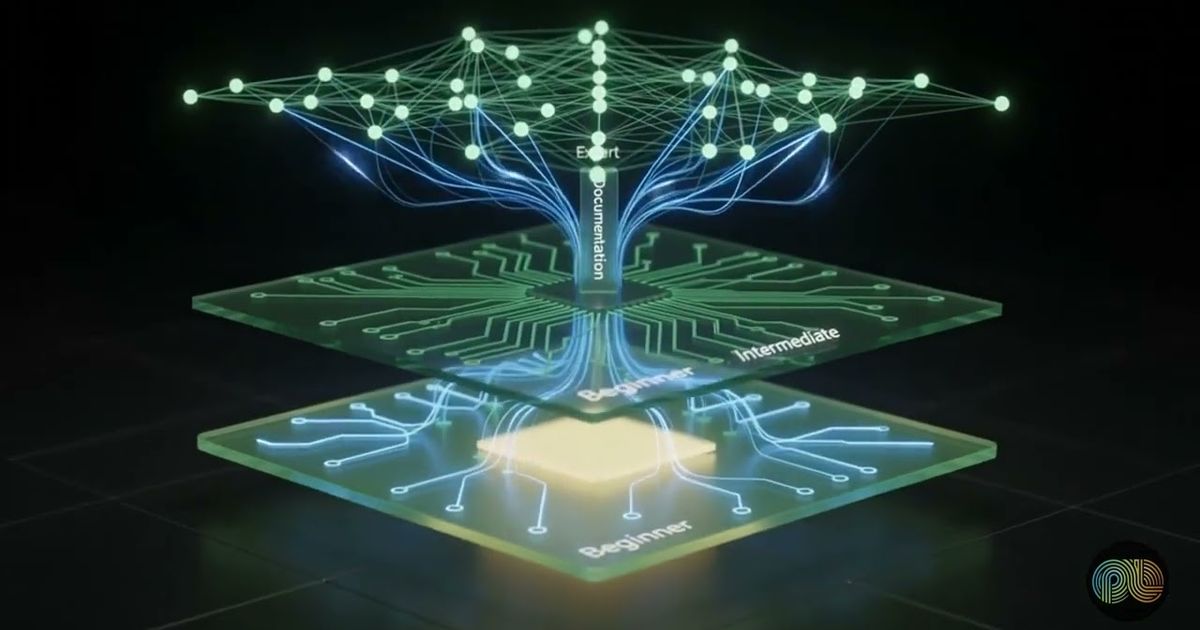
Catching signals early gives organizations time to investigate and respond before a shift becomes an established pattern that customers and competitors have already noticed. The two-minute video above walks through what early signal detection actually looks like in practice.
What counts as an emerging trend in research data?
An emerging trend is a small, repeated change that shows up before it becomes large enough to register in a standard measurement or dashboard. It often first appears as a subtle shift in how people talk about a topic, a slight change in behavior, or a handful of similar observations that individually seem unremarkable.
The key distinguishing feature of a real emerging trend is that it recurs and grows in consistency over time, rather than appearing once and disappearing. Spotting it requires looking at change over time rather than a single snapshot of current data.
How do you detect early signals before they show up on a dashboard?
Detecting early signals means combining different sources of evidence, since any single source may miss a change that becomes obvious once multiple signals are viewed together. Qualitative feedback, behavioral observations and structured measurements each reveal different pieces of an emerging pattern.
Practical approaches include:
- Using text analysis to identify growing themes in open-ended feedback or conversations.
- Watching for shifts in quantitative behavior or stated preferences over consecutive periods.
- Cross-referencing qualitative and quantitative sources rather than relying on either alone.
- Reviewing changes over time instead of only the latest snapshot of data.
Turning text into structured data explains how unstructured feedback becomes the kind of data this monitoring depends on.

How do you separate real trends from noise?
Separating real trends from noise means evaluating consistency, context and relevance before treating an unusual pattern as meaningful. Not every spike or unusual comment represents a lasting shift, and treating every anomaly as a trend leads to chasing signals that never materialize into anything.
A useful discipline is asking whether a pattern persists across more than one data source or time period, and whether it connects to a plausible underlying cause. Topic clustering vs sentiment analysis covers methods for distinguishing a genuine thematic shift from ordinary variation in feedback.

What should you do once you spot an early signal?
Once a signal appears, the right next step is investigation and validation, not treating it as a confirmed prediction. Emerging trends represent possibilities that need further evidence before an organization commits resources based on them.
The value of early detection comes from enabling a proactive response: a team that understands a changing need or concern early can investigate, test a response, and act before the shift is obvious to everyone. This shifts research from a reactive activity, triggered after something has already changed, toward continuous monitoring of evolving behavior.
Key takeaways
- Emerging trends usually appear first as small, repeated changes rather than sudden, obvious shifts.
- Combining qualitative and quantitative sources reveals early movement that any single source could miss.
- Consistency, context and relevance separate a genuine trend from ordinary noise.
- Early signals should be treated as possibilities requiring validation, not confirmed conclusions.
- Continuous monitoring supports proactive decisions instead of reactive ones made after a change is already established.
How PulseLake helps
PulseLake's research intelligence layer combines a persistent study context, a research knowledge graph and cross-study search, which makes it possible to notice patterns across studies rather than reviewing each one in isolation. Scheduled monitoring and research Q&A support ongoing tracking of evolving signals instead of relying solely on periodic, backward-looking dashboards. Talk to our team to discuss setting up continuous monitoring for a specific research area.
Frequently asked questions
How is trend detection different from standard dashboard reporting?
Standard dashboard reporting typically summarizes what has already happened over a defined period, while trend detection focuses on catching early, small changes before they accumulate into something a dashboard would clearly show. Trend detection is forward-looking and continuous rather than periodic and retrospective.
What data sources are most useful for spotting emerging trends?
The most useful approach combines qualitative sources, such as open-ended feedback and conversations, with quantitative behavioral or preference data. Relying on a single source increases the chance of missing a signal that only becomes clear when multiple types of evidence are viewed together.
How confident should a team be before acting on an emerging trend?
A team should treat an early signal as a hypothesis worth investigating rather than a confirmed finding, and should look for consistency across sources or time periods before committing significant resources. Acting too early on an unvalidated signal risks chasing noise instead of a real shift.
Can small companies use trend detection, or is it only for large research teams?
Trend detection is a discipline more than a specific tool, so it scales to the resources available. A small team can apply the same principle, at a smaller scale, by regularly reviewing feedback for repeated, consistent changes rather than waiting for a periodic report to reveal them.