 PulseLake
Annotation Drift: How to Detect and Prevent It
Annotation drift changes label meaning over time. Learn how calibration, agreement checks, sample reviews, and human oversight preserve data quality.
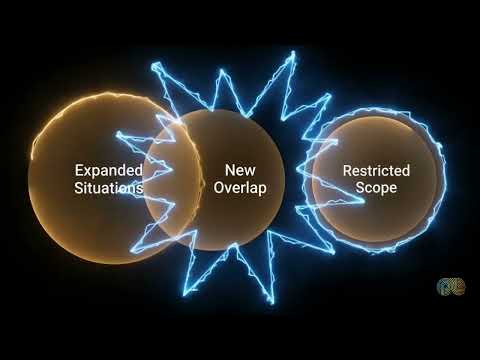
Annotation drift is the gradual change in how annotators apply labels compared with the original annotation standards. Labels may broaden, narrow, or overlap as datasets grow and reviewers encounter new cases. Continuous calibration, agreement checks, sample reviews, and updated guidance keep those shifts from quietly weakening consistency.
Drift matters because inconsistent labels make evidence harder to compare across reviewers, projects, and time periods. Treating it as an expected operational risk helps protect research analysis, AI evaluation, and model development. The two-minute video above walks through the core ideas.
What is annotation drift?
Annotation drift occurs when annotators gradually apply labels differently from the original standards. The change is usually subtle and unintentional, so reviewers may believe they remain consistent even as the practical meaning of a label shifts.
A label can drift in several directions. It may expand to cover situations that were previously excluded, become more restrictive, or begin to overlap with another category. These changes reduce consistency because identical examples may receive different labels depending on when they were reviewed or who reviewed them.
For example, a code intended specifically for usability confusion might gradually be applied to general dissatisfaction, missing functionality, and performance complaints. Those issues may appear together frequently, but grouping them under one label changes the code’s original meaning. The dataset then stops distinguishing experiences the research design intended to separate.
Why does annotation drift happen?
Annotation drift develops because annotation is an ongoing interpretive process rather than a one-time application of fixed rules. Growing datasets, reviewer experience, unfamiliar examples, and changing research priorities continually test the boundaries of a coding framework.
Repeated exposure can lead reviewers to form personal shortcuts or interpretations. New cases may not fit the original examples cleanly, while related categories can begin to feel interchangeable. If teams do not discuss these cases, local decisions can quietly become informal standards.
Research priorities can also evolve legitimately. The problem is not that a framework changes, but that it changes without an explicit decision, documented rationale, or consistent rollout. Clear governance helps distinguish controlled revisions from accidental drift, as discussed in research governance without bureaucracy.

How can teams detect annotation drift?
Teams detect annotation drift by comparing current labeling behavior with both the original standards and the judgments of other reviewers. Continuous monitoring is more effective than relying only on occasional, broad audits.
Regular agreement studies can reveal whether reviewers are interpreting labels consistently. Sample reviews can show whether recent annotations still match earlier decisions, while calibration sessions expose differences in how people handle ambiguous or difficult examples.
Teams should examine disagreements as diagnostic evidence rather than treating them only as errors to correct. A disagreement may indicate unclear wording, inadequate examples, an emerging scenario, or overlap between categories. Looking at patterns across disagreements helps determine whether the issue belongs to one reviewer, one label, or the framework itself.
How can teams prevent annotation drift?
Preventing annotation drift requires a repeatable process for checking interpretations, resolving ambiguity, and updating standards. The goal is to make changes visible and controlled before they spread through the dataset.
Useful controls include:
- Run agreement checks at regular intervals rather than only at project launch.
- Hold calibration sessions where reviewers label and discuss the same examples.
- Review samples from different annotators and different collection periods.
- Document difficult cases and the reasoning behind final decisions.
- Update label definitions when genuinely new scenarios emerge.
- Revise examples so guidance reflects both common and boundary cases.
Guidelines should evolve when the research requires it, but revisions need versioning and communication. Teams should record what changed, why it changed, and whether earlier data needs review. This creates a stable reference point while allowing the annotation framework to respond to new evidence.

How does AI-assisted annotation affect drift?
AI-assisted annotation can improve workflow efficiency, but it introduces another source of drift when reviewers accept automated suggestions without sufficient scrutiny. Human oversight remains essential to ensure that both people and AI follow the same standards.
Automation can influence human judgment over time. If reviewers repeatedly see a suggested label, they may begin treating that suggestion as the default even when an example is ambiguous or outside the category’s intended scope. This can normalize an incorrect interpretation across a large dataset.
Teams should therefore review automated suggestions, monitor disagreement patterns, and test outputs against documented definitions and examples. The aim is to use AI as an assistant rather than an authority, consistent with AI-assisted annotation practices that preserve researcher judgment and approval.
Key takeaways
- Annotation drift is a gradual change in how people or AI systems apply labels over time.
- Labels can unintentionally broaden, narrow, or overlap with neighboring categories.
- Agreement studies, calibration sessions, and sample reviews help identify drift early.
- Updated, versioned guidelines allow controlled change without losing consistency.
- Human oversight remains necessary when automated suggestions influence annotation decisions.
How PulseLake helps
PulseLake keeps methodology, evidence, decisions, ontology, governance, and lineage within a persistent study context. Researchers can use specialized agents for qualitative analysis while retaining judgment and approvals, and they can turn QA and review steps into repeatable workflows. Cross-study search also helps teams compare current interpretations with prior research and documented standards; to discuss your annotation workflow, talk to our team.
Frequently asked questions
How often should annotation guidelines be reviewed for drift?
Annotation guidelines should be reviewed throughout an active project, especially when datasets grow, new cases appear, reviewers change, or disagreement patterns emerge. The right frequency depends on annotation volume and risk, but reviews should be regular enough to detect changing interpretations before they affect a large portion of the dataset.
Is every change to a label definition annotation drift?
No. A deliberate, documented revision made in response to new research needs is controlled framework development rather than accidental drift. It becomes problematic when reviewers change a label’s practical meaning independently, without shared agreement, versioned guidance, or a decision about how the change affects earlier annotations.
Can high inter-annotator agreement rule out annotation drift?
Not entirely. Reviewers can agree with one another while collectively moving away from the original annotation standard. Agreement measures should therefore be combined with comparisons against documented definitions, benchmark examples, earlier samples, and difficult boundary cases to determine whether consistent labeling is also conceptually correct.
Should teams relabel old data after finding annotation drift?
Relabeling depends on how far the meaning shifted and how the dataset will be used. Teams should identify the affected labels and time periods, assess whether the inconsistency could change conclusions or model behavior, and document the decision. Sometimes targeted relabeling is sufficient; in other cases, preserving versions with clear lineage may be more appropriate.