AI-Assisted Annotation Explained
AI-assisted annotation uses models to suggest labels and flag uncertain cases, helping human reviewers scale labeling without surrendering quality control.

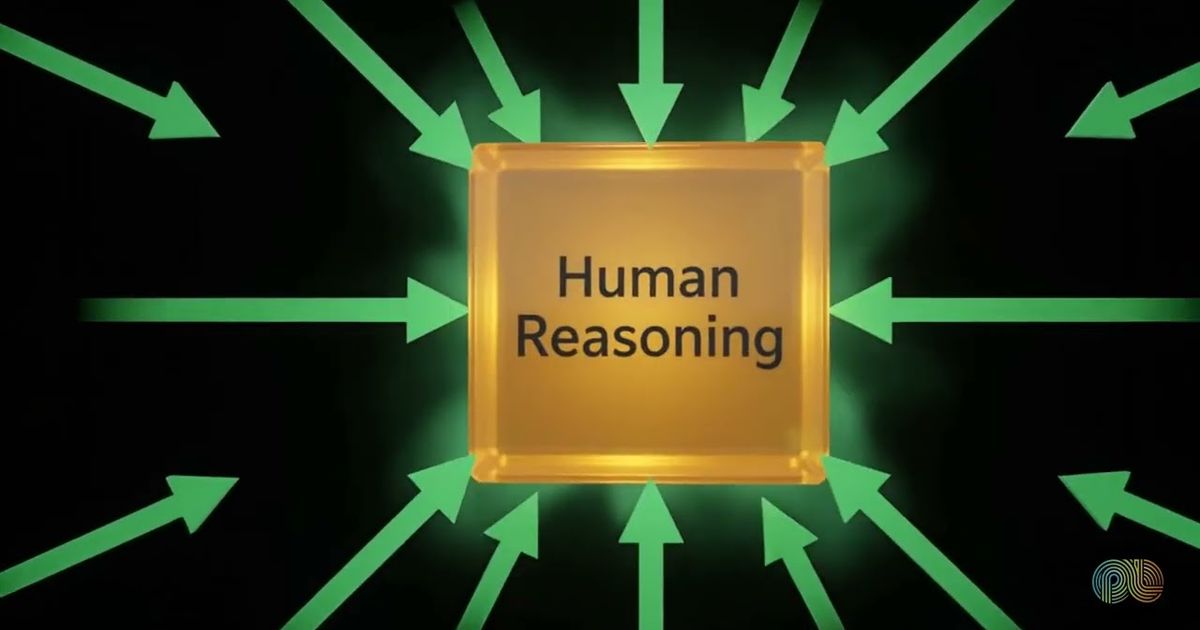
Nobody wants to hand-label ten thousand comments. AI-assisted annotation is a human-supervised labeling method: machine learning models recommend labels, detect entities, suggest relationships, classify straightforward examples and flag uncertain cases. Human annotators then verify, correct and refine the suggestions. The repetitive work shrinks, and people keep charge of judgments that need context, interpretation or domain expertise.
You'll also hear it called model-assisted labeling or AI-assisted labeling. As research data sets grow, manual annotation becomes a real bottleneck. AI assistance raises throughput, provided nobody treats model output as automatically correct and people stay responsible for the final data set.
What does AI-assisted annotation do?
It hands reviewers a starting point. Rather than labeling every item from scratch, they react to a suggestion. The model takes the repeatable pattern recognition; people save their attention for ambiguous or consequential calls.
Depending on the task, a system may:
- Recommend labels based on existing coding patterns.
- Identify likely entities in text or other research material.
- Suggest relationships between entities, concepts or categories.
- Classify straightforward examples that closely match known patterns.
- Highlight uncertain cases for closer human review.
All of it is a draft. Annotators still confirm the accurate labels, fix mistakes and decide how odd examples get handled. The split pays off most when a task mixes many repetitive decisions with a smaller number of cases that need domain knowledge.
In qualitative research, annotation often sets up later analysis by turning unstructured comments into organized evidence. It pairs well with AI-assisted theme extraction, though your annotation framework still has to define what each theme or label means.
How does human-supervised annotation work?
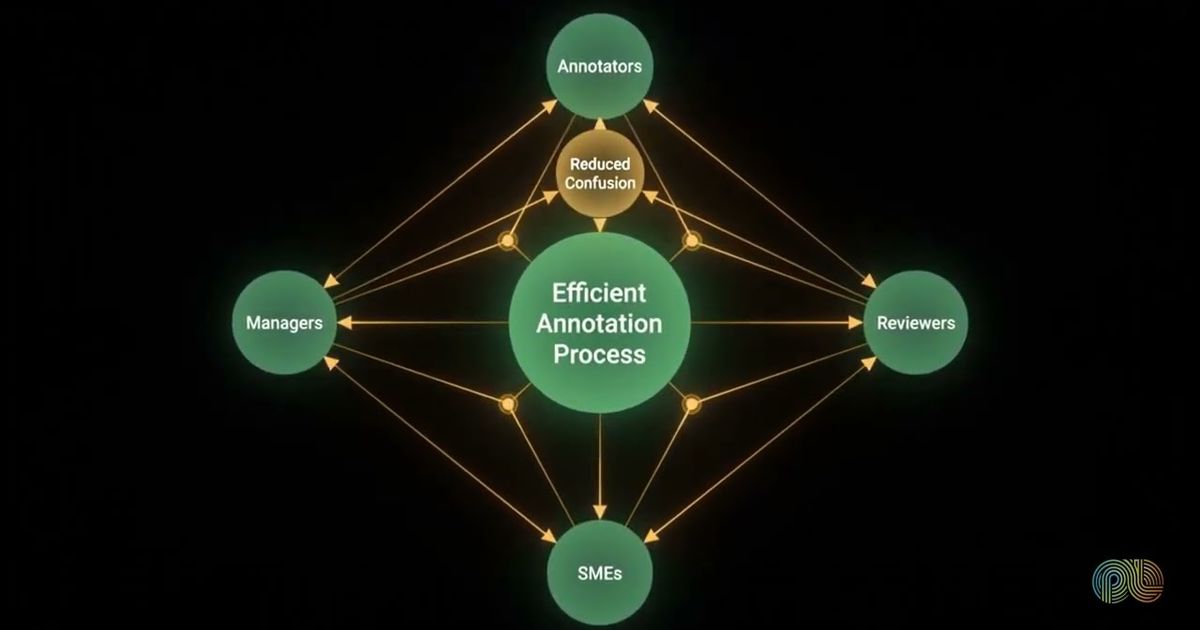
Model suggestions go in, and deliberate review and quality control sit on top. Reviewers don't disappear. Their attention just moves toward errors, uncertainty and interpretation.
A practical workflow has four stages:
- Define the annotation framework. Set the labels, definitions, guidelines, examples and rules reviewers will use.
- Generate preliminary annotations. Apply a model to suggest labels or relationships from existing coding patterns.
- Review and refine. Annotators confirm correct suggestions, fix errors and resolve uncertain examples.
- Evaluate the final data. Run quality reviews before the annotations feed analysis, reporting or future AI work.
Say a team is preparing thousands of research comments for thematic analysis. Nobody opens a completely uncoded data set. Reviewers get preliminary labels based on earlier coding patterns, accept the accurate ones, correct the mismatches and put their time into comments with nuance, overlap or unclear meaning.
The route from raw comments to structured evidence gets shorter, and humans stay in control. Effort lands where it's needed. Routine cases move fast, hard ones get real attention.

What makes AI-assisted annotation reliable?
Mostly the framework. Automation can't cover for unclear categories, inconsistent instructions or examples that don't represent the data.
Four foundations matter most:
- Clear guidelines that explain how to apply each label and handle boundary cases.
- Stable taxonomies that keep category names, meanings and relationships consistent.
- Representative examples that show how the framework applies to common and difficult cases.
- Consistent review practices, so annotators resolve similar cases in similar ways.
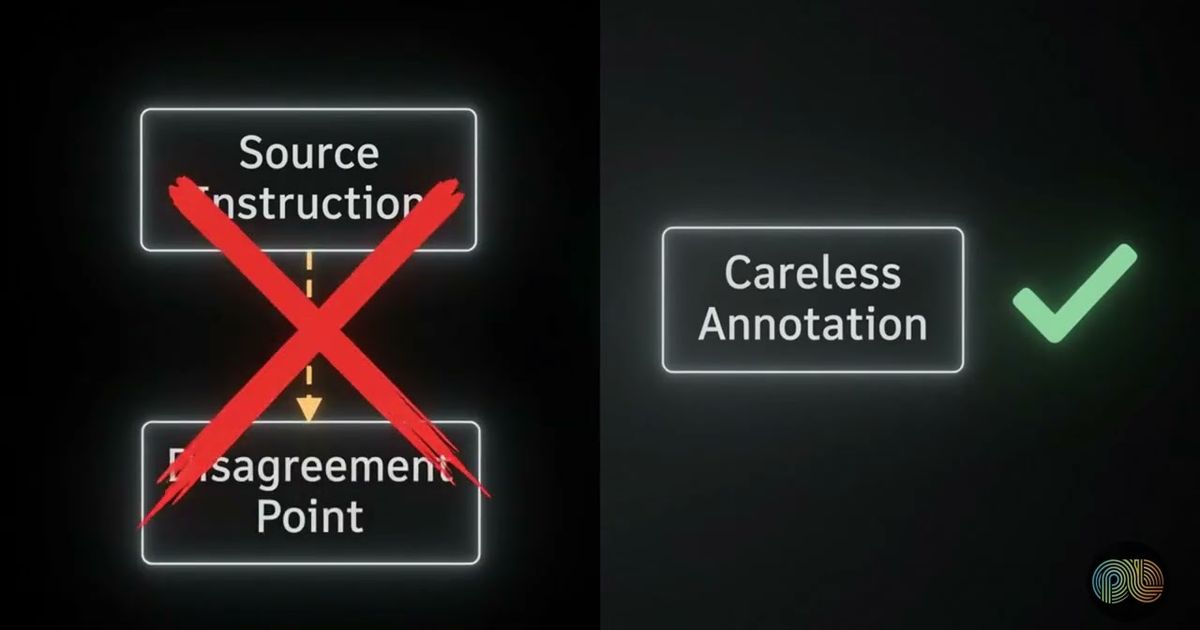
This is the bit we'd underline. Train or prompt a model on inconsistent coding patterns and it will reproduce the inconsistency, only faster. Poor standards don't merely lower annotation quality. They can spread errors through a much bigger data set before anyone catches on.
So clear up ambiguity in the framework before you turn the automation up. A documented research taxonomy gives models and reviewers a shared structure, and examples make abstract definitions easier to apply.

How should teams monitor annotation quality?
Keep evaluating, and don't assume the AI's performance stays put. Changes in incoming data, terminology, categories or research objectives can make once-useful suggestions less reliable.
Good monitoring uses several kinds of evidence. Annotation reviews expose systematic errors. Reviewer feedback points out suggestions that confuse or don't help. Regular evaluations show whether the system still performs well enough for the current task. Where disagreement or uncertainty turns up, those cases get more human review.
Governance has a few questions to answer as well. Who approves labels? How are guideline changes documented? When should automated suggestions be limited or paused? Keep model suggestions distinguishable from approved human decisions, and it's far easier to inspect the process and see how the final data set came together.
Monitoring isn't a one-time audit at the end. It's a feedback loop for refining guidance, updating examples and responding as research objectives evolve. With structured oversight, speed doesn't become the only measure of success, and the labeled data stays reliable over the long run.
How PulseLake helps
PulseLake keeps research objectives, methodology, evidence and decisions in one persistent study context. Its ontology, governance, lineage, qualitative analysis agents and approval-based workflows support consistent classification and review, while researchers keep judgment over final outputs. To see how this fits into a broader research system, talk to our team.
Frequently asked questions
Can AI-assisted annotation replace human annotators?
It's built to support them, not remove them. Models can process repeatable cases and suggest likely labels, but people still interpret ambiguity, apply domain knowledge, correct errors and approve the final data set. How much review you need depends on the task and on what a wrong label would cost.
How should a team start using AI-assisted annotation?
Start with a clearly defined, bounded annotation task, and write down the labels, decision rules and representative examples. Let the model produce preliminary suggestions, then have reviewers confirm or correct them. Evaluate the results before you expand, watching closely for uncertain cases and for categories reviewers apply inconsistently.
What should happen when an annotation taxonomy changes?
Update the guidelines and examples first, before relying on new model suggestions. Then reevaluate performance against the revised framework and review affected annotations where needed. A taxonomy change can shift the meaning of earlier labels, so the system and the human reviewers both need an explicit transition process.