Human in the Loop Annotation Explained
Human in the loop annotation combines AI labeling speed with expert review to handle ambiguity, improve data quality, and keep decisions accountable.

Human in the loop annotation is a labeling approach where AI proposes categories or flags the uncertain cases, and people review, correct and approve the decisions. Automation brings the speed. People bring judgment, aimed at the ambiguous, complex or high-impact examples where interpretation and accountability matter most.
Neither extreme works well. Fully automated annotation scales fast but can fumble context. Fully manual annotation burns your experts' time on cases a machine could have handled.
What is human in the loop annotation?
Labeling work gets split between AI and human reviewers by what each does best. AI does the quick first-pass classification; people keep responsibility for decisions that need interpretation or carry real consequences.
So the AI might suggest labels, point to likely categories or flag examples where its confidence is low. Reviewers look at the relevant cases, fix mistakes, resolve ambiguity and approve the decisions that matter. Human judgment stays in the process, but it gets spent where it adds the most.
Picture a product team with thousands of customer comments about a new feature. AI could pick out recurring themes: usability problems, missing capabilities, positive reactions. Reviewers then spend their time on comments with mixed sentiment, unfamiliar language, overlapping themes or implications for a big product decision.
This isn't a check on automated output at the end. In human in the loop labeling, the collaboration is built into the process, with clear points for review, correction, escalation and approval.

When should a human review an AI-generated label?
When it's uncertain, depends on context, is disputed, or matters enough that a mistake could affect research or evaluation decisions. Routine cases can get lighter handling where the workflow's quality rules allow it.
Four triggers are worth writing down. AI confidence below a defined threshold. Examples that could reasonably fit more than one category. Unfamiliar language, emerging topics or patterns the guidelines don't cover. And high-impact records used for training, benchmarking, evaluation or consequential reporting.
One warning: confidence is a routing signal, not proof a label is right. A system can be confident and still misread context, especially when the examples differ from what it was trained on. So your quality checks should weigh both uncertainty and what an error would cost.
Nobody needs to inspect every easy example. The point is to spend scarce expert attention on purpose, with proper oversight and accountability intact.
How does a human in the loop annotation workflow work?
Rules first, then AI-assisted classification, then targeted human review, then improvement. Each stage should say what happens, who's responsible and which cases get escalated.
- Define the annotation rules: label set, decision criteria, examples, edge cases and the conditions that require human review. Strong annotation guidelines help reviewers and AI systems apply categories consistently.
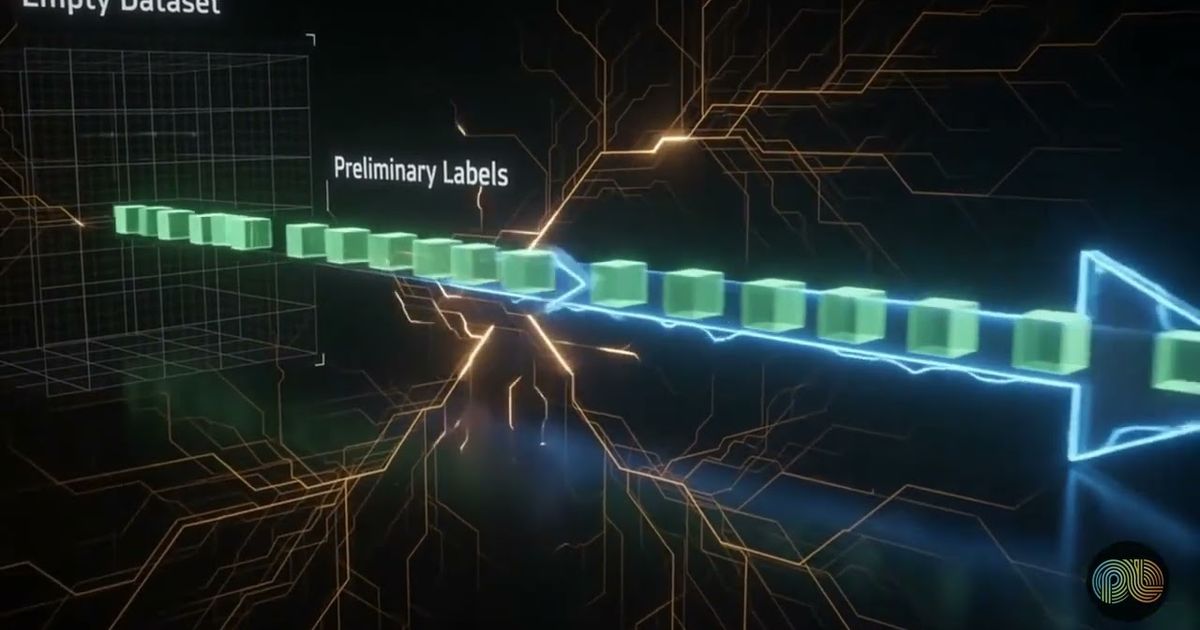
- Generate preliminary labels. AI labels straightforward examples, suggests likely categories or spots records that look uncertain.
- Route selected cases to qualified reviewers (ambiguous, complex, low-confidence or high-impact ones), instead of giving every record the same treatment.
- Correct and improve. Record reviewer decisions, then use recurring corrections to update guidelines, strengthen training datasets and refine future AI assistance.
The end result is a feedback cycle. Reviewer corrections show where the AI is reliable and where it keeps struggling, and those observations improve both the current dataset and the workflow for the next project.

What makes human in the loop annotation successful?
Workflow design. Bolting manual review onto the end of automation isn't the same thing. Thresholds, review stages, visible reasoning and explicit responsibilities decide whether human attention improves quality, and whether it does so efficiently.
Here's what we'd get right first:
- Clear confidence thresholds: when AI output can proceed, when it needs review, when it escalates.
- Structured review stages: routine correction, expert adjudication and final approval, split out where the project needs different levels of judgment.
- Transparent reasoning: keep the proposed label, reviewer decision, correction and rationale, so teams can see how an outcome was reached.
Then responsibilities. Say who writes guidelines, reviews uncertain cases, resolves disagreements, approves changes and monitors recurring errors.
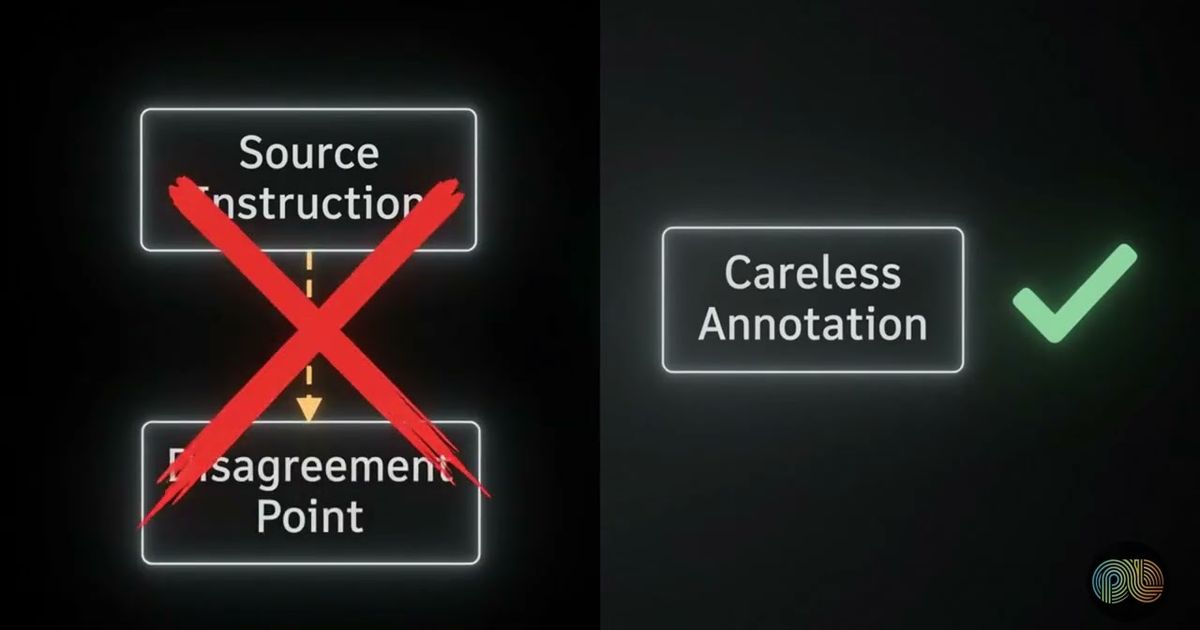
Reviewers also need a consistent way to flag unclear rules and awkward edge cases. Patterns in their corrections should turn into guideline revisions, better examples and better training data, not stay as one-off fixes. A good annotation quality control process reads errors as evidence about the system, and not just as individual records to repair.
Let AI and people each do what they're good at, and annotation can scale without giving up the consistency, accountability and quality that trustworthy research and reliable AI evaluation need.
How PulseLake helps
PulseLake keeps research objectives, methodology, evidence and decisions in a persistent study context. AI agents can support qualitative analysis, while approval, QA, governance and lineage capabilities help researchers keep judgment and trace how evidence becomes an output. To see how these capabilities can support governed, AI-assisted research workflows, talk to our team.
Frequently asked questions
Does every AI-generated annotation need human approval?
Not necessarily. A well-designed workflow can let routine cases go through under defined quality rules and send uncertain, ambiguous, novel or high-impact examples to reviewers. How much review you need depends on what the dataset is for, what mistakes would cost and how reliable the AI has proven on relevant examples.
Can human in the loop annotation eliminate labeling errors?
It can't guarantee an error-free dataset, since reviewers disagree, misread guidelines and make inconsistent calls too. What it does is reduce risk: judgment goes in where automated labeling is weakest, and you get a process for correction and escalation. You still need clear guidelines, reviewer calibration, documented rationales and recurring quality checks alongside the AI assistance.
How do reviewer corrections improve future AI annotation?
They show which labels, examples or distinctions keep tripping the AI up. Teams can use those patterns to clarify guidelines, add better examples, improve training datasets and change which cases get routed for review. Over time, human expertise feeds both the current dataset and future annotation workflows.