Annotation Guidelines for Reliable AI Evaluation
Annotation guidelines make AI evaluation consistent by defining how reviewers judge accuracy, evidence preservation, uncertainty, and performance over time.

Annotation guidelines are the written rules for judging AI outputs the same way every time. They describe what dependable performance looks like across different tasks, datasets and conditions, including how reviewers assess stable reasoning, evidence preservation and appropriate uncertainty. Paired with benchmarks and human review, they turn AI reliability from a gut feeling into a repeatable evaluation practice.
One good demo proves almost nothing.
If you want AI in everyday research workflows and not a string of one-off experiments, you need to know it holds up under realistic variation. That takes consistent judgment, written down.
What are annotation guidelines?
Instructions for the people who label, score or categorize AI outputs. Their job is to turn vague hopes like "accurate" or "reliable" into criteria that different people can apply the same way across tasks.
A useful guideline settles a handful of things up front:
- The unit being reviewed.
- The labels or scores on offer, and the evidence each judgment needs.
- Examples of acceptable and unacceptable outputs.
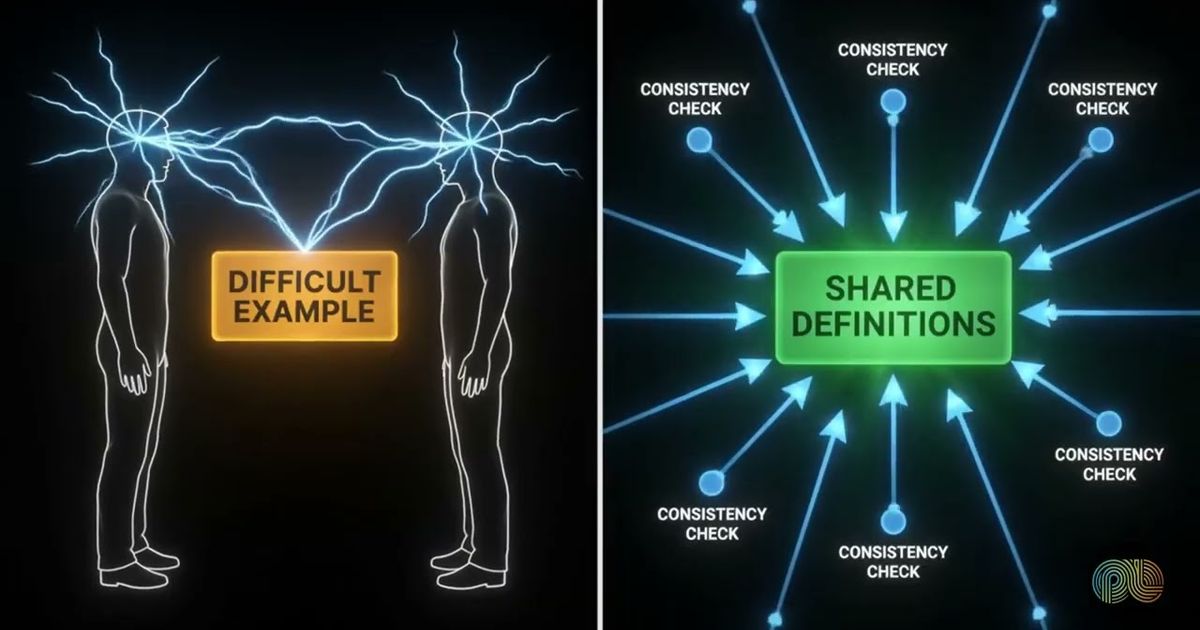
- What to do with the murky cases, and how to settle disagreements.
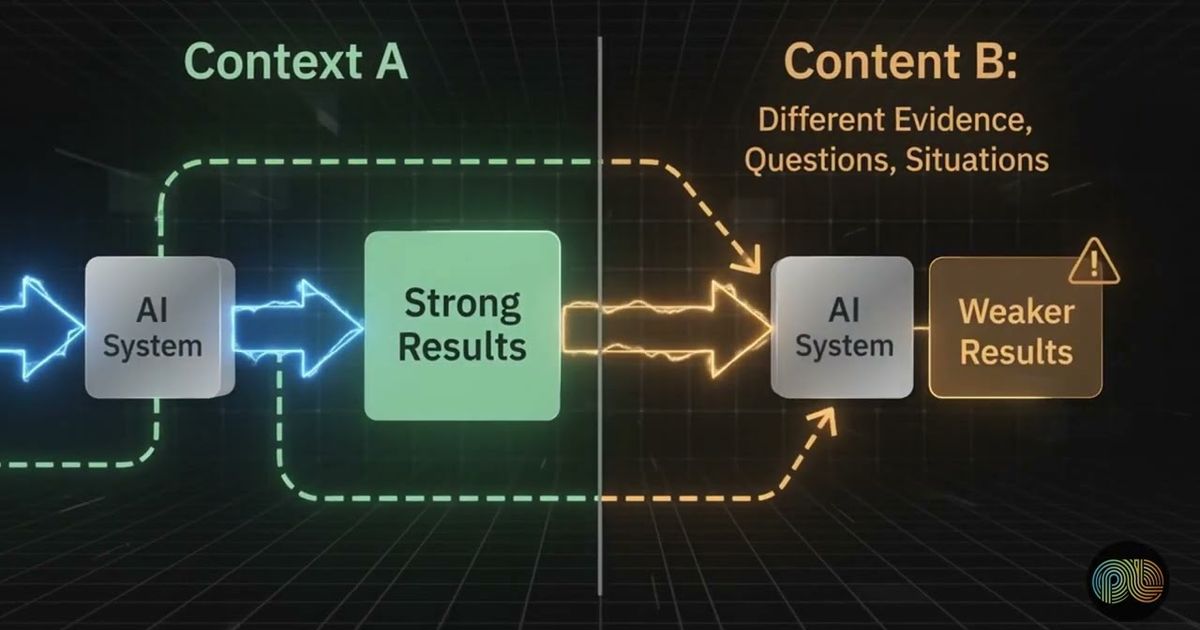
For AI reliability evaluation there's one more job: helping reviewers tell an occasional right answer from dependable behavior. A system is reliable when its performance stays predictable under repeated use and it responds sensibly to uncertainty, missing information and unfamiliar situations.
Clear guidance doesn't take human judgment out of the loop. It makes the judgment visible and comparable, which counts most when several reviewers, research teams or evaluation rounds all feed labels into the same benchmark.
Why must AI reliability be monitored over time?
Imagine a system that passes your first evaluation and then gets a new prompt, a different retrieval strategy and a model update. Is it still reliable? A one-time test can't say.
Prompts, workflows, retrieval strategies, datasets and the underlying models all affect performance, so measurement has to be continuous. In practice that means comparing current outputs with your benchmarks and review criteria. Slow quality shifts get easier to catch before they touch a research decision or an operational process.
Log the context of every evaluation, too. A score is close to useless if nobody knows which model, prompt, data source, retrieval method, rubric version or workflow produced it. Versioning gives you the lineage to investigate changes and reproduce findings.
People drift as well. Reviewers can slowly start reading labels differently, especially once new kinds of cases turn up. Watching for annotation drift helps you work out whether shifting results come from the AI system, the evaluation process or both.
How do annotation guidelines measure AI reliability?
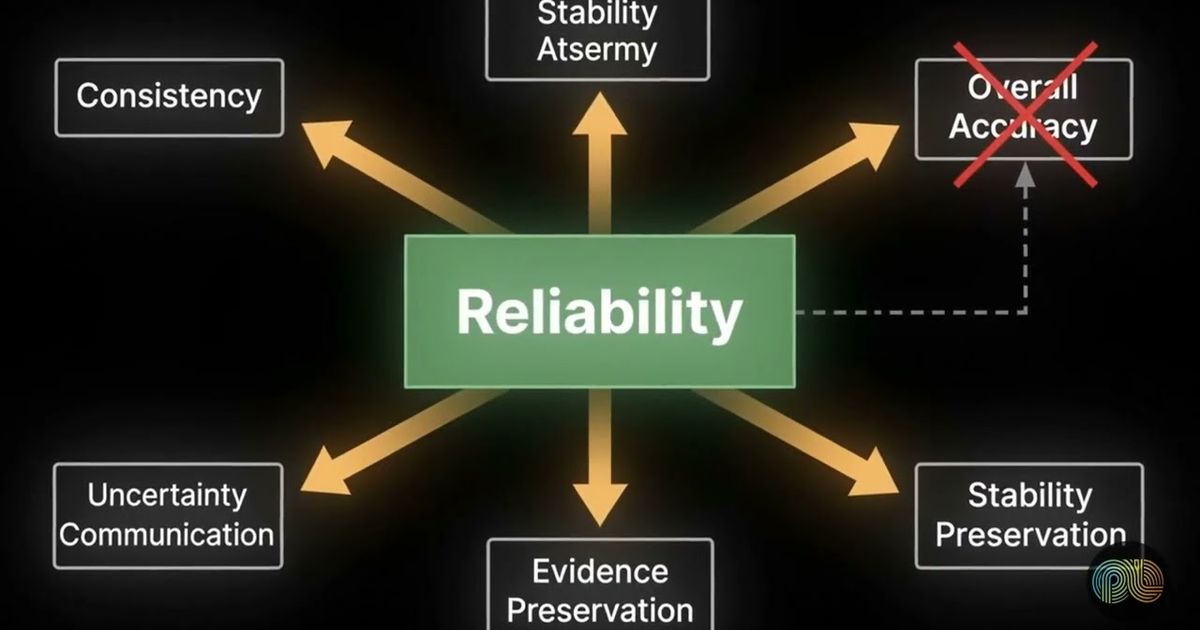
By pushing reviewers past overall accuracy. Instead of asking only "is it right?", they look at how the system behaves across comparable inputs, shifting evidence and realistic operating conditions.
Evaluation annotation usually covers four dimensions:
- Output consistency: do similar inputs get compatible conclusions, or does the answer wobble for no good reason?
- Reasoning stability: does the system apply similar logic to similar tasks, or do its standards drift?
- Evidence preservation: when it summarizes, does it keep the qualifications, findings and contradictions that mattered in the source?
- Uncertainty communication: does it limit its claims when evidence is incomplete, conflicting or unfamiliar?
A structured rubric can set rating levels for each dimension and ask reviewers to note their supporting evidence. Benchmark datasets give you repeatable cases to compare against. Human review catches the context-sensitive failures that automated measures tend to miss.
Counting correct responses is the easy part. What you're after is a defensible picture of dependable behavior. If you're evaluating generated findings, a broader AI output verification process helps check claims against source evidence.

How should teams maintain annotation guidelines as conditions change?
Treat them like any operational asset: review them regularly and revise them. We'd go as far as saying no AI system stays reliable forever, because research domains, organizational knowledge, user expectations and operating conditions all keep moving.
A practical cycle runs in four beats. Evaluate, by running benchmark datasets and structured rubrics on realistic tasks. Review, with qualified reviewers looking at failures, disagreements and uncertain cases. Monitor performance as prompts, evidence sources, workflows and models change. Then improve: refine the system, the benchmark or the guideline, and keep the version history.
A new situation the rules don't cover? Add examples or sharpen the decision criteria; don't squeeze in inconsistent labels. And write down every change, so old results stay interpretable.
Benchmarks, structured rubrics, human review and ongoing monitoring together give a much better view of long-term performance than any one of them. Reliability is something you maintain through disciplined measurement, open review and steady improvement. A few isolated wins can't establish it.

How PulseLake helps
PulseLake keeps research objectives, methodology, evidence and decisions in a persistent study context with governance and lineage. Teams can use specialized agents alongside researcher approvals, automate QA and recurring evaluation workflows, and search evidence across studies with provenance. To talk about how this could support reliable AI-enabled research, talk to our team.
Frequently asked questions
What should an AI reliability annotation rubric include?
The output being evaluated, the rating scale and observable criteria for each score. Cover correctness, consistency across similar tasks, reasoning stability, preservation of important evidence and how uncertainty is communicated. Add examples and instructions for ambiguous cases so reviewers apply it the same way.
Can accuracy alone show that an AI system is reliable?
No, it only gets you part of the way. Accuracy tells you whether outputs are right for a given set of cases; reliability is about dependable behavior across repeated use and realistic variation. A system can post acceptable overall accuracy and still be inconsistent, lose important evidence when summarizing or sound overconfident when information is incomplete.
How often should annotation guidelines be reviewed?
Whenever prompts, models, retrieval methods, datasets, workflows or intended uses change. Also whenever reviewers keep disagreeing or keep hitting cases the current rules don't cover. Regular monitoring picks up gradual shifts you'd miss by waiting for a major evaluation cycle.
How should teams handle disagreements between annotators?
Lay each judgment next to the written criteria and look at the evidence behind each label. An agreed adjudication process settles the case in front of you; repeated disagreements may mean the definitions or examples need work. Document the decision and any guideline change so later evaluations stay comparable.