Continuous AI Evaluation Explained
Continuous AI evaluation monitors accuracy, reliability, safety, usefulness, and alignment so AI systems remain dependable as models and contexts change.

Continuous AI evaluation is the ongoing assessment of an artificial intelligence system's accuracy, reliability, safety, usefulness and alignment with its intended goals after deployment. It checks whether the system still works under real-world conditions as models, data, users and research contexts change, instead of treating pre-release testing as enough.
Passing a test in March says little about September.
In research, AI outputs shape how evidence is interpreted, organized and turned into decisions. Regular evaluation lets teams catch declining performance, understand limits, keep trust and tighten safeguards before weak outputs settle into organizational knowledge.
What is continuous AI evaluation?
A repeatable process for measuring AI performance across the system's whole operational life. A one-time release check tells you the system worked once; this tells you whether performance is still acceptable as conditions shift.
Every evaluation program does roughly the same four things. It sets the expected quality, tests outputs against it, records failure patterns, and uses what turns up to improve the system or the workflow around it. Runs can happen on a schedule, after a model or prompt change, when new data arrives, or when users start applying the system to a different research context.
The goal isn't proving the AI works everywhere. It's mapping where the system is reliable, where confidence should be limited and what oversight each use case needs.
What should continuous AI evaluation measure?
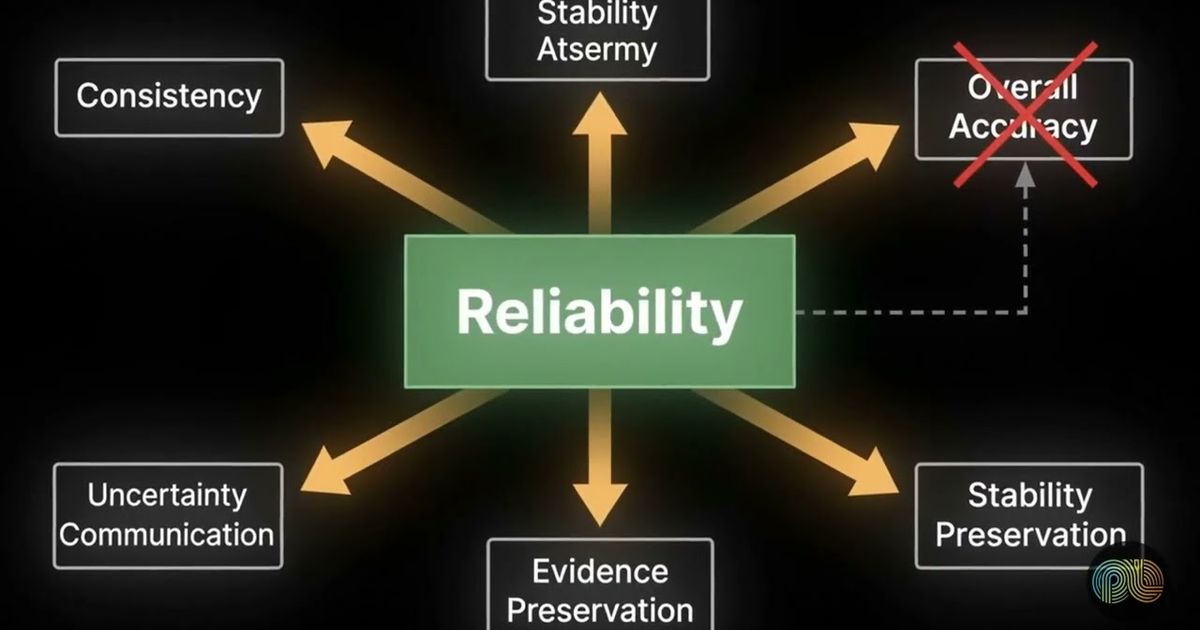
Accuracy, reliability, safety, usefulness and alignment with intended goals. No single metric tells you whether an output supports sound research decisions, so combine technical measures with human review.
Technical evaluation can look at consistency, performance against reference answers and changes between system versions. Human reviewers judge relevance, practical usefulness, appropriate interpretation and whether the output reflects the evidence available.
Frame the dimensions as questions your reviewers can answer:
- Accuracy: does the output represent the underlying data or evidence correctly?
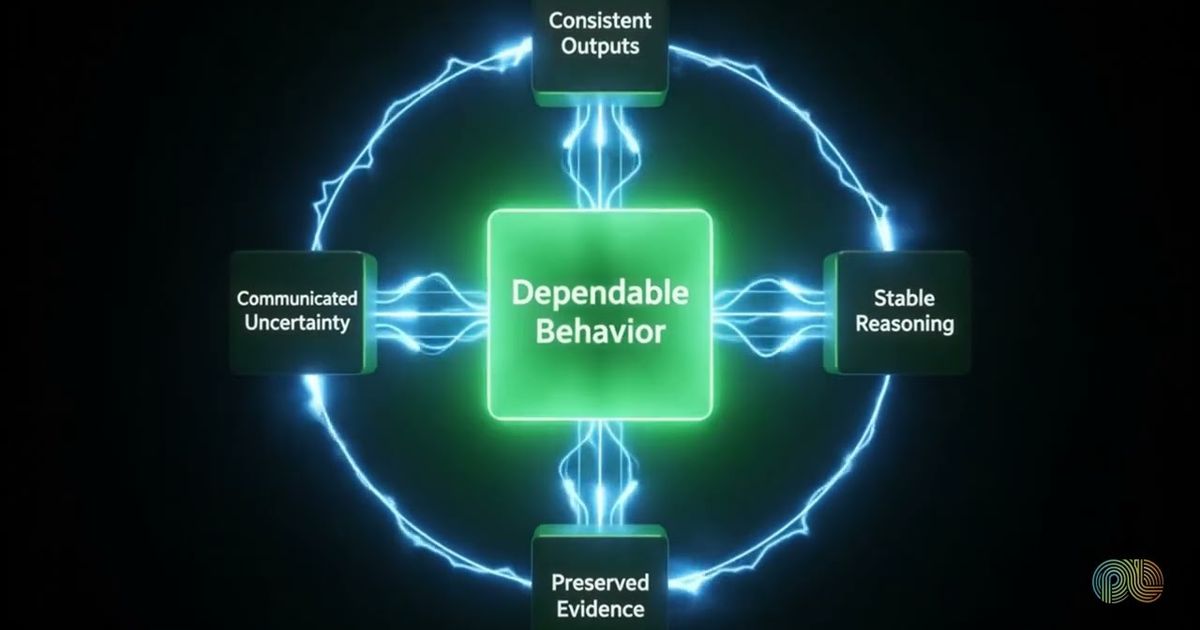
- Reliability: does the system behave consistently across comparable cases?
- Safety: does it stay inside defined safeguards and avoid unacceptable behavior?
- Usefulness: does it help a researcher finish the intended task?
Alignment asks whether the result serves the stated research goal rather than an adjacent or assumed one. Context fit asks whether performance holds across different questions, evidence types and organizational settings.
Write these down as explicit quality criteria. Clear criteria make reviews more consistent, and they help you tell model problems apart from weak instructions, missing evidence or unsuitable workflows. That distinction saves a lot of wasted effort.

Why does research require ongoing AI evaluation?
Because AI-generated outputs feed straight into how knowledge gets created and interpreted. A system that does well on one evidence type or research question may get less reliable once the context moves.
Change arrives from several directions. Models, prompts, tools or retrieval processes get updated. New data differs from the material in earlier evaluations. User behavior and expectations evolve, and teams apply the system to new evidence types or organizational situations.
None of these has to cause an obvious technical failure, which is what makes them tricky. An answer can read fluently while it overlooks evidence, weakens an interpretation or borrows an unsuitable pattern from another context. So evaluation has to look at the whole research task; a valid-looking response isn't the bar.
That broader view supports AI output verification, where claims and interpretations are checked against the evidence and the intended research purpose.
How do you build a continuous AI evaluation process?
You need clear criteria, representative test cases, a mix of evaluation methods and a feedback loop for responsible refinement. Done well, you see overall performance and also the specific conditions where the system fails.
- Define quality criteria that tie accuracy, reliability, safety, usefulness and alignment to the system's intended research role.
- Assemble representative cases across evidence types, questions and contexts, plus historical examples of successful and unsuccessful outputs.
- Evaluate from more than one angle: technical checks where things are measurable, then qualified human reviewers for relevance, interpretation and decision usefulness.
- Refine and repeat. Record findings, adjust prompts, models, safeguards or workflows, and rerun the evaluation after meaningful changes.
Don't skip failure analysis. Track unsupported conclusions, omitted information, inconsistent behavior and performance differences across contexts. A structured AI error taxonomy turns isolated mistakes into recognizable patterns you can monitor over time.
Historical examples give you a stable baseline. Rerun the successful and unsuccessful cases after a change and you can see whether the system is improving, degrading or just trading one kind of error for another. That loop is what ties measurement, learning and responsible refinement together.

How PulseLake helps
PulseLake keeps objectives, methodology, evidence, analysis and decisions in a persistent study context, so AI-supported work is easier to review against what it was meant to do. Its research knowledge graph, evidence provenance, governance, lineage and researcher approval points support traceable evaluation, and reusable workflows can structure QA and recurring checks. To talk about how this could fit your research operations, talk to our team.
Frequently asked questions
How often should an AI system be evaluated after deployment?
It depends on the system's risk, usage and rate of change. Evaluate after material changes to models, prompts, data, tools or workflows, and on a recurring schedule too. New use cases or unexpected output patterns should trigger an evaluation as well; don't wait for the next planned review.
Can automated metrics replace human evaluation of research AI?
Not fully, at least when AI supports research interpretation or decision-making. Technical checks can measure consistency and performance against known references, but people have to assess relevance, usefulness, contextual fit and whether conclusions fairly represent the evidence. Strong programs use both.
What belongs in a representative AI evaluation test set?
Cases that reflect the evidence types, research questions, user requests and organizational contexts the AI will actually meet. Include routine cases, difficult edge cases, historical successes and known failures. Version the set so you can compare performance consistently as the system changes.
Does continuous evaluation always require retraining the model?
Usually the fix lies elsewhere. A failure may come from unclear instructions, missing context, weak retrieval, unsuitable workflows or too little human review. Depending on the cause, the right response could be revising prompts, improving evidence access, adding safeguards, changing approvals or narrowing the use case.