AI Reliability: How to Measure It
AI reliability measures whether systems deliver consistent, dependable results across changing tasks, data, evidence, and operating conditions.

AI reliability is how consistently an AI system gives dependable results when questions, evidence, datasets, tasks and operating conditions vary the way they do in real work. A reliable system behaves predictably over repeated use and keeps the important information intact. When evidence is incomplete, uncertainty is high or the situation is new, it responds sensibly.
"Did it get this one right?" is a tiny question. A demo can answer it. Your research workflows can't live on it.
What is AI reliability?
Try an experiment: ask the system the same thing three different ways and put the answers side by side.
That's AI reliability in miniature: behavior you can depend on when conditions wobble the way they really do. It's about repetition, so one task done well (or one slick demo) tells you very little.
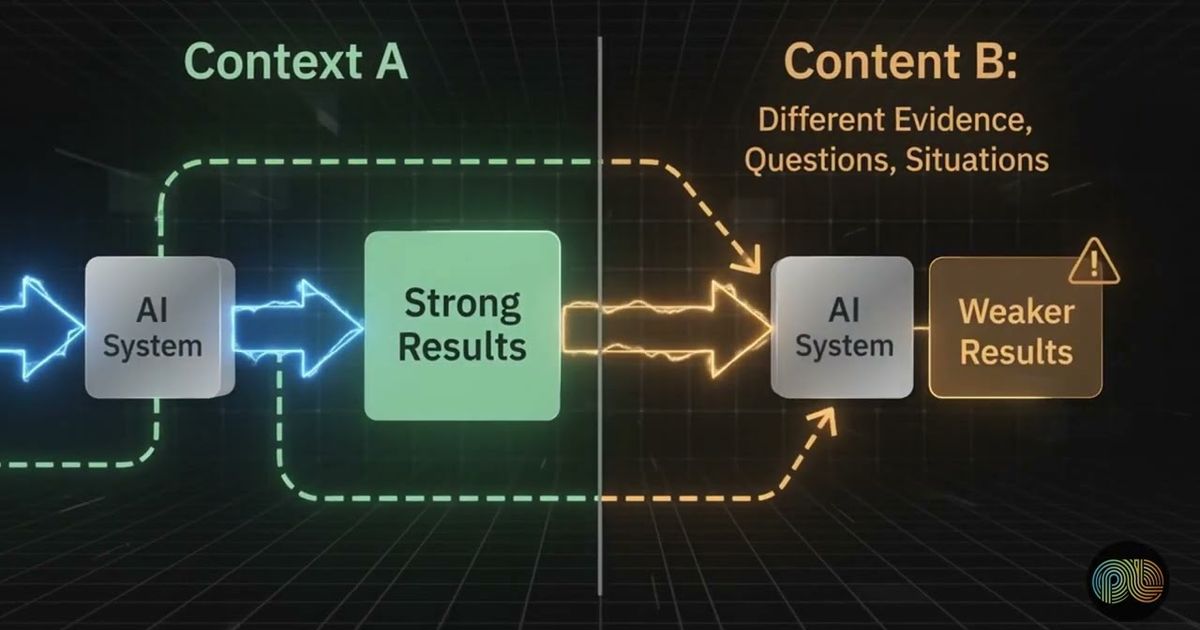
Plenty of systems nail a question, then fall over when you reword it, when the evidence has holes or when the task drifts into unfamiliar territory. A reliable one stays inside acceptable limits through all of that, and if it can't back a confident answer, it says so.
Identical wording isn't the test. A generative system can phrase one well-supported conclusion several ways, and that's fine. The substance has to hold steady: the claims, the handling of evidence, the reasoning, the way uncertainty gets described. Steady enough for the research use you have in mind.
Which makes reliability a question about the job. A brainstorming tool can roam further than one that summarizes evidence for a big decision. So settle what dependable means for this task, this evidence, these users and the cost of being wrong.
Why must AI reliability be monitored over time?
Because last quarter's system isn't quite today's. Prompts change. Workflows, retrieval strategies, datasets and the underlying models change too, and something that passed an earlier evaluation can stop being dependable once conditions shift.
Some of that is deliberate: you edit a prompt, you swap a model. Some of it creeps in. The organization's knowledge moves on, users start asking new kinds of questions, the research wanders into areas the original test set never touched, and even what people consider an acceptable answer shifts.
Ongoing monitoring spots slow slides in quality before they bend a research decision or an operational process. You rerun the relevant tests, study the failures and compare performance with your criteria across time. Don't assume reliability lasts; watch for the moment behavior slips outside the limits you set.
It works best inside continuous AI evaluation, with tests tied to real system changes and real use cases. Whenever a prompt, retrieval method or model changes, check that you didn't improve one part of performance while quietly damaging another.
How should AI reliability be measured?
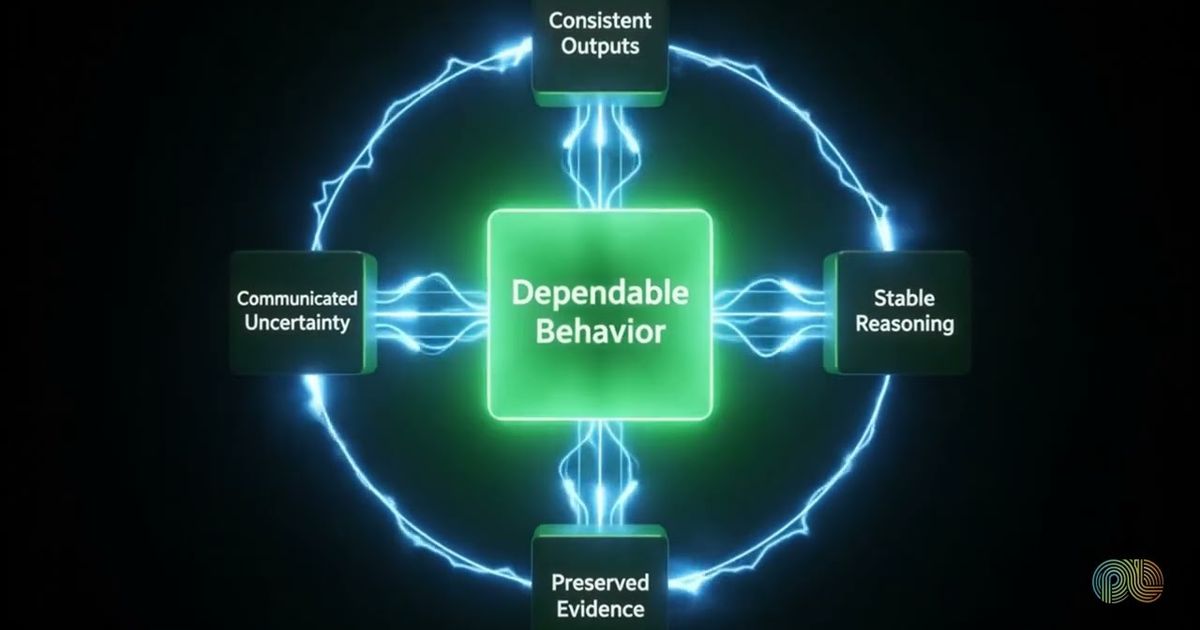
Not with accuracy alone. We'd use several checks that cover for each other, organized around four questions:
- Are the outputs consistent? Similar inputs should reach compatible conclusions, even in different words.
- Is the reasoning stable? Comparable tasks shouldn't set off unexplained jumps in logic, assumptions or interpretation.
- Is the evidence preserved? Summaries should keep the important caveats, contradictions and context.
- Is uncertainty communicated? Confidence should fall when information is incomplete, conflicting or unfamiliar.
What should you look for in AI reliability and uncertainty? The last two. Weak systems tend to give themselves away there.
None of this makes accuracy irrelevant. It tells you one answer matched the expected result in one test. Reliability asks whether good behavior survives repeated runs and realistic variation, so a benchmark needs different question forms, evidence conditions, datasets and task types. Feed a model only tidy, ideal examples and nearly any model looks great.
To make those expectations formal, use a benchmark dataset design process plus structured evaluation rubrics. A rubric writes down the criteria, helps human reviewers apply them the same way and keeps severe failures separate from small differences in presentation.

How does AI model reliability become an operational capability?
By building evaluation into how the system is developed, reviewed and maintained. Five parts carry it: benchmark datasets, structured rubrics, human judgment, continuous monitoring and steady improvement.
Benchmark datasets give you repeatable cases across the tasks and conditions you care about. Rubrics define acceptable performance, including how the system should keep evidence intact and express uncertainty. Human reviewers catch what automated checks miss: a quiet omission, confidence it hasn't earned, an interpretation that changes every run.
Monitoring ties it to daily operation. A failure or a quality slide shows up, you trace the conditions, fix the system or workflow and test again. Open review lets you record what changed, what evidence supported the change and which limits remain.
Our honest view: no AI system stays reliable just because it did well once. New domains, shifting organizational knowledge, changing user expectations and technical updates keep handing it conditions it hasn't met. Steady measurement is what turns reliable AI from a hope pinned on one good demo into a research capability you look after.

How PulseLake helps
PulseLake keeps objectives, methodology, evidence and decisions in a persistent study context, so researchers can check AI-assisted work against its source material. Its research intelligence capabilities provide evidence provenance. Specialized agents and workflow automation can support repeatable analysis, QA, approvals and monitoring, with researchers keeping the judgment. To talk through how this could support reliable research workflows, talk to our team.
Frequently asked questions
Can an accurate AI system still be unreliable?
Yes. It can get a test question right and still act inconsistently once the wording, evidence, dataset or operating conditions change. Accuracy covers correctness on the cases you tested. Reliability also covers repeat performance, steady interpretation, evidence kept intact and fitting uncertainty, so one success is thin proof of dependable behavior.
How often should teams reevaluate AI reliability?
Continuously, and again whenever something meaningful changes: prompts, workflows, retrieval strategies, datasets or the underlying model. Update the evaluations when the system moves into a new research domain or user expectations shift. How often depends on how often the system changes and how much rides on what it produces.
What should human reviewers examine in AI reliability tests?
Whether conclusions hold across comparable cases, whether reasoning and assumptions shift without explanation and whether summaries keep the important evidence and caveats. They should also ask if the confidence matches the information available. People are especially good at catching quiet omissions, misleading framing, contradictions and answers that sound right without proper support.