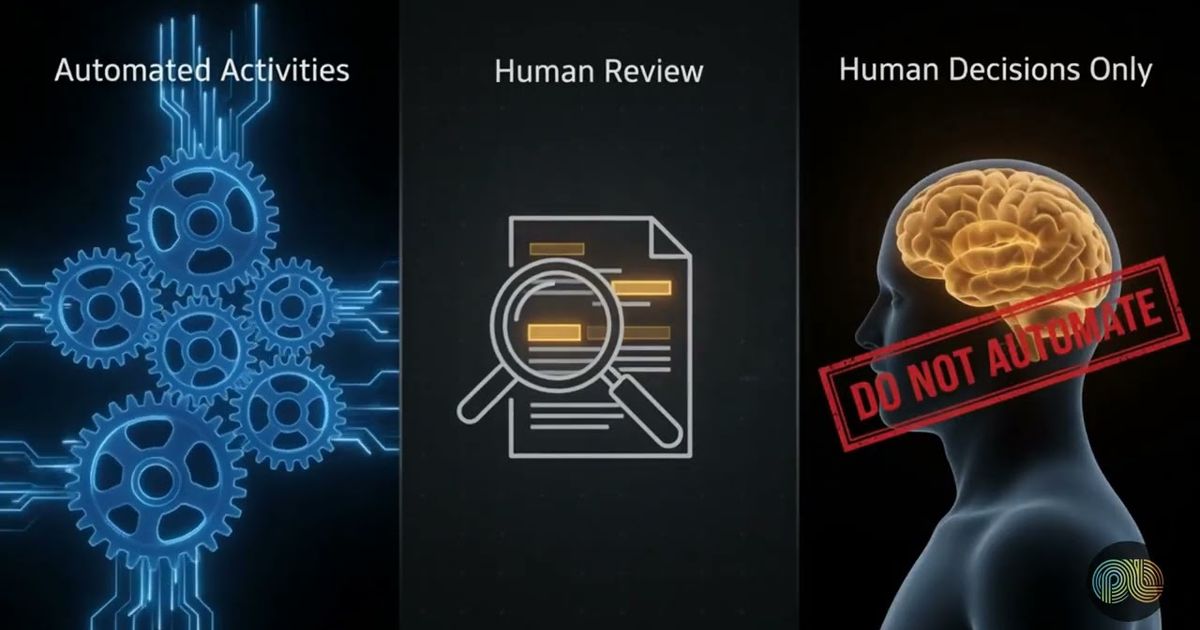
Research Governance Without Bureaucracy
Research governance sets lightweight standards for quality, ethics, data access and documentation so teams can scale reliable research without delays.

Most researchers have met governance as a queue. It doesn't have to be one. Research governance without bureaucracy is a set of shared standards for planning, conducting, documenting, reviewing and sharing research responsibly. Done well, it protects participants and sensitive information and improves quality, consistency and trust: a few essential guardrails, controls in proportion to risk, and room for researchers to adapt methods.
That balance gets harder as research spreads across teams. Too little governance and you get inconsistency and uncertainty. Too much and useful work stalls without getting any better.
Governance without bureaucracy gives people a clear foundation for responsible decisions, then gets out of the way.
How can research governance stay lightweight?
Match controls to the risk and complexity of the research. Skip the single rigid process for every study: set minimum standards and add safeguards only where they're needed.
Our favorite distinction here is guardrails versus gates. Guardrails help researchers make sound decisions on their own. Gates stop work until someone grants authorization. Some gates are necessary. Put them everywhere, though, and you create queues and teach teams to see governance as an obstacle when it could be practical guidance.
A practical approach has four parts:
- Set principles. Baseline expectations for ethics, data handling, documentation and quality.
- Match review to risk. A simple path for routine, low-risk work; escalation for sensitive or consequential studies.
- Provide guidance. Templates, checklists, examples and decision rules, so researchers can act without waiting for permission.
- Improve the system. Remove controls that don't improve quality, protect participants or reduce meaningful risk.

What is research governance?
It's the framework an organization uses to keep research ethical, reliable, consistent and appropriately accessible. It sets expectations for how studies are planned, conducted, documented, evaluated and shared. It doesn't dictate every methodological choice.
What should a useful framework make clear? What evidence, documentation and approvals a study needs. How researchers protect participants and explain the research purpose. Where data can be stored, who can access it and how it may be reused. And which quality checks happen before findings inform decisions.
Studies differ, and so will their methods and levels of review. They can still share principles for ethics, evidence, documentation and data stewardship, and those foundations matter most when you're scaling research without sacrificing quality.
What standards should research governance include?
Six: participant protection, transparency, data handling, access management, documentation and quality review. Each one should define the outcome you need and leave room for methods that suit the study.
Participant protection covers informed participation, respectful treatment, thinking through foreseeable risks and using what people share responsibly. Transparency means communicating the research purpose and how information will be handled, in a way that fits the study.
On data, standards cover storage, retention, sharing and permissions. Access management should let the right people use research information while keeping sensitive data from inappropriate exposure. Neither unrestricted access nor complete isolation suits every project.
Documentation has one job: make a study understandable to people outside the original team. Useful records include the objectives, methodology, participant or sample context, analytical choices, limitations, evidence and resulting decisions. Consistent records also support organizing research into reusable knowledge.
Quality review asks whether the methods and claims are fit for purpose. How deep it goes should depend on the study's risks, complexity and intended use.
How does governance improve collaboration and scale?
Teams that share expectations for how research is created, evaluated, stored and used read each other's work faster. Evidence that follows familiar standards and carries enough context for interpretation is simply easier to assess.
Trust doesn't need identical methods. It needs visible reasoning, enough documentation, responsible data practices and a common understanding of quality.
Scale comes from the same foundations. New team members can follow established guidance. Recurring studies can use repeatable workflows, and earlier findings can be evaluated for reuse. Teams speed up because they stop reinventing basic ethical, access, documentation and review decisions on every project. Where research automation fits, it works best on top of that shared base.
What research governance mistakes should you avoid?
Confusing governance with maximum control. That's the central one. Good governance supports professional judgment; it doesn't replace it with approvals, exhaustive rules or uniform processes.
Watch for these:
- One process for every study, whatever its risk or complexity.
- Empty paperwork. Require documentation only when it supports evaluation, reuse, accountability or responsible data handling.
- Poorly configured access rules that block authorized use. Keep permissions appropriate to the data, consent and assigned tasks, following least privilege.
- Ethics as a final check, when participant welfare and transparency belong in the first planning conversation.
- Approvals mistaken for quality: more review stages don't automatically produce reliable findings.
Then there's the framework that never changes. Revise standards that add friction without reducing risk or improving outcomes. Decision rights matter too, because even a short policy turns into a burden when nobody knows who owns it or reviewers apply different criteria.

How PulseLake helps
PulseLake keeps objectives, methodology, evidence and decisions in one persistent study context, supported by governance and lineage. Its research knowledge graph and evidence provenance show where findings came from, and workflow automation can make approvals and QA repeatable. To see how this could support your research operating model, talk to our team.
Frequently asked questions
Who should own research governance in an organization?
Make ownership explicit and shared, not concentrated in one control function. Research leaders can maintain methodological standards, while privacy, legal, security and operational stakeholders contribute requirements in their areas. Researchers also need a way to challenge unclear rules and suggest practical improvements.
Does every research study need formal approval?
No. Routine, low-risk work can often go ahead under established standards, templates and decision rules. Formal approval makes more sense when a study involves sensitive information, meaningful participant risk, unfamiliar methods, regulatory obligations or decisions with substantial consequences.
How can you tell when research governance is too bureaucratic?
Watch for repeated delays to low-risk work, duplicated checks, documentation nobody uses and unclear decision ownership. Every requirement should tie back clearly to participant protection, ethics, data responsibility, evidence quality, access or reuse. If one doesn't, question it.
How often should research governance standards be reviewed?
Periodically, and whenever new methods, data types, risks or recurring delays expose gaps. Constant policy rewrites aren't the aim. You want a practical framework that reflects current research, and you want to drop requirements that no longer improve quality or responsible practice.