Research Governance at Scale: A Practical Framework
Research governance at scale creates shared standards for ethical, reliable, traceable work while preserving team flexibility and professional judgment.

Research governance at scale is the system of policies, standards, responsibilities, and decision processes that guides how research is created, managed, shared, and reused across an organization. It keeps growing bodies of evidence ethical, reliable, traceable, and aligned with organizational needs without eliminating team autonomy or professional judgment.
Governance matters because inconsistent methods, storage practices, and quality standards make findings harder to trust and reuse as research activity expands. Shared foundations allow teams to work independently while contributing to a coherent research ecosystem. The short video above walks through the core ideas.
What is research governance at scale?
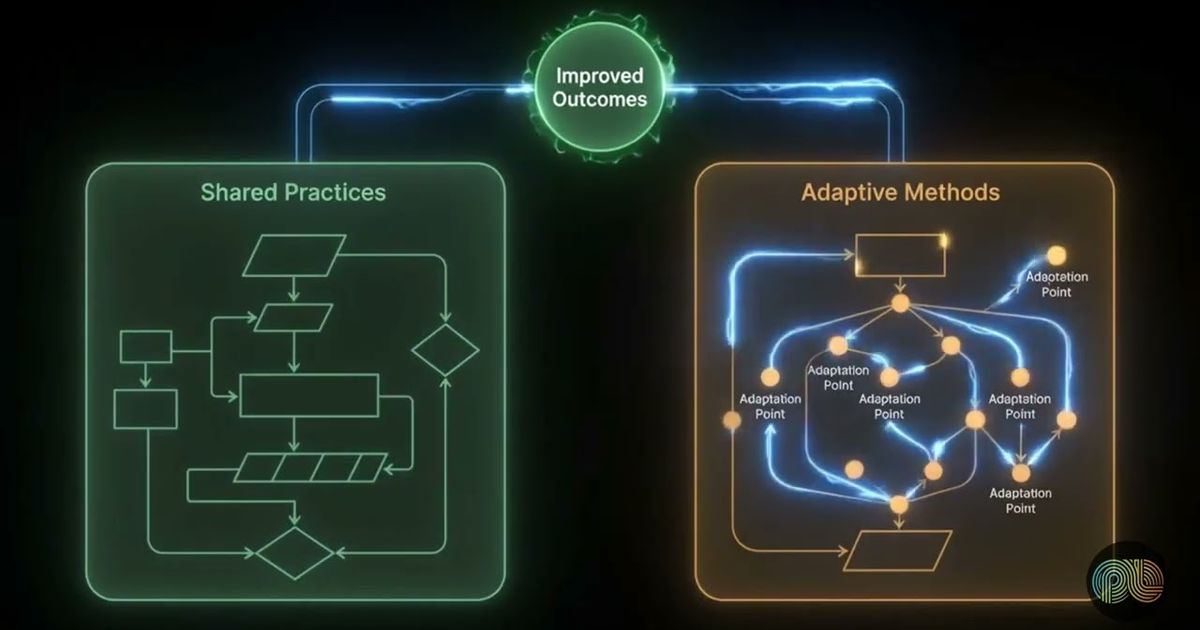
Research governance at scale coordinates research through common expectations rather than centralized control over every decision. It defines the boundaries within which researchers can apply their expertise and choose methods appropriate to each question.
A governance system typically establishes shared foundations for:
- Research quality and methodological rigor.
- Ethical conduct and participant privacy.
- Documentation and evidence management.
- Ownership, review, and approval responsibilities.
- Storage, access, sharing, and reuse.
- Traceability from conclusions back to supporting evidence.
These foundations should create consistency where consistency matters while leaving room for professional judgment. A qualitative interview program and a quantitative survey may require different methods, but both can follow the same expectations for documentation, privacy, evidence lineage, and review.
Governance also supports the transition from research reports to research systems. Instead of treating each study as an isolated deliverable, the organization manages research as connected knowledge that can inform future work.

Why does research governance become harder as organizations grow?
Growth increases the number of teams, methods, repositories, tools, and quality standards involved in research. Without coordination, evidence becomes fragmented and stakeholders cannot easily determine where a finding came from, whether it remains current, or how confidently they should use it.
Common problems include teams documenting similar studies differently, storing evidence in disconnected locations, or applying inconsistent review criteria. These differences make comparison and reuse difficult even when individual studies are sound.
Governance addresses this problem by making evidence understandable beyond the team that created it. Clear metadata, ownership, documentation, and lineage help stakeholders assess the origin and limits of a finding. This is closely related to auditability in research, which depends on preserving the path from a claim to its methods and evidence.
Trust is the practical outcome. Decision-makers gain greater confidence when they can see that appropriate methods were used, information was stored responsibly, and conclusions remain connected to supporting evidence.
How should you build a scalable research governance framework?
A scalable framework should begin with essential standards and become more sophisticated as research maturity increases. The goal is not to design every possible rule at once, but to establish clear foundations that teams can apply consistently.
Start with four areas:
- Set shared standards. Define baseline expectations for quality, ethics, privacy, documentation, storage, and evidence handling.
- Assign responsibilities. Clarify who owns studies, approves sensitive work, maintains records, resolves exceptions, and reviews quality.
- Preserve traceability. Connect questions, methods, source materials, analysis, findings, and decisions so others can interpret and reuse the work responsibly.
- Improve continuously. Review standards as methods, organizational needs, risks, and research technologies change.
Early governance may consist of basic templates, naming conventions, privacy requirements, and review checkpoints. More mature systems can manage relationships across studies, formal evaluation processes, reusable methods, and ongoing quality improvement.
Avoid turning governance into unnecessary bureaucracy. Requirements should be proportionate to the risk and complexity of the work, with clear paths for documenting justified exceptions. Governance succeeds when it makes good research easier to produce and reuse, not when compliance becomes the primary output.

How does AI change research governance?
AI makes governance more important because automated systems can process and distribute research knowledge quickly. If their inputs include errors, outdated information, or unsupported conclusions, those weaknesses can spread into summaries, analyses, and decisions at greater speed.
AI-assisted research workflows therefore need explicit oversight. Teams should know which evidence an output used, what assumptions shaped it, whether the source material is current, and where human approval is required. Researchers should retain responsibility for evaluating whether an output is methodologically appropriate and sufficiently supported.
Effective controls can include evidence provenance, versioned source material, defined review points, access rules, and evaluation criteria. These controls support accountability without requiring researchers to inspect every automated action manually.
Governance should also distinguish generated interpretation from verified evidence. An AI summary may help a researcher navigate a large evidence base, but it should not become authoritative merely because it is concise or produced quickly. Reliable use depends on preserving the connection between outputs, underlying evidence, and accountable human judgment.
Key takeaways
- Research governance at scale creates shared policies, standards, responsibilities, and decision processes across an organization.
- Effective governance preserves team flexibility while establishing common expectations for quality, ethics, privacy, documentation, and evidence management.
- Traceability helps stakeholders understand where findings came from and how they should be interpreted.
- AI-assisted workflows require provenance, evaluation, oversight, and clear human accountability.
- Governance should evolve from basic standards toward connected knowledge, formal evaluation, and continuous improvement.
How PulseLake helps
PulseLake keeps objectives, methodology, evidence, analysis, and decisions within a persistent study context. Its research knowledge graph, cross-study search, governance foundations, lineage, and evidence provenance help teams connect findings to their sources while specialized agents operate with researcher judgment and approvals. To discuss how these capabilities can support a governed research system, talk to our team.
Frequently asked questions
Can a small research team benefit from governance before it scales?
Yes. A small team can establish lightweight standards for documentation, privacy, evidence storage, ownership, and review before inconsistent practices become difficult to change. Early governance does not require a large rulebook; a few clear expectations can improve continuity, make onboarding easier, and prepare research for responsible reuse as the organization grows.
Who should own research governance in an organization?
Ownership should be explicit, but governance usually works best as a shared responsibility. A research operations or insights leader may maintain standards, while study owners, privacy specialists, method experts, and organizational leaders handle defined decisions and approvals. The model should identify who sets policies, who applies them, who approves exceptions, and who reviews whether the framework remains effective.
How often should research governance standards be reviewed?
Organizations should review standards whenever methods, risks, regulations, technologies, or operating needs change, as well as through a regular improvement process. The appropriate cadence depends on the volume and sensitivity of the research. Reviews should examine whether requirements remain useful, whether teams follow them consistently, and whether new evidence or AI workflows introduce gaps.