 PulseLake
AI Research Governance: Principles and Practices
AI research governance defines how teams use, evaluate, and oversee AI so research stays accurate, transparent, privacy-aware, and accountable.

AI research governance is the system of policies, practices, evaluation methods, and assigned responsibilities that controls how artificial intelligence is used throughout research. It defines acceptable uses, requires appropriate human oversight, tests output quality, protects privacy, documents AI involvement, and keeps AI-supported conclusions aligned with evidence and organizational standards.
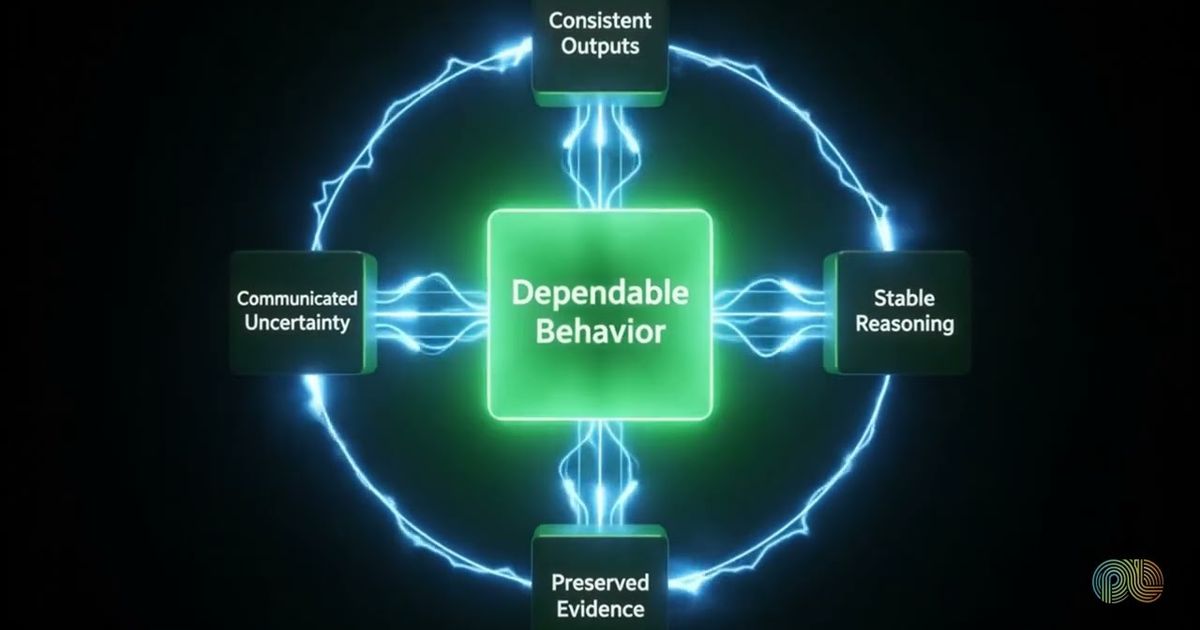
These controls matter because speed without oversight can amplify errors, hide weak evidence, expose sensitive information, or blur responsibility for decisions. A clear framework lets teams experiment while preserving reliability, explainability, privacy, and accountability. The two-minute video above walks through the core ideas.
What does AI research governance include?
AI research governance covers the rules, controls, and responsibilities applied whenever AI contributes to research. It extends across research design, evidence collection, analysis, interpretation, reporting, and decision support.
A practical governance framework should address four areas:
- Permitted use: Teams define where AI may assist, where human review is mandatory, and where automation is inappropriate.
- Performance evaluation: Researchers test outputs for accuracy, consistency, evidentiary grounding, and fitness for purpose.
- Transparency: Records show when AI was used, what information influenced it, and how people reviewed its output.
- Accountability: Named roles own approvals, exceptions, monitoring, and responses when something goes wrong.
Governance also needs privacy and data-handling rules appropriate to the research context. These controls should protect participants, confidential organizational information, and any sensitive material used by an AI system. Effective research governance without bureaucracy makes these expectations clear without turning every low-risk task into a lengthy approval process.
How should organizations set boundaries for AI?
Organizations should classify research activities by risk and decide the appropriate balance between automation and human judgment. The more consequential, sensitive, or difficult to verify an activity is, the stronger the required oversight should be.
AI may support activities such as drafting, organizing information, identifying patterns, or producing preliminary analyses. Researchers should still verify whether the output is methodologically sound and supported by the available evidence.
Human review should be required when an output affects research conclusions, participant treatment, privacy, or important organizational decisions. Final accountability must remain with identifiable people rather than being delegated entirely to an automated system.
Useful boundaries include:
- Which tasks AI may perform independently or only as a draft.
- Which outputs require researcher review and formal approval.
- Which data AI systems may access and how that access is controlled.
- Which decisions must never be made solely by AI.
These boundaries create room for experimentation while ensuring that speed does not replace judgment.

How should teams evaluate and explain AI outputs?
Teams should evaluate AI outputs against their intended purpose rather than treating fluency as proof of quality. Review should test accuracy, consistency, relevance, evidence grounding, and whether the output is suitable for the decision it may inform.
A repeatable evaluation process can follow four steps:
- Define the intended use. State the task, users, evidence requirements, and consequences of error.
- Test the output. Check factual accuracy, methodological consistency, and performance across representative cases.
- Inspect the evidence. Confirm that claims are traceable to appropriate data rather than unsupported generation.
- Document the review. Record AI involvement, limitations, reviewer decisions, and required corrections.
Transparency should make it possible for stakeholders to understand where AI contributed, what information influenced the result, and how researchers assessed it. This does not require exposing every technical detail, but it does require enough context to judge the output responsibly.
Regular evaluation is essential because performance may change as systems, prompts, data, or research contexts change. A structured approach to AI output verification helps teams detect limitations before they affect consequential decisions.

Who is responsible for AI research governance?
AI research governance requires shared participation, but responsibilities must be explicit. Researchers, technical specialists, and organizational leaders each contribute a different perspective to reliable and responsible use.
Researchers assess methodological quality, evidence, participant impact, and whether an output answers the original question. Technical specialists examine system behavior, data flows, security, and operational limitations. Leaders set acceptable risk, approve standards, assign ownership, and ensure that governance supports organizational obligations.
Governance cannot remain static as AI capabilities and research practices evolve. Teams need continuous monitoring, updated standards, documented learning, and clear processes for reporting problems or revising controls. Strong governance therefore supports innovation: it gives teams a controlled way to test new uses while preserving evidence quality, transparency, and accountable decision-making.
Key takeaways
- AI research governance defines policies, evaluation methods, and responsibilities for using AI throughout research.
- Organizations should specify which tasks can be automated, which require review, and which decisions must remain human-led.
- AI outputs should be tested for accuracy, consistency, evidence grounding, and fitness for their intended purpose.
- Transparency should show when AI contributed, what influenced the output, and how people reviewed it.
- Governance should evolve through continuous monitoring, updated standards, and collaboration across research, technical, and leadership roles.
How PulseLake helps
PulseLake keeps objectives, methods, evidence, analysis, and decisions within a persistent study context, supported by governance, lineage, and evidence provenance. Specialized AI agents can assist with research design, interviewing, analysis, reporting, and client Q&A while researchers retain judgment and approvals. Repeatable workflows can incorporate QA and approval steps, helping teams operationalize governance rather than leaving it only in policy documents; to discuss your requirements, talk to our team.
Frequently asked questions
Does every use of AI in research need the same level of review?
No. Oversight should reflect the sensitivity of the data, the difficulty of verifying the output, and the consequences of error. A low-risk drafting task may need a simple researcher check, while analysis that informs an important decision may require documented testing, evidence review, formal approval, and ongoing monitoring.
Can AI make final research decisions if its outputs are accurate?
Accuracy alone is not enough to transfer accountability to an AI system. Final decisions may also involve methodological limitations, ethical considerations, privacy obligations, organizational priorities, and consequences that the system cannot judge fully. AI can support a decision, but identifiable people should review the evidence and remain responsible for consequential conclusions.
What should an AI governance record include?
A governance record should identify the AI-supported task, its intended purpose, the information used, the output produced, and the people responsible for review. It should also document evaluation criteria, known limitations, corrections, approvals, and any exceptions to standard policy. This creates traceability without assuming that automated outputs are inherently trustworthy.