Responsible AI Research: Principles and Practices
Responsible AI research keeps AI-assisted studies fair, reliable, transparent, private, and accountable through evaluation and human oversight.

Responsible AI research is the practice of designing, evaluating, and using AI in research while addressing accuracy, fairness, accountability, privacy, transparency, and potential harm. It treats technical capability as only one part of trustworthiness and keeps human researchers responsible for interpreting evidence, managing risk, and approving conclusions.
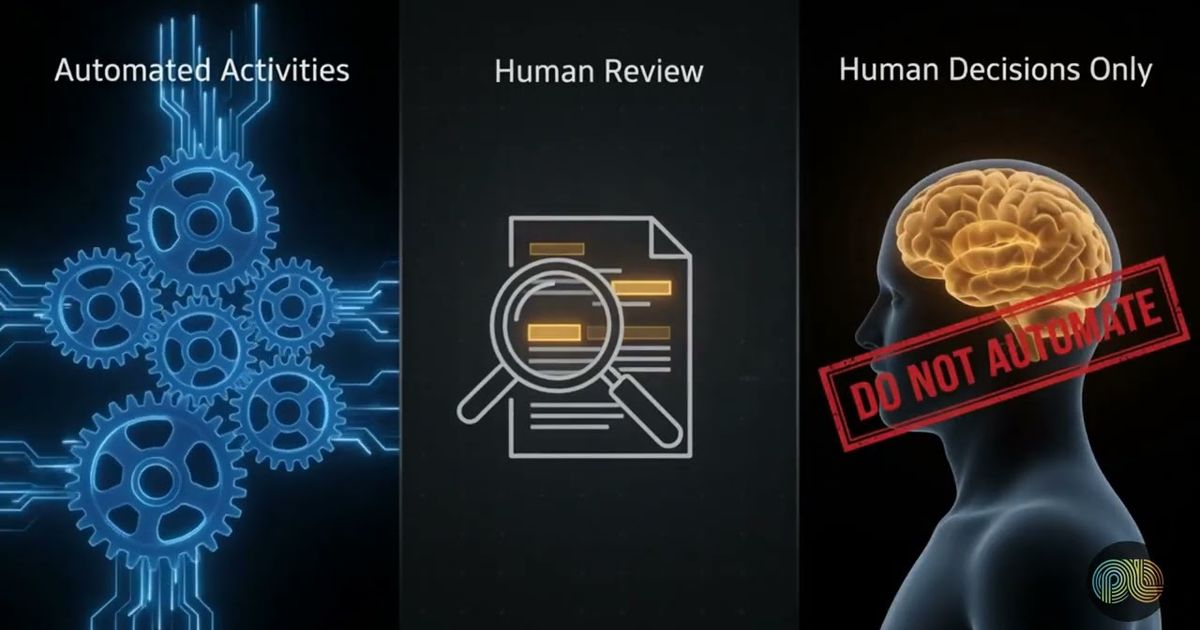
This matters because AI-assisted findings may shape products, services, policies, and experiences that affect people. Without appropriate safeguards, efficient analysis can still produce unsupported, unfair, or contextually inappropriate conclusions. The two-minute video above walks through the core ideas.
What is responsible AI research?
Responsible AI research applies ethical, methodological, and operational safeguards whenever AI helps collect information, analyze evidence, or generate insights. Its purpose is to make AI-supported research trustworthy rather than merely fast or technically impressive.
The practice commonly addresses six connected principles:
- Accuracy: Outputs should reflect the available evidence and perform adequately for the intended research task.
- Fairness: Researchers should examine whether systems or research designs disadvantage particular groups.
- Accountability: Named people must remain answerable for methods, interpretations, approvals, and resulting decisions.
- Privacy: Sensitive information requires appropriate protection throughout collection, analysis, storage, and delivery.
- Transparency: Teams should disclose where and how AI contributed to the research process.
- Impact: Researchers should consider how findings and resulting decisions could affect people beyond the immediate study.
These principles apply across the research lifecycle. They are relevant when selecting an AI system, preparing data, evaluating outputs, reporting findings, and monitoring how insights are ultimately used.
How do you conduct responsible AI research?
Teams conduct responsible AI research by building evaluation, documentation, privacy, and human review into the workflow. These controls should be defined before AI outputs influence conclusions or decisions.
A practical process includes four stages:
- Define safeguards. Clarify the research purpose, acceptable use of AI, sensitive information involved, evaluation criteria, and who can approve decisions.
- Evaluate outputs. Test whether conclusions are supported by evidence, accurate enough for the intended use, and consistent across relevant contexts. A structured approach to AI output verification helps make this repeatable.
- Document AI involvement. Record which systems performed which tasks, what inputs they received, what limitations were observed, and where people reviewed or changed outputs.
- Review consequences. Consider who could be affected by the findings, what might happen if an output is wrong, and whether additional evidence or human validation is required.
This process should match the level of risk. An AI-generated draft for internal exploration does not require the same controls as an automated analysis informing a policy, customer experience, or high-impact product decision.

What risks should researchers evaluate?
Researchers should evaluate data limitations, unsupported conclusions, inconsistent performance, privacy exposure, and downstream impact. A system can appear capable while still being unsuitable for a particular population, context, or decision.
Important risks include:
- Limited inputs: Training information or study data may omit relevant perspectives, contain errors, or reflect existing biases.
- Unsupported conclusions: AI may generate plausible interpretations that are not grounded in the underlying evidence.
- Context sensitivity: Performance can change across populations, topics, languages, data formats, or research settings.
- Sensitive information: Prompts, transcripts, datasets, and outputs may contain confidential or personally identifying material.
- Automation bias: Researchers and stakeholders may accept polished outputs without sufficient scrutiny.
- Downstream harm: A flawed finding may influence a product, service, policy, or experience that affects people.
Risk evaluation is not a one-time technical test. Teams need governance structures, evaluation methods, and an organizational culture that encourages people to question AI-supported findings. AI research governance can establish ownership, review requirements, and escalation paths without replacing methodological judgment.

What role should human researchers play?
Human researchers remain accountable for interpreting evidence, evaluating uncertainty, identifying risks, and deciding whether conclusions are appropriate. AI can support the work, but it should not become the unexamined authority behind a research decision.
AI can improve consistency, identify patterns, and help analyze complex or extensive information. Researchers contribute contextual understanding, methodological judgment, awareness of consequences, and the ability to recognize when an apparently coherent result does not fit the evidence.
This division of responsibility makes human oversight substantive rather than ceremonial. Reviewers need access to the evidence, documentation of AI involvement, and authority to challenge, revise, or reject outputs. Responsibility therefore depends on the surrounding research system as much as on the AI model itself.
Key takeaways
- Responsible AI research combines technical evaluation with fairness, privacy, transparency, accountability, and impact assessment.
- AI outputs must be checked for evidence support, limitations, and performance across relevant contexts.
- Organizations should document AI involvement and assign clear human ownership for decisions.
- Human researchers remain responsible for interpretation, risk evaluation, and final conclusions.
- The goal is to use AI for better evidence and decisions without weakening trust in the research process.
How PulseLake helps
PulseLake preserves objectives, methodology, evidence, AI involvement, and decisions in a persistent study context with governance and lineage. Specialized agents can support research design, analysis, deep research, and reporting while researchers retain judgment and approvals. To discuss how this can support responsible research workflows, talk to our team.
Frequently asked questions
Can AI-generated research findings be trustworthy?
AI-generated findings can be trustworthy when they are grounded in appropriate evidence, evaluated against clear criteria, and reviewed by qualified people. Trust should depend on the documented process and the intended use, not on how confident or polished an output sounds. Higher-impact decisions generally warrant stronger validation and oversight.
How should a team document AI involvement in a study?
The study record should identify which AI systems were used, the tasks they performed, the inputs or evidence they analyzed, and any important limitations. It should also record where human reviewers checked, revised, approved, or rejected outputs. This documentation supports transparency, accountability, and later evaluation.
Does responsible AI research prevent organizations from innovating?
Responsible AI research does not require avoiding experimentation or technological progress. It creates safeguards that help teams explore AI while recognizing uncertainty, protecting sensitive information, and testing whether outputs are fit for purpose. The aim is innovation that produces better evidence and decisions without transferring accountability away from people.