Synthetic data vs synthetic respondents: what's the difference?
Understand synthetic datasets, simulated respondents and the evidence needed before using either in market research.
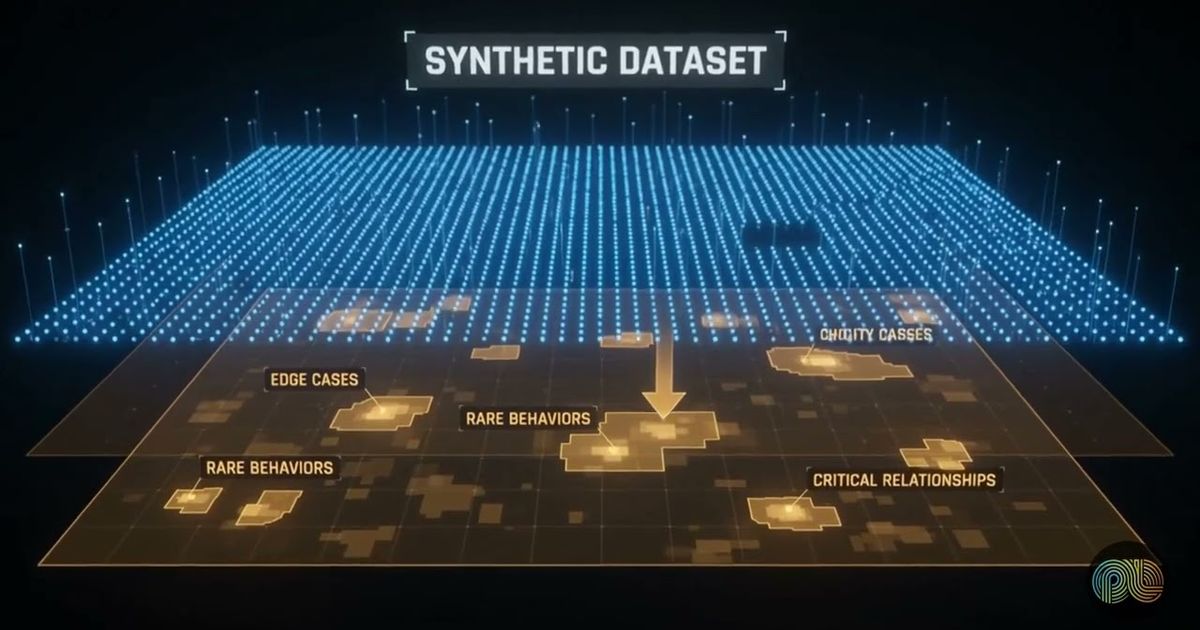
Synthetic data is generated information designed to resemble a dataset or represent a scenario. Synthetic respondents are simulated participants that answer research questions. Their answers are one kind of synthetic data, but a realistic answer is not evidence that a real person thinks, buys or behaves that way.
That distinction matters when a research brief says, “We need more responses.” More rows can help exercise an analysis pipeline. More simulated answers can help challenge a questionnaire. Neither automatically solves a shortage of evidence about the people a business wants to understand.

What are you actually generating?
Consider a fictional retailer preparing a returns survey. Its engineering team needs a test file with order IDs, purchase dates and return reasons. Its researchers want to know whether the questions are clear. Its commercial team wants an estimate of how often delivery problems lead to returns.
Those are three different jobs. Generated order records can support the first. Simulated respondents can suggest confusing questions for the second. The third requires a defensible connection to observed customers, whether the analysis uses existing transactions, fresh research or a model validated for that particular estimate.
The last row is important. Human research also needs quality controls. Treating simulated output cautiously does not make every online panel representative or every interview reliable.
When is synthetic data the right tool?
Generated data is useful when the task concerns the behaviour of a system rather than the prevalence of a belief. A team might need unusual values to test a chart, long comments to test an export or conflicting timestamps to expose a data-processing error.
For example, a test dataset could deliberately include a return date before a purchase date. The record is valuable because it should trigger a validation failure. It is not meant to estimate how often customers return products before buying them.
Research teams can use the same approach to check their reporting workflow. Generate a clearly labelled test file, run the calculations and inspect how missing values, skipped questions and multiple selections appear. Keep the file out of the live study and remove it before any stakeholder sees results.
The acceptance criterion should match the job. For software testing, it might be successful handling of edge cases. For a statistical model, it might be preservation of specified relationships on a held-out evaluation. “Looks plausible” is too weak for either purpose.
When are synthetic respondents useful?
A simulated participant is useful for rehearsing a conversation or exploring a hypothesis before spending time with people. Ask it to interpret a concept description, explain unfamiliar wording or respond under explicitly different assumptions. Its value lies in the questions it raises for the researcher.
Suppose a team asks a simulated small-business owner about a premium support package. One version assumes the owner handles support personally; another assumes an operations manager does it. Different answers may reveal that the questionnaire needs to establish responsibility before asking about willingness to pay.
That is an actionable design improvement. It still does not establish demand for the package. The assumptions created the contrast, so the next step is to learn how those responsibilities actually vary among target customers.
PulseLake is a research operating system that connects study design and evidence collection with structured analysis, interpretation and reporting. Its research frameworks organise questions and measures into dimensions and sub-dimensions. That structure gives the evidence a shared meaning and makes it usable for analysis beyond an individual response or survey.
A research operating system preserves how evidence relates to the concepts and measures being investigated. PulseLake uses frameworks, dimensions and sub-dimensions for that structure; generated records and simulated respondents still need distinct provenance and validation.
Why don't more generated responses mean more evidence?
A model can produce many different sentences while drawing on the same underlying information. Counting those sentences as independent participants hides their shared origin.
Imagine generating 500 answers from a single persona description. The count is real: there are 500 outputs. But it does not mean 500 customers were observed, and it does not justify a conventional survey margin of error on that basis. The uncertainty depends on the model, inputs, assumptions and validation design.
Repeating generation is still useful for studying stability. If the same instructions produce sharply different rankings, the researcher should know. Stability and external validity remain separate questions: a model can repeat an answer consistently and still disagree with the relevant population.
Reports should therefore distinguish generated output counts from human sample sizes. Put the distinction next to the finding, where a reader will see it, rather than relying on a methodology appendix to correct an impression created by a headline.
How do products in this category differ?
The market includes several approaches, so compare the unit of work before comparing sales claims. Fairgen describes survey-data augmentation, while Evidenza describes research using synthetic audiences. Lakmoos presents modelled audiences for research and simulation. Qualtrics includes synthetic research within a broader research offering.
These descriptions establish category fit, not equivalent accuracy. Ask each supplier whether it starts with your observed dataset, a reusable audience model, supplied persona attributes or another evidence base. Then ask what validation applies to your question, audience, language and decision.
PulseLake's relevant distinction is the ability to work across traditional research, AI-led interviews with people, synthetic exploration and scenario simulation. That helps organise the sequence of work; it does not remove the need to validate a simulated finding.
What should a defensible validation plan include?
Start with a decision narrow enough to evaluate. “Understand our customers” is too broad. “Identify which wording customers find confusing before fieldwork” is testable. So is agreement on a concept ranking, provided the comparison uses suitable human evidence and was specified before seeing the answer.
Hold back evaluation material from the inputs used to build or tune the simulation. Otherwise, agreement may reflect access to the answer. Record the comparison method and examine disagreement by relevant segment, not only in an overall average.
Look for consequential errors. Missing a low-frequency accessibility concern may matter more than getting a common preference approximately right. A validation plan should reflect that asymmetry and say which decisions remain outside the model's approved use.
Finally, define a refresh trigger. A change in audience, product, market conditions, questionnaire or model may invalidate earlier evidence. Keep the prior version so the team can explain why a result changed.
How should teams label the findings?
Use ordinary language: “These responses were generated from the stated persona assumptions.” If observed and generated records appear together, retain a record-level origin field and report them separately before presenting any combined estimate.
Do not invent participant quotations. A synthetic answer may be quoted as an example of model output, with that label attached. It should never appear under a fictional customer name in a way that suggests a real interview occurred.
A good handoff includes the purpose, source material, generation settings, known limitations and next human check. This is enough for another researcher to challenge the work without reverse-engineering how it was produced.
Frequently asked questions
Are synthetic respondents real research participants?
No. They are simulated participants. Their outputs can support research preparation and model-based exploration, but should not be described as interviews or survey responses collected from people.
Is synthetic data automatically anonymous?
No. Generating a new dataset does not itself prove that individuals cannot be identified or that sensitive source information cannot be reproduced. Assess the generation method, access controls and disclosure risk for the intended use.
Can synthetic responses replace a pilot survey?
They can help rehearse questions before a pilot. A human pilot remains useful for observing actual comprehension, device behaviour, recruitment problems and unexpected interpretations among the intended respondents.
What should we report as the sample size?
Report the number of observed human participants separately from generated records or simulation runs. Explain how each was used and avoid presenting generated counts as independently recruited people.