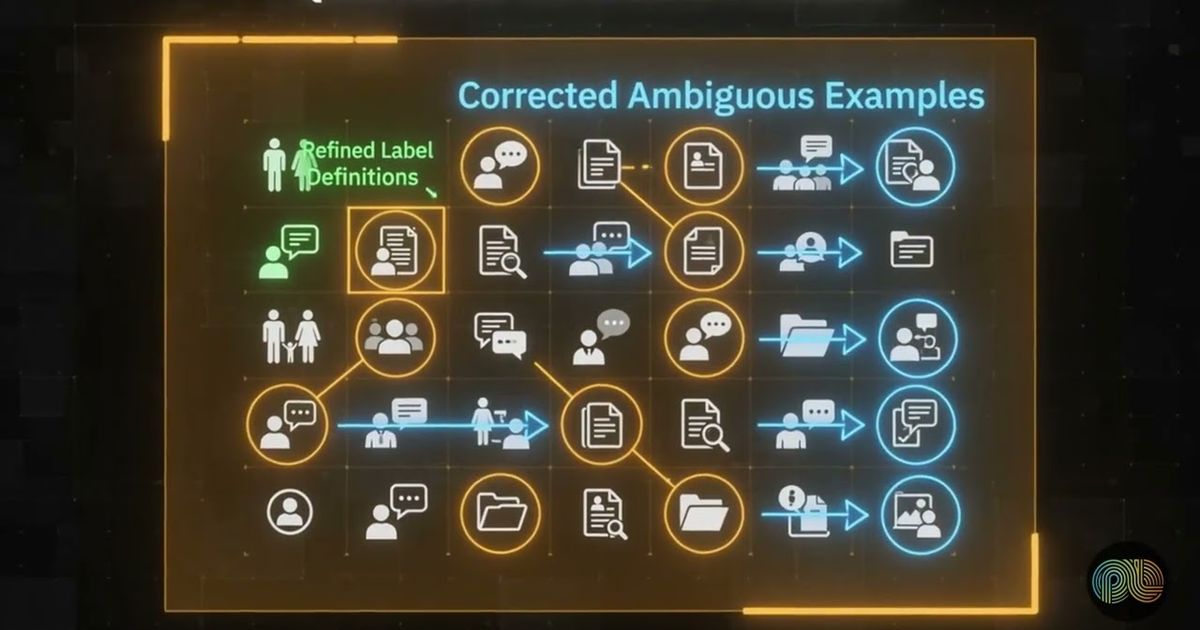
Synthetic Data Validation
Synthetic data validation tests whether generated datasets preserve the distributions, relationships, behaviors, and relevance required for reliable use.

Synthetic data validation is the process of determining whether artificially generated data preserves the structures, distributions, relationships, and behaviors needed for a specific purpose. It combines technical comparison with practical judgment to establish whether a synthetic dataset is sufficiently realistic, relevant, and reliable for research, testing, or analysis.
Validation matters because data can look plausible while omitting rare cases, distorting important relationships, or reproducing hidden source bias. Without fit-for-purpose checks, researchers may draw conclusions from patterns created by the generation process rather than the phenomenon under study. The short video above walks through the core ideas.
What is synthetic data validation?
Synthetic data validation evaluates how well generated information represents the properties of real or expected data that matter for an intended use. It does not require a synthetic dataset to reproduce every feature of its source exactly.
The relevant standard depends on the research objective. Data created to test survey logic may need realistic response paths and edge cases. Data used to evaluate an analytical model may need accurate variable distributions, dependencies, and outcome patterns. Synthetic personas used for early concept exploration require explicit assumptions and a path to validation with real people.
Validation should therefore begin with a clear statement of purpose. Researchers need to define what the data must preserve, what variation it should contain, and which decisions it must not support. This fit-for-purpose approach is more useful than asking whether the dataset is realistic in a general sense. It also reinforces the limits described in synthetic respondents and their limits.
How should synthetic data be validated?
A strong validation process combines statistical checks, behavioral checks, consistency tests, and domain review. Each check should connect directly to a property required by the intended application.
Researchers can follow a practical sequence:
- Define the intended use. Specify whether the data will support instrument testing, hypothesis exploration, model evaluation, system testing, or another purpose.
- Choose reference points. Compare the synthetic dataset with suitable real-world data, established expectations, explicit assumptions, or a combination of these sources.
- Test important properties. Examine distributions, ranges, relationships between variables, internal consistency, expected behaviors, and coverage of meaningful cases.
- Review practical relevance. Ask whether the dataset can support the actual research question without implying more certainty or representativeness than validation establishes.
Validation criteria should be recorded alongside results. That documentation makes it possible to distinguish confirmed properties from untested assumptions and to repeat checks when the source, generator, or intended use changes.

Why is realistic-looking synthetic data not enough?
Surface similarity does not guarantee analytical usefulness. A dataset can contain believable records and familiar averages while failing to represent the interactions, exceptions, or rare behaviors that influence a decision.
For example, synthetic customer records might closely match the typical customer but underrepresent unusual onboarding paths. The data could appear credible in a summary while producing misleading results in a system test designed to detect onboarding failures.
Researchers should look beyond isolated values to the structure connecting them. Important questions include whether variables move together as expected, whether sequences are coherent, whether constraints are respected, and whether edge cases remain present. The goal is not visual plausibility; it is preservation of the evidence needed for the task.
This distinction is especially important when synthetic data informs consequential conclusions. If the intended use changes, the dataset should be validated again because a property that was irrelevant for one task may be essential for another.
How can AI and human researchers work together on validation?
AI can accelerate comparison and anomaly detection, but researchers must define what successful validation means. Automated checks are useful only when their criteria reflect the research objective and domain context.
AI systems can help compare synthetic and reference datasets, identify unusual patterns, test internal consistency, and examine whether important relationships have been maintained. They can also make repeated checks more efficient when datasets or generation methods are updated.
Human researchers remain responsible for selecting meaningful reference data, interpreting discrepancies, and deciding whether the results are acceptable for the proposed use. Domain expertise is particularly important when a statistically unusual pattern is valid in practice or when a statistically similar pattern lacks practical meaning.
The best division of labor uses AI for scalable inspection and humans for objective setting, contextual interpretation, approval, and governance. The same principle applies more broadly to AI output verification: automation can support evaluation, but it should not define its own standard of truth.
What risks should synthetic data validation address?
Validation should test for inherited bias, generation artifacts, missing edge cases, and unsupported uses. These risks can remain hidden even when a dataset passes basic statistical comparisons.
A generator may reproduce biases or coverage gaps found in its source information. It may also introduce new artifacts, such as combinations that occur because of the generation method rather than real-world behavior. Both can distort research conclusions or system evaluations.
Researchers should document where the data came from, how it was generated, which assumptions shaped it, and which checks it passed. They should also state limitations clearly, including populations, scenarios, or behaviors that were not adequately represented.
Synthetic data should not be treated as automatically representative. It can expand research possibilities when real-world data is limited, sensitive, or difficult to access, but validation must preserve attention to quality, relevance, and responsible use.

Key takeaways
- Synthetic data validation determines whether generated data is suitable for a defined research, testing, or analytical purpose.
- Realistic appearance is insufficient when important relationships, behaviors, or edge cases are missing.
- Effective validation combines technical checks with domain expertise and practical judgment.
- AI can accelerate comparisons and consistency testing, while researchers retain responsibility for criteria and approval.
- Limitations, assumptions, provenance, and validation results should remain visible to downstream users.
How PulseLake helps
PulseLake supports explicit, versioned synthetic personas and populations for testing instruments, concepts, and hypotheses, with clear provenance and a path into human validation. Its persistent study context, governance, lineage, research knowledge graph, and evidence-aware AI agents can keep assumptions, checks, findings, and approvals connected. To discuss how these capabilities fit your research system, talk to our team.
Frequently asked questions
Can synthetic data be validated without access to real data?
Synthetic data can still be evaluated against domain rules, logical constraints, explicit assumptions, expected ranges, and known relationships when real reference data is unavailable. However, those checks cannot confirm full real-world representativeness. Researchers should document the missing comparison, limit the claims supported by the dataset, and plan human or real-data validation when access becomes possible.
Does passing statistical validation make synthetic data safe to use?
No. Statistical similarity addresses only part of the validation problem. Researchers must also assess practical relevance, edge-case coverage, inherited bias, generation artifacts, privacy considerations, and whether the data supports the intended decision. A dataset can pass distribution checks while still producing unreliable conclusions for a particular application.
When should a synthetic dataset be validated again?
Revalidation is appropriate when the generation method, source information, assumptions, population definition, or intended use changes. It is also necessary when researchers discover new edge cases or domain requirements. Validation is contextual, so evidence that supports one analytical purpose does not automatically establish suitability for another.