 PulseLake
AI as a Research Assistant, Not a Decision Maker
AI works best as a research assistant that supports human judgment and productivity, not as a decision maker that replaces researcher accountability.
AI as a research assistant means using artificial intelligence to organize information, summarize materials, surface patterns and speed up repetitive tasks, while leaving research decisions to humans. AI systems lack the context, accountability and judgment needed to evaluate uncertainty and consequences, so treating their output as a final answer rather than an input to review introduces real risk.
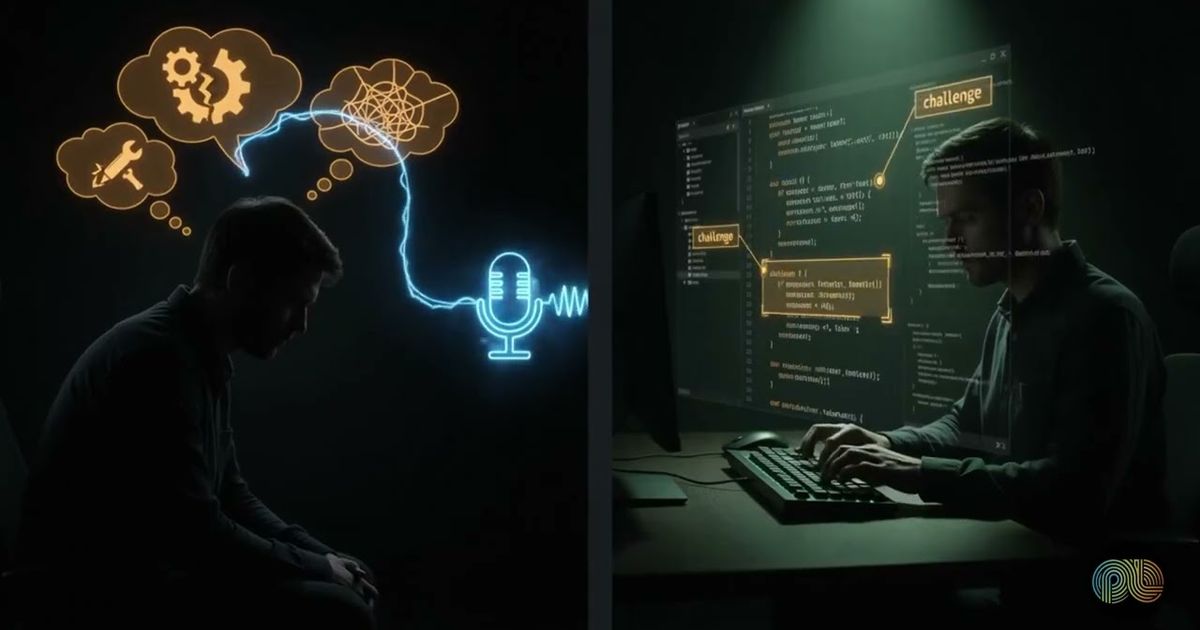
This distinction matters because research findings often inform decisions with real budget, product or strategic consequences attached to them. The two-minute video above explains why the researcher's role becomes more, not less, important as AI takes on more of the workload.
What roles should AI play in a research workflow?
AI is most useful in a research workflow when it takes on organization, summarization, pattern identification and repetitive tasks that free up researcher time for interpretation. These are capabilities that support the research process without requiring judgment about what the findings actually mean for a decision.
Common places AI fits well include:
- Organizing and tagging large volumes of qualitative material.
- Summarizing long documents, transcripts or prior study findings.
- Flagging possible patterns or themes for a researcher to examine.
- Accelerating repetitive steps in analysis or reporting.
Where AI actually fits in the research workflow breaks down these use cases by stage of a typical project.

Why can't AI make research decisions on its own?
AI cannot make research decisions on its own because research decisions require understanding context, weighing uncertainty and taking responsibility for consequences, none of which an AI system genuinely possesses. AI has no experience of the business it is analyzing and no accountability for what happens if a recommendation turns out to be wrong.
AI-generated suggestions should be treated as inputs that require examination, not answers that can be accepted directly. Incorrect outputs, incomplete understanding of context and hidden biases in the underlying model are all reasons human oversight remains necessary before a finding gets used to justify a decision.
How should researchers review AI-generated outputs?
Reviewing AI-generated outputs means building a validation step into the workflow before any AI-assisted finding gets used to support a decision. Strong workflows include a review process where a researcher checks important findings against the underlying evidence rather than accepting a generated summary at face value.
This review does not need to slow every task down. Lower-stakes work, such as organizing raw material, needs lighter oversight than a finding that will directly shape a strategic recommendation. Evaluating AI generated research outputs covers specific criteria for judging whether an AI-assisted output is trustworthy enough to use.
How will the researcher's role change as AI expands?
The researcher's role shifts toward asking better questions, interpreting evidence and making thoughtful decisions as AI takes over more mechanical tasks. Responsibilities become clearly divided: AI supports efficiency and pattern-finding, while humans provide judgment, empathy and strategic understanding that AI cannot supply.
This is less a reduction of the researcher's value and more a change in where that value comes from. Curiosity, critical thinking and responsibility for the outcome remain squarely with the researcher, even as AI expands what a research team can produce in the same amount of time.

Key takeaways
- AI works best as an assistant that supports research productivity, not as the final authority on findings.
- Strong use cases for AI include organizing material, summarizing documents and surfacing possible patterns.
- Research decisions require context, accountability and judgment that AI systems do not possess.
- AI-generated findings should go through a human review step before informing a decision.
- As AI expands research capacity, researcher value shifts toward interpretation and judgment rather than manual execution.
How PulseLake helps
PulseLake's AI agents handle research design, interviewing, qualitative analysis, deep research, reporting and client Q&A, while keeping researchers responsible for judgment and final approvals rather than removing them from the loop. Because objectives, evidence and decisions live in one persistent study context, a researcher can trace any AI-assisted finding back to its underlying evidence before relying on it. Talk to our team to see how the approval workflow fits a specific research process.
Frequently asked questions
Can AI replace a market research team?
AI can automate specific tasks within research, such as summarizing transcripts or organizing data, but it cannot replace the judgment, accountability and contextual understanding a research team provides. Decisions about what findings mean and how confidently to act on them still require human evaluation.
What is the biggest risk of trusting AI-generated research findings without review?
The biggest risk is acting on an output that contains an error, a hidden bias or an incomplete understanding of context, without anyone catching it before it informs a real decision. Building a review step into the workflow is the most direct way to reduce this risk.
Does using AI in research require new skills for researchers?
Using AI effectively in research does require new skills, particularly the ability to evaluate AI-generated outputs critically rather than accepting them at face value. Researchers also benefit from getting sharper at framing questions, since AI performs better when guided by clear, well-scoped instructions.
Where should human oversight be strongest in an AI-assisted research workflow?
Human oversight should be strongest wherever a finding is about to inform a real decision, such as a strategic recommendation or a client-facing conclusion. Lower-stakes, mechanical tasks like organizing raw material can generally run with lighter review.