Human Review Pipelines for AI Research
Human review pipelines route AI-generated research through risk-based checks to improve accuracy, accountability, transparency, and decision confidence.

Before AI research reaches reports, recommendations or organizational knowledge, people need assigned checks and quality standards. A human review pipeline sets that sequence. The checks concern facts, methods, reasoning, domain fit, compliance, clarity and uncertainty; how closely reviewers examine them depends on the decision's risk.
AI is quicker. That doesn't make its reading of incomplete, ambiguous or high-impact evidence reliable.
Reserve expert attention for costly mistakes, and let automation handle the rest.
What mistakes should teams avoid?
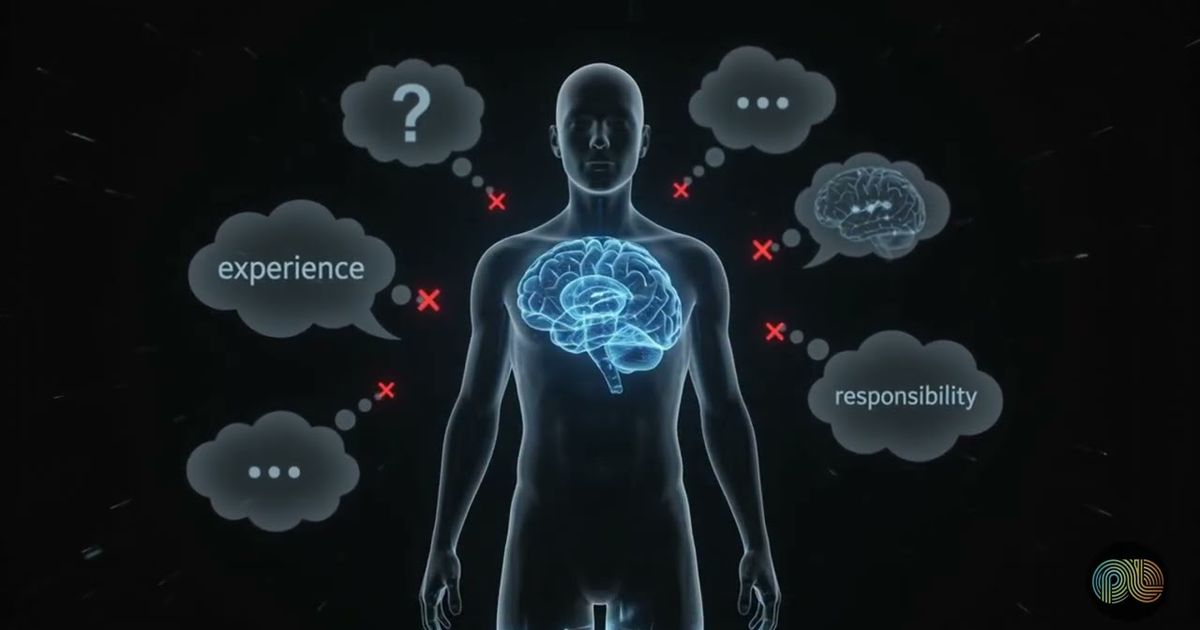
A signature is easy to collect. Meaningful oversight is harder, and ceremonial sign-off is the mistake we'd put first. The person signing needs to own a defined check, have enough context and be able to get at the evidence. They also need permission to say 'this is wrong' or take the concern to someone else.
Other warning signs: a routine task gets the burden of a high-risk one; the reviewer receives vague instructions instead of quality standards. Perhaps all they see is a beautifully finished answer, with its evidence, assumptions and uncertainty missing. Or several people are reviewing it, but ownership is anyone's guess. Approval becomes the end of the story, with no decisions, revisions or lineage kept. Putting a human into this arrangement won't automatically remove bias or error. Humans supply both.
Design for the awkward cases, including disagreement. An unresolved issue needs to reach the right person, and the context needs to survive for later examination. You don't get that from an informal last glance.
What is a human review pipeline?
Think of the work between 'AI generated this' and 'approved for use.' A pipeline divides it into defined checkpoints. The person at each checkpoint examines an assigned part of the output, then approves, requests changes, rejects or escalates it.
The order could be: AI analysis; checks on facts and method; domain or policy review; publication approval. With separate stages, responsibility is visible. 'Someone reviewed it' is no substitute for knowing which of those jobs was actually done.
Leave automated tasks automated. What needs human attention is the ambiguous evidence, the assumption worth testing, the context a system may miss. Someone has to weigh the consequences, too, and decide whether the uncertainty is explained properly. Those are the places where automation is least dependable, not an argument for doing everything twice.
Afterwards, can another person find out what was checked and by whom? Can they see what changed and why the output was accepted? The review record should answer those questions. Without it, the accountability that makes human review of AI reports worthwhile is missing.

How much human review does an AI output need?
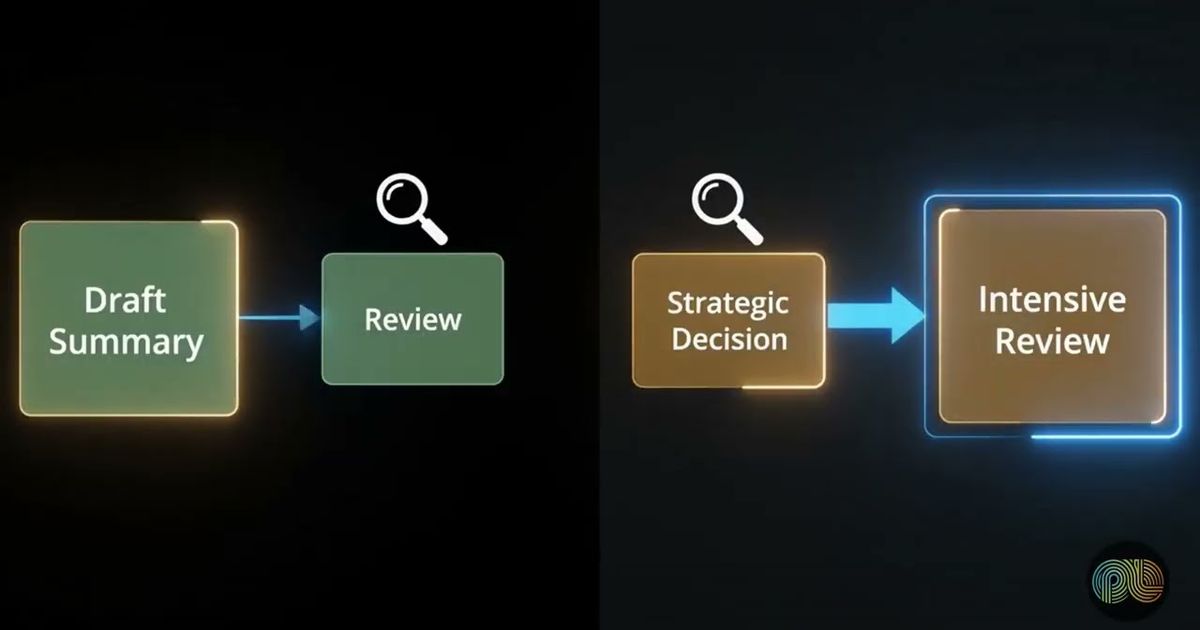
How well do you know this task? If it is routine, with familiar inputs and understood failure modes, you may only need a quick verification. Compare that with a strategic or regulated decision, or one with a large impact: several stages are often warranted there. Judge the review burden against risk and uncertainty as well as the possible impact.
Our view is that one-size-fits-all review is the easiest trap here. A routine summary waits on several reviewers for no good reason, while a major recommendation gets a glance that misses serious errors. Risk-based review avoids that mismatch: ordinary work stays fast and consequential outcomes get examined more closely.
To calibrate, ask five things:
- Decision impact: what happens if the output is wrong or misleading?
- Evidence quality: is the evidence complete, current, relevant and traceable?
- Task ambiguity: does the work involve interpretation, conflicting signals or shaky assumptions?
- Domain sensitivity: does approval need specialized expertise or policy knowledge?
- Reversibility: can the decision be corrected easily once the output is used?
How should review responsibilities be divided?
Where might this answer go wrong? Assign reviewers along those lines. One compares each important claim with the available source material. Another looks at the design of the research, its data and its limitations: does this analysis fit, and do the conclusions follow without unsupported leaps? For domain context, someone needs to consider the market, customer or organizational setting involved.
Don't leave compliance or communication unassigned. The former covers applicable policies, governance rules and approval requirements. The latter asks whether conclusions, assumptions and uncertainty have been stated clearly enough.
You can give a single person several of these jobs on lower-risk work. With a consequential, complex AI answer, use qualified people whose expertise complements each other's. Either arrangement needs clear AI output verification criteria. 'It looked plausible' tells you nothing about whether the named checks behind an approval were done.
What makes human review consistent and transparent?
Let the reviewer see what the response rests on. Which evidence informed it? What was assumed? Where is evidence missing, and what remains unresolved? Alongside those answers, provide explicit criteria and make uncertainty visible. Otherwise there's too little to inspect.
A rubric is useful because 'check the analysis' isn't much of an instruction. It supplies repeatable questions. A reviewer might have to confirm that claims have support, the method fits, the logic holds together, compliance is covered and the writing is clear before giving approval.
Don't neglect evidence lineage; it matters just as much. Pick a generated claim and follow it backwards: the reviewer needs to reach the underlying study data, source or analysis step. That connection helps them verify the claim, investigate a disagreement or understand why a conclusion changed.
Put the evidence beside the answer and the review changes. That's what a retrieval-grounded workflow does: it gives the reviewer relevant material to examine, instead of relying on a confident tone or a gut feeling. Record what was assumed, what remained uncertain, what reviewers decided and which changes they requested. The resulting audit trail helps the pipeline adapt over time.

How PulseLake helps
PulseLake keeps objectives, methodology, evidence, analysis and decisions in a persistent study context, so reviewers have what they need to evaluate AI-generated outputs. Its research intelligence capabilities support evidence provenance, and workflow automation can structure approvals, QA, recurring processes and downstream actions. Specialized agents can help with design, analysis, reporting and research Q&A while researchers keep the judgment and the approvals. To work out a review model that suits you, talk to our team.
Frequently asked questions
Can one person review an AI-generated research output?
Yes, provided it's routine, low-risk work and the reviewer has both the context and a clearly defined set of checks. There isn't a universal number of people to assign. The risk sets that number. With more at stake, it often helps to involve different sorts of expertise, such as a methodologist, domain expert or compliance owner.
What evidence should reviewers see before approving AI research?
Could the reviewer find the sources for the important claims and tell how the output was produced? They need at least that much, plus the relevant assumptions and any known gaps or uncertainty. Let them see previous review decisions and revisions where those exist. You're asking for a judgment about support and reasoning, not how well the answer reads.
Does human review eliminate errors in AI-generated outputs?
No. An answer can sound entirely plausible and still lack support; the person reading it may accept it, miss a problem or bring their own bias. That's why the pipeline assigns responsibilities and provides traceable evidence, consistent criteria and escalation for unresolved issues. Those measures lower the risk and improve accountability. They don't guarantee correctness.