Autonomous Research Limits: Where Humans Must Lead
Autonomous research limits define where AI needs human supervision to protect context, ethics, evidence quality, accountability, and sound decisions.

Autonomous research limits mark the point where AI systems shouldn't carry on researching without meaningful human supervision. AI can run structured tasks quickly. But questions of importance, ambiguity, ethics, evidence sufficiency, interpretation and real-world consequence need human context, professional judgment, and someone accountable for the decision.
Findings end up shaping products, policies, organizations and people's lives. At those stakes, "the model decided" is never an answer anyone should accept.
When does autonomous research need human oversight?
Whenever someone has to answer for the outcome. Also when the task needs contextual understanding, ethical judgment or a read on ambiguity, when the evidence may be incomplete, or when a conclusion could materially sway a decision.
AI works with patterns in whatever it was given. It can miss a hidden assumption, a cultural factor, a practical constraint or an ethical concern that changes what a finding means out in the world. An analysis can be perfectly consistent and still wrong for the situation, because the framing was off or the context never made it in.
Humans should lead on four questions. Is the research question important, appropriate and answerable? Does the method fit, and does it treat participants responsibly? Is the evidence sufficient and represented accurately? Does the conclusion hold up, and suit the decision it feeds?
Accountability can't be handed to a model either. Researchers answer for methods, claims and the recommendations that follow, most of all when findings touch products, organizations, policies or people. We'd put that in writing for any team using research AI.
What are autonomous research limits?
A map of which activities an AI system may do by itself and which need a person to review, approve or control. Behind it sits a plain recognition that research is more than a sequence of tasks.
It's a string of choices: what to study, how to represent participants, which evidence to trust, which conclusions hold up. They usually come with incomplete information, competing values and consequences that automated processing can't weigh on its own.
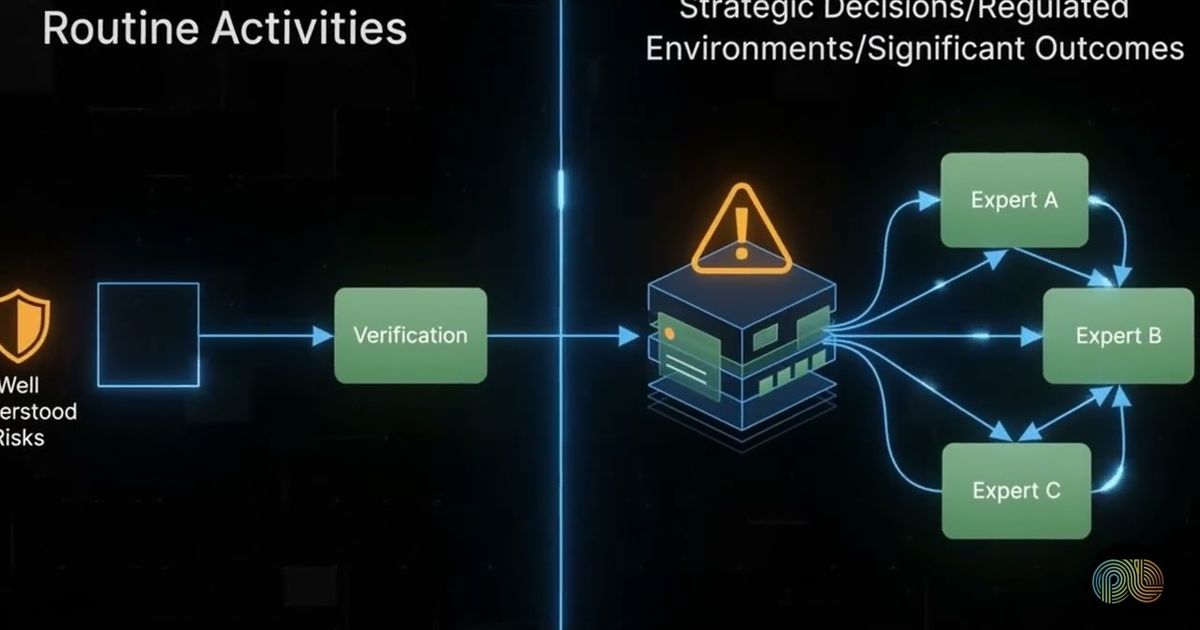
Where the line falls depends on the task and what's riding on it. An AI system might sort existing material with very little intervention, while anything that affects people, organizational strategy or public policy needs much closer oversight. Autonomy should be handed out on purpose; it isn't a default setting.
How should organizations set autonomous research limits?
Tie autonomy to the clarity of the task, the risk, the quality of the evidence and the cost of a mistake. More ambiguity or impact means more human involvement.
A practical control model has six parts:
- Define task boundaries: what the AI may do, what it may recommend and what it must not decide.
- Set approval points, with human review before consequential interpretations, conclusions or actions.
- Evaluate outputs, testing whether it follows the method and represents evidence faithfully.
- Monitor operation for repeat errors, drifting performance and odd behavior.
- Preserve transparency by recording inputs, assumptions, transformations and the basis for outputs.
- Assign accountability to named people who approve methods and decisions.
None of this blocks innovation; if anything it makes room for it. As systems take on more autonomy in structured tasks, solid evaluation and AI output verification keep trust intact, and human responsibility and contextual reasoning stay where they belong.

What research tasks can AI handle autonomously?
The structured, reviewable ones, with clear inputs and outputs. That's where AI is most dependable, and where it speeds research up without becoming the final authority on meaning or action.
Good candidates include organizing documents, responses and other available information, and spotting patterns for researchers to investigate. They also include generating hypotheses to test (not facts to accept) and helping with analysis while the underlying evidence stays within reach.
Each of these puts machine speed to work while the consequential judgments stay with researchers. It's the same line as treating AI as a research assistant instead of a decision maker. The system adds capacity, and a qualified person answers for the research logic and the conclusions.

How PulseLake helps
PulseLake keeps research objectives, methodology, evidence, assumptions and decisions in a persistent study context with governance and lineage. Specialized agents can support research design, analysis, reporting and other workflows while researchers keep judgment and approvals. To talk about how these controls could fit your research operating model, talk to our team.
Frequently asked questions
Can AI determine whether research evidence is sufficient?
Only partly. AI can find missing fields, compare evidence against predefined criteria and flag inconsistencies for review. It can't decide alone whether the evidence adequately represents the real-world context or supports a consequential conclusion. That takes a researcher weighing method, uncertainty, alternative explanations and intended use.
Why can't AI understand research context like a human researcher?
AI processes patterns from the data and instructions it gets. It doesn't live in the social, cultural, organizational or practical environment being studied, and relevant assumptions and consequences may never appear in its inputs. Human review connects analytical output to lived context, ethical obligations, stakeholder needs and knowledge nobody wrote down.
Do autonomy boundaries slow research innovation?
We'd argue the opposite; they can make research AI easier to adopt. Clear boundaries let teams automate suitable tasks with confidence and save human attention for ambiguous or consequential decisions. When approval, monitoring, transparency and accountability are explicit, avoidable errors drop, and machine speed and professional judgment each handle the work they suit.