Evidence Lineage Explained
Evidence lineage connects research conclusions to their sources, transformations, and analyses, making every insight transparent, auditable, and reusable.

Evidence lineage is the complete, inspectable history of a research insight from its original question and raw evidence through transformation, analysis, interpretation, and final recommendation. It keeps conclusions connected to their sources, so reviewers can verify the reasoning, assess changes, and understand what evidence supports each decision.
This visibility matters because convincing conclusions are not necessarily well-supported conclusions. A clear lineage replaces reliance on personal judgment or institutional memory with reasoning that other people can inspect and evaluate. The two-minute video above walks through the core ideas.
What is evidence lineage?
Evidence lineage records where research evidence originated, how it changed, which analyses influenced it, and what findings or recommendations depend on it. It treats each insight as part of a connected chain rather than as a statement isolated inside a finished report.
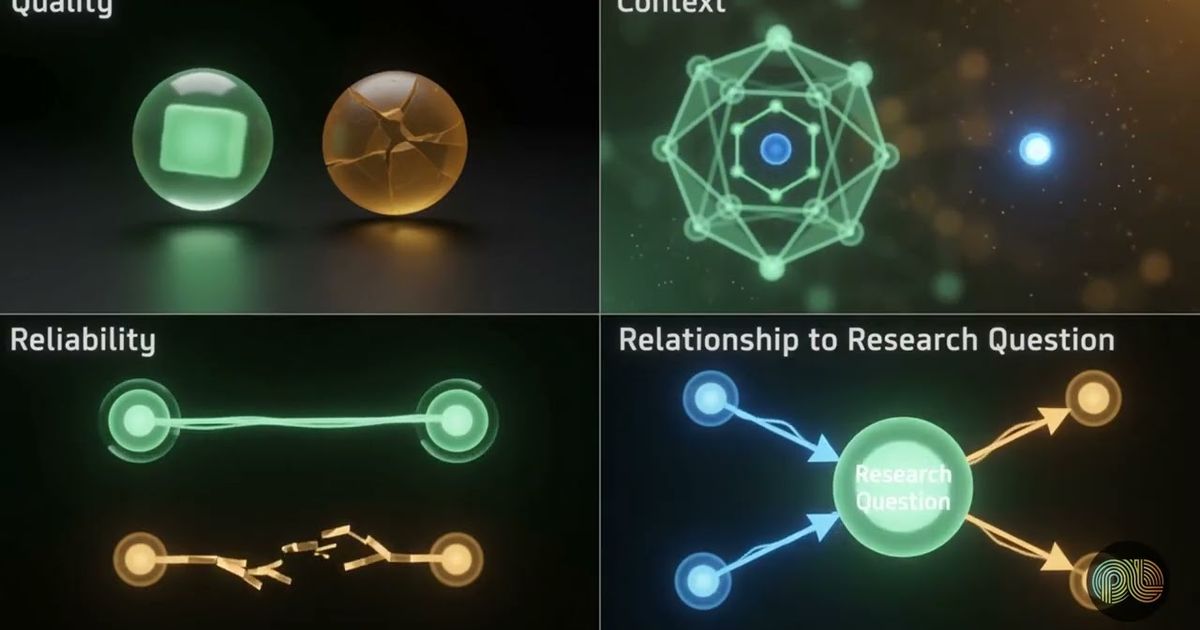
A useful lineage connects four kinds of information:
- The research question and study context that shaped the inquiry.
- The participant responses, observations, behavioral data, or other source evidence.
- The transformations applied through coding, grouping, summarization, or analysis.
- The themes, findings, recommendations, and decisions produced from that work.
The purpose is not simply to preserve more files. It is to preserve the relationships among questions, evidence, interpretation, and action, making the reasoning behind an insight transparent instead of implied.
How does evidence lineage work?
Evidence lineage works by maintaining links at every stage of the research process. Each transformation adds interpretation, but it should not sever the connection to the material that came before it.
Consider a recommendation to simplify a product workflow:
- Start with the research question. Record what the study was intended to understand and the context in which the question was asked.
- Connect the source evidence. Preserve the participant responses, individual observations, and behavioral data relevant to the workflow.
- Record the interpretation. Link coded observations to themes and show which analyses shaped the resulting finding.
- Connect the recommendation. Make the path from supporting themes to the proposed workflow change available for inspection.
This chain allows a reviewer to move backward from the recommendation to its supporting evidence or forward from an observation to the conclusions it influenced. It also complements an evidence graph that represents relationships explicitly.

Why does evidence lineage matter for AI research?
Evidence lineage makes AI-assisted research outputs easier to verify. An AI-generated summary, synthesized insight, or comparative analysis becomes more trustworthy when its statements remain linked to the evidence and transformations that produced them.
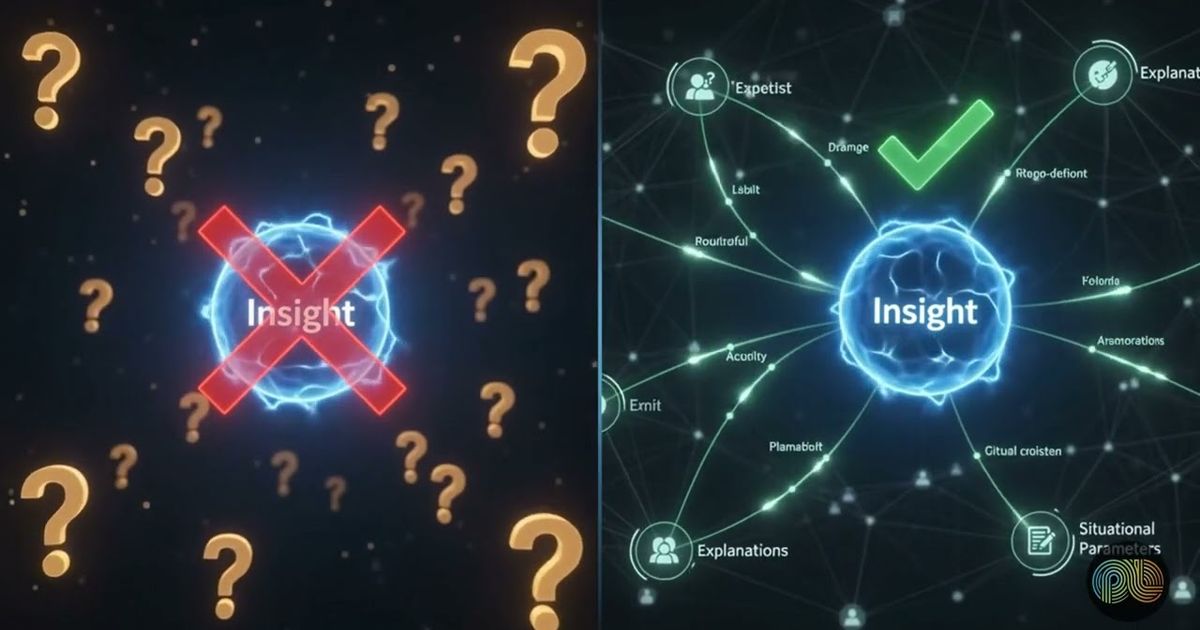
Without lineage, reviewers may accept an output because it sounds coherent or aligns with expectations. With lineage, they can ask more useful questions:
- Which source material supports this statement?
- What grouping, summarization, or comparison shaped it?
- Where did human or AI interpretation enter the chain?
- Does the conclusion accurately reflect the underlying evidence?
Lineage does not eliminate the need for researcher judgment. It gives researchers the context needed to exercise that judgment, investigate questionable claims, and apply a consistent AI output verification process.

How does evidence lineage improve collaboration?
Evidence lineage gives researchers, designers, analysts, and decision-makers shared access to the reasoning behind a conclusion. People can evaluate findings without relying entirely on the original research team to reconstruct the study from memory.
It also helps research remain useful over time. When new evidence appears, teams can identify which themes, findings, recommendations, or decisions depend on related earlier evidence and may need reconsideration. They do not have to repeat an entire study simply because its supporting context is difficult to recover.
This changes research from isolated moments of discovery into a continuously verifiable knowledge system. Each conclusion carries its history, enabling teams to revisit assumptions, compare interpretations, and build on prior work without treating every report as a disconnected endpoint.
Key takeaways
- Evidence lineage connects research questions, source evidence, transformations, findings, and recommendations.
- Transparent lineage allows reviewers to verify reasoning instead of trusting conclusions based on presentation or authority.
- AI-assisted summaries and analyses are easier to assess when every statement remains connected to supporting evidence.
- New evidence can be evaluated against the findings and decisions that depend on earlier information.
- Preserved context helps teams reuse research without relying on institutional memory alone.
How PulseLake helps
PulseLake keeps research objectives, methodology, evidence, analysis, and decisions in a persistent study context. Its research knowledge graph, cross-study search, evidence provenance, governance, and lineage foundations help teams inspect how knowledge was produced and preserve it for later use. To discuss how this could support your research system, talk to our team.
Frequently asked questions
How is evidence lineage different from a research repository?
A research repository stores studies, reports, recordings, transcripts, and other materials so people can find them later. Evidence lineage records the relationships among those materials, the analyses applied to them, and the conclusions that depend on them. A repository answers where information is stored, while lineage helps explain how a specific insight was produced.
Can evidence lineage show which findings need review when data changes?
Yes. When findings remain linked to their supporting evidence, researchers can identify which conclusions depend on evidence that has changed, been challenged, or been supplemented. This does not automatically determine whether a conclusion is wrong, but it narrows the review to the relevant themes, analyses, recommendations, and decisions.
What should researchers capture to create useful evidence lineage?
Researchers should capture the original research question, study context, source evidence, significant transformations, analytical steps, themes, findings, and resulting recommendations. They should also preserve enough context to explain why each connection was made. The goal is a chain another qualified reviewer can inspect, not a record of every minor action performed during a study.