Research-Driven Transformation Explained
Research-driven transformation uses continuous evidence and learning to guide organizational change, reduce uncertainty, and improve decisions over time.

Research-driven transformation is an approach to organizational change that uses systematic research, evidence collection, analysis, and continuous learning to guide decisions. Rather than relying mainly on assumptions or internal opinion, teams investigate current realities, evaluate possible interventions, measure progress, and adjust the transformation as new evidence emerges.
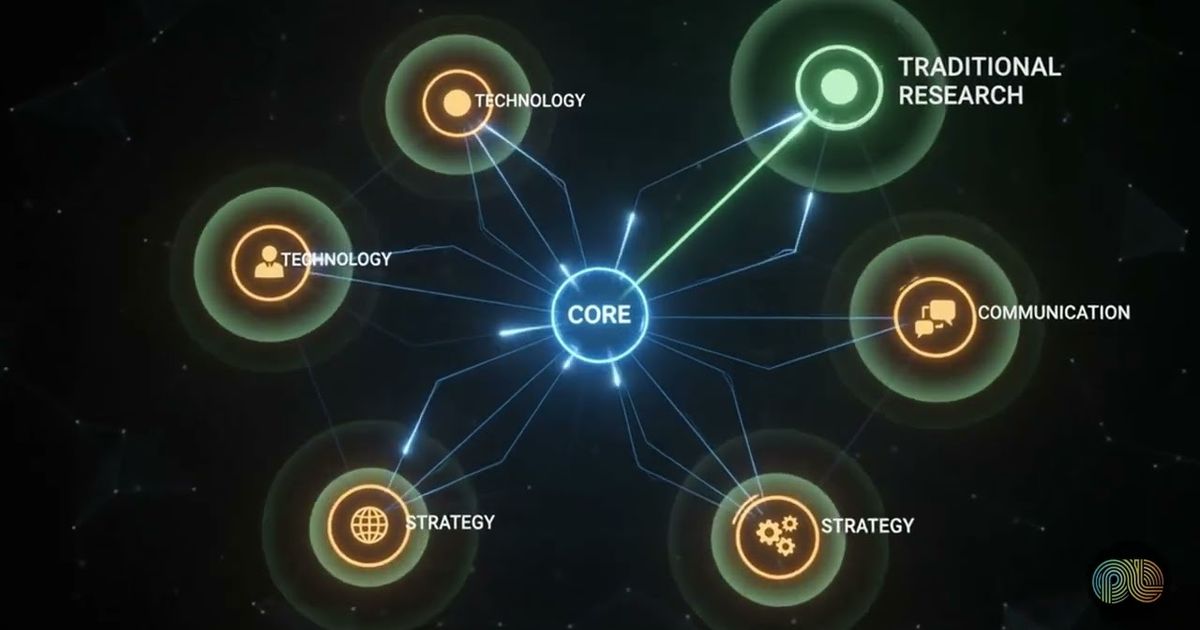
Transformation affects people, processes, technology, and organizational behavior at the same time, so weak assumptions can create costly misalignment. Treating research as an ongoing operating discipline helps leaders see interactions, surface constraints, and respond before problems harden. The two-minute video above walks through the core ideas.
What is research-driven transformation?
Research-driven transformation places structured inquiry at the center of organizational change. Evidence informs what should change, how an initiative should be designed, and whether it is producing the intended outcomes.
The approach begins with a clear understanding of current conditions rather than a predetermined solution. Teams define the problem, investigate stakeholder needs, examine existing processes, and identify meaningful opportunities. Strong research problems and objectives keep this work focused on decisions the organization must make.
Research then continues through implementation. Teams collect evidence about adoption, performance, behavior, and emerging constraints instead of waiting for a final evaluation. This makes research a mechanism for navigating uncertainty, not simply a way to judge results after major decisions have already been made.
Why does research improve organizational change?
Research improves transformation by revealing how people, processes, technology, and organizational behavior interact. It helps teams test assumptions, understand tradeoffs, and identify barriers that may be invisible from a leadership or project-planning perspective.
For example, an organization introducing new workflows or AI capabilities may have a sound technical plan but still face weak adoption. Research can uncover:
- User expectations that the proposed experience does not meet.
- Operational constraints that make a new workflow impractical.
- Adoption barriers such as unclear responsibilities or missing skills.
- Areas where employees need additional guidance or support.
These findings allow teams to adjust implementation instead of treating resistance or underperformance as isolated failures. Evidence also helps distinguish between a flawed strategy, an execution problem, and a solution that needs more time or support. Transformation becomes more adaptive because decisions reflect actual conditions rather than internal opinion alone.
How do you build continuous learning into transformation?
Continuous learning requires research before, during, and after implementation. Teams should establish a baseline, identify evidence that will signal progress, review findings at useful intervals, and change course when results challenge prior assumptions.
A practical learning cycle includes four steps:
- Understand the current reality. Document stakeholder needs, operating conditions, existing behaviors, and known constraints.
- Define evidence of progress. Connect intended outcomes to observable signals, using qualitative and quantitative evidence where appropriate.
- Measure throughout implementation. Monitor adoption, experience, operational effects, and unintended consequences rather than relying only on an end-stage review.
- Adapt the initiative. Use new evidence to revise workflows, support, priorities, or the transformation plan itself.
This cycle should be built into governance and delivery routines. Repeatable research workflow automation can support recurring measurement, reviews, notifications, and reporting, but teams still need to interpret what the evidence means. The purpose is not measurement for its own sake; it is learning whether intended outcomes are being achieved and what should happen next.

What role should AI and human judgment play?
AI can strengthen research-driven transformation by making large collections of organizational evidence easier to analyze and connect. Human judgment remains necessary because transformation choices must balance evidence with strategy, culture, resources, and long-term goals.
AI can help identify recurring patterns across initiatives, synthesize evidence from multiple sources, and retrieve lessons from previous changes. It can also support ongoing monitoring by organizing new information as the transformation develops. These capabilities make it easier to see relationships that may be missed when evidence remains fragmented across reports and teams.
However, AI should not make transformation decisions independently. Leaders and researchers must assess evidence quality, examine context, resolve contradictions, and decide which tradeoffs are acceptable. Human oversight also ensures that recommendations fit organizational values, practical constraints, and strategic priorities. The strongest model combines AI-supported analysis with explicit human review and approval.

Key takeaways
- Research-driven transformation replaces assumption-led change with systematic evidence and continuous learning.
- Research should examine interactions among people, processes, technology, and organizational behavior.
- Measurement must continue throughout implementation so emerging challenges can influence the plan.
- AI can connect patterns and prior lessons, while people retain responsibility for judgment and decisions.
- Continuous research helps organizations develop an enduring capacity to adapt and improve.
How PulseLake helps
PulseLake keeps objectives, methodology, evidence, analysis, and decisions in one persistent study context. Its research intelligence capabilities support cross-study search, evidence provenance, and connections across previous initiatives, while specialized agents and workflow automation can assist with analysis, recurring measurement, QA, and reporting under researcher oversight. To discuss applying these capabilities to transformation research, talk to our team.
Frequently asked questions
How is research-driven transformation different from traditional change management?
Traditional change management often emphasizes planning, communication, stakeholder engagement, training, and adoption. Research-driven transformation can include all of those activities, but it makes systematic evidence collection and continuous learning central to the effort. Research does not only evaluate the finished initiative; it shapes the problem definition, intervention, implementation, and ongoing adjustments.
What evidence should transformation teams collect?
Useful evidence depends on the initiative, but it commonly covers current workflows, stakeholder needs, adoption behavior, user expectations, operational constraints, support requirements, and progress toward intended outcomes. Teams may combine interviews, surveys, observations, operational data, assessments, and existing organizational knowledge. Each source should connect to a specific transformation question or decision.
Can smaller organizations use research-driven transformation?
Yes. Research-driven transformation does not require a large research department or an elaborate measurement program. A smaller organization can begin with focused interviews, workflow observations, a few well-defined outcome measures, and regular evidence reviews. The essential practice is to make decisions from structured learning rather than relying only on assumptions or senior opinion.
How often should transformation evidence be reviewed?
Evidence should be reviewed often enough to influence decisions while the organization can still respond. The appropriate cadence depends on the initiative's pace, risk, and availability of meaningful new information. Teams should define review points during planning, then add reviews when unexpected adoption barriers, operational problems, or changes in strategic conditions emerge.