AI-Generated Summaries for Research
AI-generated summaries condense research evidence while preserving context, uncertainty and source links, helping teams review findings faster and safely.

AI-generated summaries condense research evidence into short, readable accounts of the main themes, findings, participant perspectives and decisions. A good one stays faithful to its sources. It keeps context and uncertainty, admits contradictions and ties each conclusion to supporting evidence, instead of swapping the original material for something that merely sounds plausible.
Researchers spend a lot of hours translating detailed evidence into something a stakeholder can absorb in five minutes. Used carefully, AI takes over much of that repetitive work, and the time goes back into interpretation, validation and decision support.
What are AI-generated summaries in research?
Condensed versions of research materials, produced with artificial intelligence, built to cut reading effort without cutting analytical integrity.
What goes in depends on the job. It could be recurring themes across interview transcripts, findings from a survey or assessment, or the places where participants agree and where they split. It could be decisions and open questions from research meetings, or evidence spread across several studies or documents.
Shorter isn't the same as summarized, though. A real summary carries the meaning of the source plus the context a reader needs to interpret it correctly, including the line between what was directly observed, what a researcher interpreted and what stakeholders decided. AI-generated key takeaways that blur those three are worse than no takeaways.
One more use: AI can reshape unstructured material into consistent formats, which helps when you're turning text into structured data for comparison, retrieval or more analysis.
What mistakes should researchers avoid?
Mistaking a fluent summary for an accurate one. Clean prose hides omissions, unsupported readings and lopsided emphasis very well.
Smaller failures pile up around it. Contradictions get cut to make a simple story. Weak signals are presented as established findings. Conclusions float away from the evidence behind them, and critical context about the research question, the participant group, the method or the conditions of an observation gets lost.
Summarization isn't analysis, either. A short output makes evidence easier to review, but it can't decide on its own which findings matter, whether the study supports a decision or how competing interpretations get resolved. That's still the researcher's call.
What makes AI-generated summaries trustworthy?
Grounding. A trustworthy summary rests on identifiable research evidence and is honest about its limits, so a reader can tell what was learned, where it came from and how far to lean on it. Five checks:
- Faithful: says what the source says, no plausible extras.
- Connected: major findings keep links to documents, excerpts, observations or data.
- In context: participants, methods, questions and conditions survive.
- Honest about doubt: mixed, incomplete or tentative evidence is described that way.
- Contradictions kept in view, not squeezed into a tidier story.
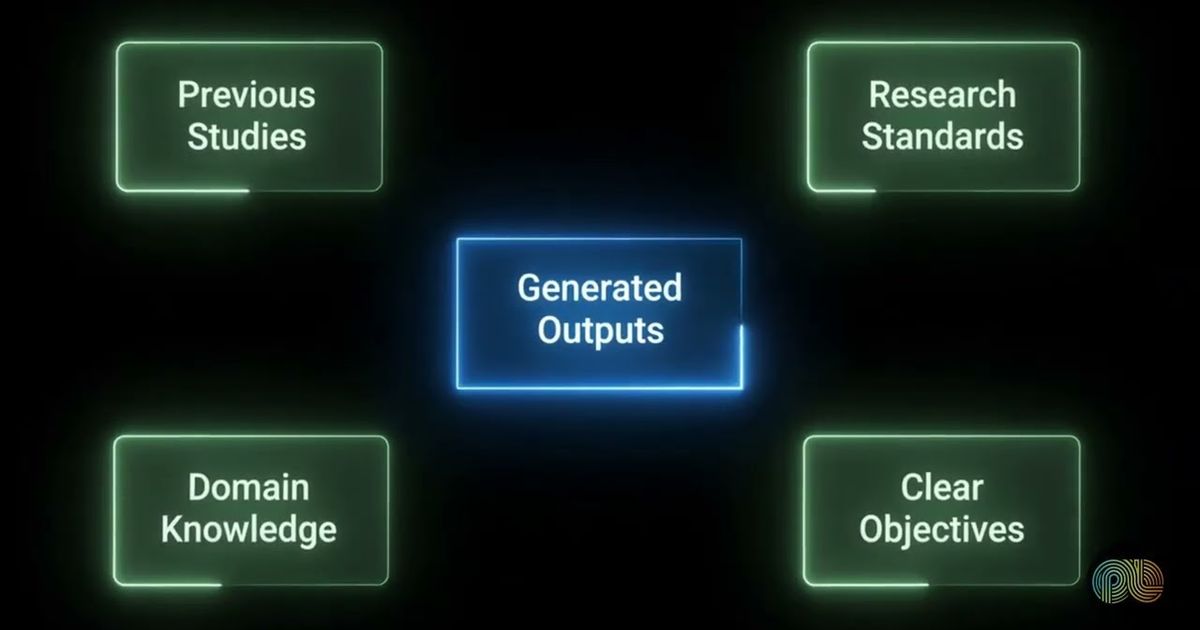
AI does its best work on structured research assets with retrieval. Metadata says what an asset is, lineage says where it came from and semantic relationships link related concepts and evidence. Retrieval hands the model the right source material for the task, so it isn't leaning on general language generation alone.
None of that removes the need to check. Teams still need a consistent way of evaluating AI-generated research outputs, especially when a conclusion might steer strategy. And when a summary and its source disagree (say the summary drops a restriction the source clearly states), the source wins. Correct the summary or throw it out.

How should researchers create and review AI summaries?
Treat the output as an analytical aid, never a final deliverable by default. Start with a clear purpose and end with a person reading the result against the original evidence.
So: decide what the summary is for (themes, findings, perspectives, decisions or evidence across documents). Pull the right transcripts, notes, datasets, reports and metadata instead of an undefined heap. Tell the system to preserve uncertainty, flag contradictions and avoid conclusions the evidence doesn't support. Then validate: check important claims against their sources, put back context that got dropped and fix any overstatement.
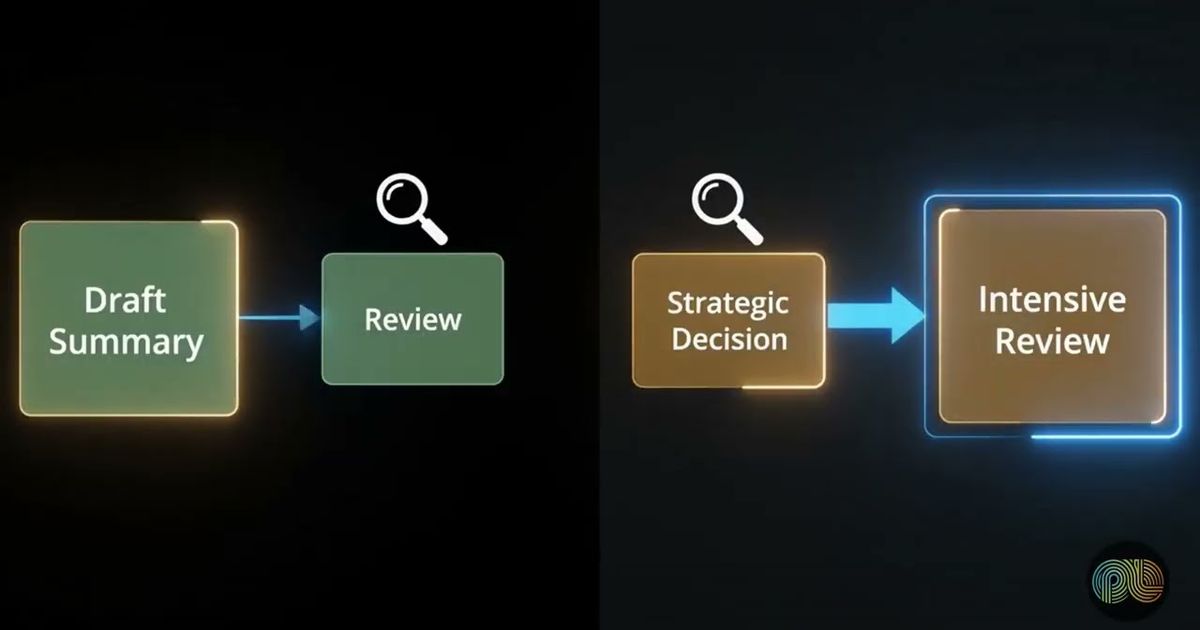
How hard you review should track the cost of being wrong. A working summary you use to find your way around a transcript can get a light check. A synthesis behind a strategic decision can't, and neither can one you'll keep as long-term organizational knowledge.
Look past the factual slips, too. Does the summary give one vivid comment too much weight? Skip a minority perspective? Merge two distinct findings? State tentative evidence with confidence it hasn't earned? We think those are the errors that actually mislead people.

How PulseLake helps
PulseLake keeps objectives, methodology, evidence, analysis and decisions in a persistent study context. Its research intelligence capabilities support cross-study search, evidence provenance and natural-language questions, and specialized agents can help with qualitative analysis and reporting under researcher approval. Repeatable QA and delivery workflows can carry validated findings into dashboards, PowerPoint reports or client workspaces. To talk through the approach, talk to our team.
Frequently asked questions
Can AI summarize evidence from multiple research documents?
It can, provided it can retrieve the relevant materials and tell their sources apart. AI can synthesize themes, findings, perspectives and decisions across documents. Make sure the summary keeps meaningful differences between studies visible, especially when methods, participant groups or research questions differ, and doesn't blend everything into one general conclusion.
Should AI-generated research summaries include source references?
Yes, for the findings that matter. Keep them tied to their evidence through citations, links, excerpts or some other form of provenance. References let researchers verify claims, check context and spot where a summary overstated or left something out, and they count most when a summary informs strategic decisions or becomes part of institutional knowledge.
How much human review does an AI-generated summary need?
It depends on how the summary will be used. A temporary navigation aid might need only a quick accuracy check. A client deliverable, strategic synthesis or permanent knowledge asset needs careful comparison with the original evidence, covering factual accuracy, omitted context, contradictions, uncertainty and unsupported conclusions.
Can an AI summary replace a full research report?
Usually not. A summary makes a report easier to navigate, but the full document and the underlying evidence hold the methodology, analysis, limitations and supporting material a short version may drop. Keep those sources within reach whenever someone needs to evaluate or act on a consequential finding.