 PulseLake
Research Data Chunking: How to Do It Correctly
Research data chunking divides evidence into meaningful, context-rich units that improve AI retrieval, grounded analysis, and knowledge reuse across studies.

Research data chunking is the process of dividing research evidence into logically complete, manageable units while preserving enough context for each unit to remain meaningful on its own. Effective chunks follow the structure of the research—not arbitrary character limits—so retrieval systems and AI tools can find focused, interpretable evidence.
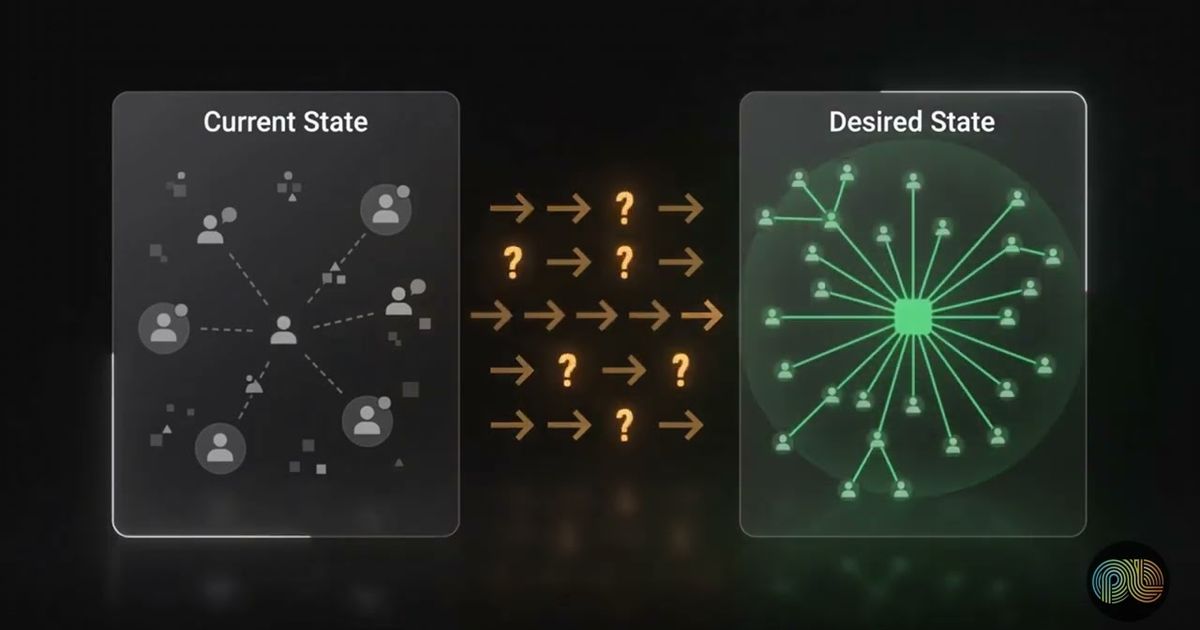
It matters because retrieval quality determines whether AI analysis surfaces relevant evidence or produces interpretations from noisy, incomplete material. The two-minute video above walks through the core ideas.
What is research data chunking?
Research data chunking turns a study into smaller units that remain understandable when retrieved independently. The goal is to create meaningful blocks, not blocks of equal length.
Depending on the material, one chunk might contain:
- A participant’s complete response to a question.
- A full observation from a field study.
- A thematic section from a report or transcript.
- Another logically complete piece of evidence.
The appropriate unit depends on the research structure and analytical purpose. A short answer may work as one chunk, while a longer response may need to be separated at a clear change in topic.
Each chunk should preserve the details needed to explain what the evidence means. If a statement depends on a preceding question, qualifier, example, or supporting observation, that information should remain attached or be recoverable through an explicit relationship.
How should you chunk research data?
Start with the natural structure of the evidence and identify complete units of meaning. Create a new chunk when the topic or analytical purpose changes, while keeping related observations and supporting evidence together.
A practical process is:
- Identify the research unit. Determine whether the useful unit is a response, observation, theme, finding, or another coherent element.
- Preserve necessary context. Keep the question, explanation, qualifier, and supporting evidence required to interpret the unit.
- Split at meaningful boundaries. Topic transitions, changes in subject, and shifts between distinct findings often provide better boundaries than fixed character counts.
- Test the retrieved result. Review whether each chunk makes sense on its own and whether unrelated material is being returned with it.
For example, if a participant describes a product problem, its cause, and a workaround, those details may belong together. If the participant then discusses an unrelated feature, that transition may justify a new chunk.
Chunking should be considered when building AI-ready research data, because retrieval performance depends on how clearly evidence is structured before analysis begins.

What chunking mistakes reduce retrieval quality?
The two main errors are creating chunks that are too large or too small. Large chunks introduce unrelated material, while tiny fragments remove the context needed for accurate interpretation.
Common problems include:
- Combining unrelated ideas: Retrieval may return a large passage even though only one small part answers the question.
- Separating context from a statement: A claim may become ambiguous or misleading without its question, qualification, or explanation.
- Using arbitrary length rules: Fixed character or token counts can split a complete thought or combine several distinct topics.
- Detaching evidence from support: Findings become harder to evaluate when their supporting observations or relationships are lost.
There is no universal ideal chunk size for every research source. Teams should use technical size limits as guardrails, then refine boundaries according to meaning and test whether retrieved chunks are focused, complete, and relevant.

How do metadata and semantic relationships improve chunks?
Metadata and semantic relationships reconnect each chunk to the wider research context. They preserve where the evidence came from, why it was collected, and how it relates to questions, findings, and supporting material.
Useful connections include:
- The original study from which the chunk came.
- The research question the evidence addresses.
- The findings or observations associated with the chunk.
- The supporting evidence connected to an interpretation.
These links help AI systems retrieve focused information without treating every fragment as isolated text. The result contains enough context to support reasoning while avoiding unrelated noise.
As repositories expand, these relationships also make knowledge easier to discover, compare, and synthesize across studies. A structured approach such as building an evidence graph can preserve provenance while connecting related evidence and conclusions.
Key takeaways
- Research data chunks should represent complete units of meaning rather than equal-sized blocks.
- Large chunks reduce retrieval precision by mixing relevant and unrelated ideas.
- Extremely small chunks can lose context and lead to incomplete or misleading interpretations.
- Metadata and semantic relationships keep chunks connected to their study, questions, findings, and supporting evidence.
- Effective chunking improves evidence grounding, AI reasoning, and knowledge reuse across a growing repository.
How PulseLake helps
PulseLake’s persistent study context and research knowledge graph help keep evidence connected to objectives, questions, and related organizational knowledge. Researchers can use cross-study search and natural-language questions with evidence provenance to find and evaluate material across studies. To discuss how this fits your research system, talk to our team
Frequently asked questions
Can a single participant response become more than one chunk?
Yes. A long participant response can be split when it contains distinct topics, but each resulting chunk should remain logically complete. Keep the explanations, qualifiers, and supporting details needed to interpret each point, and preserve links showing that the chunks came from the same response and study.
Should research chunks all have the same token or character count?
No. Fixed token or character limits can provide technical guardrails, but they should not define the research unit. Chunk boundaries should follow complete responses, observations, themes, or topic transitions, with enough context to stand alone when retrieved during AI-assisted analysis.
How can teams tell whether their research chunks are working?
Test retrieval using realistic research questions and inspect the returned evidence. Effective chunks should be relevant to the query, understandable without excessive surrounding text, and connected to their source and supporting material. If results repeatedly contain unrelated topics or context-free fragments, the chunk boundaries need refinement.