Question Level Traceability Explained
Question level traceability links every finding to the research question it answers, improving evidence reuse, gap detection, decisions and AI retrieval.

Question level traceability is the practice of explicitly linking every observation, theme, finding and recommendation to the research question it addresses. It preserves the logical path from organizational curiosity to collected evidence, allowing teams to understand why evidence exists, combine relevant knowledge across studies and identify questions that remain insufficiently answered.
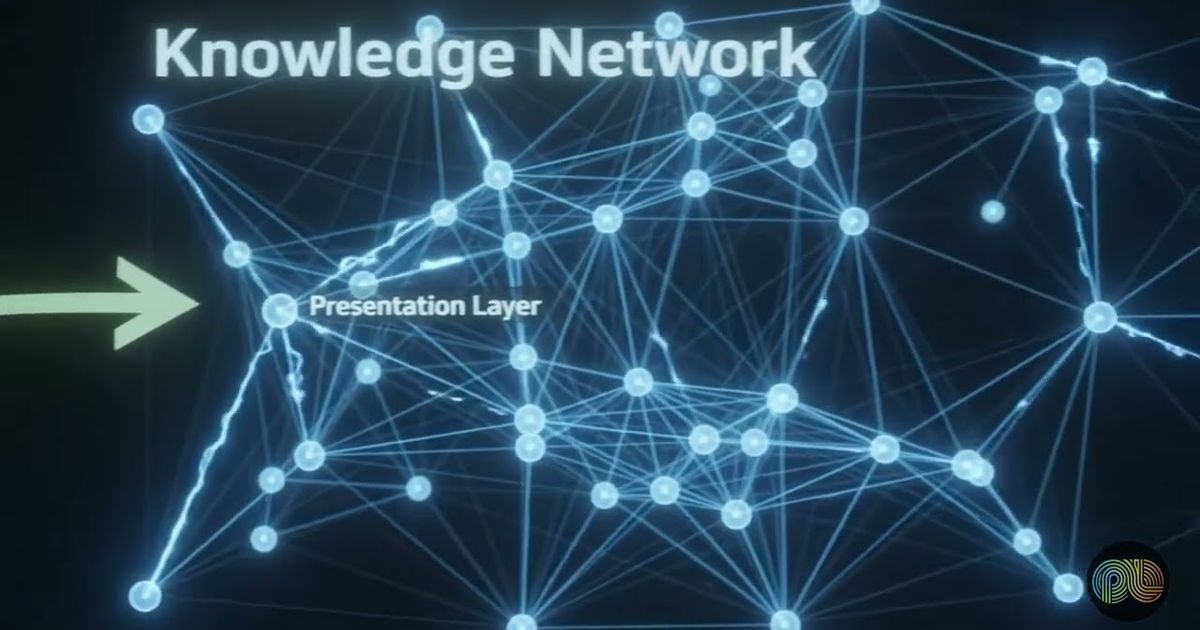
This matters because findings often outlive the reports that explain their original purpose, making evidence harder to interpret or reuse responsibly. The two-minute video above walks through the core ideas.
What is question level traceability?
Question level traceability organizes research around the questions being investigated, not only around projects, reports or files. Each piece of evidence remains connected to one or more questions that give it meaning.
A traceable research structure typically connects several layers:
- A business or strategic question defines what the organization needs to understand.
- Research questions translate that need into something a study can investigate.
- Observations and data capture what participants said, did or reported.
- Themes and findings interpret patterns in that evidence.
- Recommendations connect the findings to possible decisions or actions.
These links preserve the reasoning behind an output. Someone encountering a recommendation months later can inspect the question it addressed and the evidence supporting it, rather than relying on an isolated slide or summary.
Question level traceability complements, rather than replaces, project-level organization. Projects still supply important context, but the question becomes a stable reference point around which evidence can accumulate over time.
How does question level traceability work across studies?
A shared question can connect evidence from multiple studies while each study retains its original context. This helps researchers synthesize knowledge without incorrectly treating every finding as directly comparable.
For example, several teams might investigate customer onboarding across different products, audiences and time periods. Their findings may look unrelated when stored in separate reports. Linking them to the same underlying question reveals their relationship and makes cross-study synthesis possible.
Researchers must still preserve differences in methodology, sample, market, product and timing. A common question indicates shared intent; it does not prove that evidence was collected under equivalent conditions. Teams can use cross-study synthesis to compare patterns, contradictions and contextual differences systematically.
This structure also makes duplicated work more visible. When proposed studies map to an existing question, researchers can review what is already known before commissioning more research. They may discover that the question has sufficient evidence, needs confirmation in a new context or requires a different method.
Why does question level traceability improve decisions and AI retrieval?
Traceability shows decision-makers how strongly a question is supported and helps AI systems retrieve evidence by intent. Both humans and machines can distinguish relevant evidence from content that merely uses similar language.
Its main benefits include:
- Evidence reuse: Findings related to the same question can be discovered across projects and reports.
- Gap detection: Questions with limited, outdated or weakly connected evidence become easier to identify.
- Decision clarity: Recommendations can be inspected alongside the questions and evidence behind them.
- Grounded retrieval: AI can retrieve material associated with the user’s actual question instead of relying only on document titles or keyword overlap.
Question-based retrieval reduces the chance that unrelated information appears simply because it contains similar terms. It also supports more grounded AI responses by preserving the relationship between a generated answer, its evidence and the intent that evidence was collected to address.
Traceability does not remove the need for judgment. Researchers must still evaluate evidence quality, relevance, recency and comparability before drawing a conclusion.

How can teams implement question level traceability?
Teams can implement question level traceability by creating stable question records and linking research outputs to them throughout the study lifecycle. The links should be maintained as evidence, interpretations and recommendations change.
A practical process has four steps:
- Define the question. Record clear wording, scope and the decision or knowledge need behind it.
- Link the evidence. Connect observations, responses and other source material to the relevant question.
- Connect interpretations. Map themes, findings and recommendations back to both the question and supporting evidence.
- Review the network. Check whether links remain valid, where evidence is weak and whether related studies already exist.
Use many-to-many relationships where necessary. One finding may address several questions, while one question may accumulate evidence from many studies. Stable identifiers help preserve these relationships even when wording evolves.
Governance should define who can create, revise, merge or retire questions. It should also preserve the original wording and history so that a revised question does not silently change the meaning of earlier evidence.

What mistakes should teams avoid?
Teams should avoid treating traceability as a set of superficial tags. Useful traceability preserves reasoning and context, not just a shared label.
Common mistakes include writing questions so broadly that almost any evidence could fit, linking only final findings while omitting source evidence and assuming that studies attached to the same question are automatically comparable. Teams should also avoid forcing weak evidence into a question simply to make the knowledge base appear complete.
Traceability needs ongoing maintenance. Questions change, evidence ages and new studies may contradict earlier conclusions. Reviews should identify outdated links, duplicated questions, unresolved contradictions and gaps that require further research.
Key takeaways
- Question level traceability links observations, themes, findings and recommendations to the questions they address.
- Stable questions make related evidence easier to combine across projects without discarding study context.
- Traceable structures reveal weak evidence, unanswered questions and potentially duplicated research.
- AI retrieval improves when evidence is organized by intent rather than titles and isolated keywords.
- Researchers must still judge evidence quality, recency and comparability.
How PulseLake helps
PulseLake keeps research questions, methodology, evidence and decisions within a persistent study context. Its research knowledge graph, cross-study search and evidence provenance can preserve connections between questions and supporting material, while natural-language research Q&A helps teams retrieve relevant knowledge. To discuss how this could fit your research system, talk to our team.
Frequently asked questions
How is question level traceability different from evidence lineage?
Question level traceability explains which question a piece of evidence helps answer and why that evidence matters. Evidence lineage records where evidence came from and how it was collected, transformed or interpreted. The two practices work together: traceability preserves purpose, while lineage preserves origin and processing history.
Can one research finding answer more than one question?
Yes. A finding can address several related research questions, and a single question can draw support from many findings and studies. This many-to-many structure reflects how research actually works, but every link should be explicit and defensible rather than inferred from loose keyword similarity.
Does question level traceability replace a research repository taxonomy?
No. A taxonomy categorizes studies, methods, audiences, products and other research entities, while question level traceability records the logical relationship between questions and evidence. Teams generally need both: taxonomy supports consistent organization and filtering, while traceability shows what the evidence was intended to explain.
How does question level traceability reduce repeated research?
When evidence from multiple studies converges around a stable question, researchers can see what the organization already knows before starting another project. They can then determine whether existing evidence is sufficient, outdated, contradictory or missing a specific context. This does not eliminate replication, but it helps teams repeat research deliberately rather than unknowingly.