Grounded AI Responses Explained
Grounded AI responses connect important claims to verifiable evidence, improving transparency, reviewability, and trust in AI-assisted research decisions.

What supports the answer? With grounded AI responses, important claims lead back to specific, verifiable evidence supplied or retrieved for the task. Trusted documents, research findings, interview excerpts, structured knowledge objects and datasets take precedence over reliance mainly on training.
A paragraph can sound confident and get the findings wrong. Fluency won't expose that.
Grounding gives you a claim to inspect, challenge or fix without rerunning the study.
What are grounded AI responses?
Pick a major statement from an answer. Can you find its support in the evidence available for the task? That's the test for a grounded response, also called a grounded answer. Credibility comes from being able to inspect that connection, not from thinking, ‘This sounds plausible.’
There needn't be a single kind of source. Research findings and reports qualify, as do interview transcripts and participant excerpts. A response can also draw on structured knowledge objects, prior study context, documents, datasets or retrieved records. In each case, we're talking about trusted material.
Suppose the request is to summarize customer feedback from several studies. The findings and excerpts come first: retrieve the ones that bear on the request. A synthesis follows from those, rather than the other way round. It must keep their context intact and distinguish what the material supports from the interpretation being made of it.
That last distinction matters. We'd stress that the evidence has a say in what gets written, limiting the answer and supporting its central claims. Writing freely and attaching references at the end doesn't meet that standard.
What are the limits of grounded AI responses?
Grounded doesn't mean correct. You may be able to follow the path from information to conclusion more closely and still find a mistake. Poor evidence, retrieval, interpretation or review can each let one through.
Sometimes the available evidence isn't complete, or it doesn't represent the people or issue under study. Sometimes participants disagree, or one study conflicts with another. Then there's retrieval: the system might never find the material that would have changed its answer. Even a retrieved finding isn't safe from distortion. What was tentative in the source becomes definite in the response; what was qualified by study conditions becomes an excerpt without those qualifications.
The sixth limitation bothers us most. It is the person reviewing the answer who sees citations and stops checking. Citations give the impression that a check has already happened, so too often nobody asks whether the cited material supports the claim beside it.
Don't separate the output from its evidence chain when evaluating it. Before a finding informs a decision, use a structured approach to AI output verification: test whether the sources are relevant, the claims supported, the uncertainty acknowledged and the result consistent.

How does grounding work?
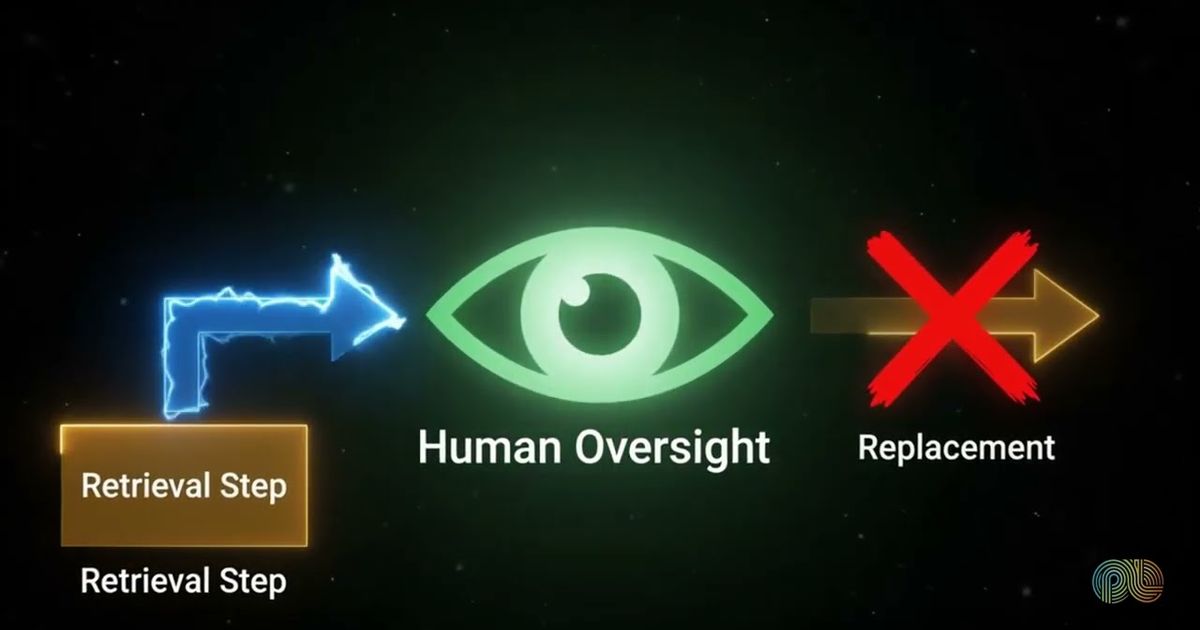
The order is quite literal: evidence before prose. Work out the question, retrieve what is relevant, and write within the bounds of that material. Afterward, review the connections between sources and claims. You're asking for a supportable answer here, not just a likely one.
- Frame the question: what must the response answer, and which evidence is appropriate?
- Retrieve the evidence (documents, findings, excerpts, datasets, knowledge objects).
- Generate the response from what was retrieved, keeping the context and admitting uncertainty.
- Review the lineage. Does each major conclusion accurately reflect the information behind it?
For researchers, seeing the answer isn't enough. They need to know what was retrieved and where an interpretation has entered the response. That's the purpose of clear evidence lineage. It lets a reviewer go back from the conclusion to the sources, instead of accepting appearances.

Step one gets skipped more than it should. Leave the choice of appropriate evidence undecided and the system can ground its answer in the wrong material. The sources may be perfectly good for a slightly different question. That doesn't make the answer as relevant to the question you actually asked.
Why does grounding improve trust in AI research?
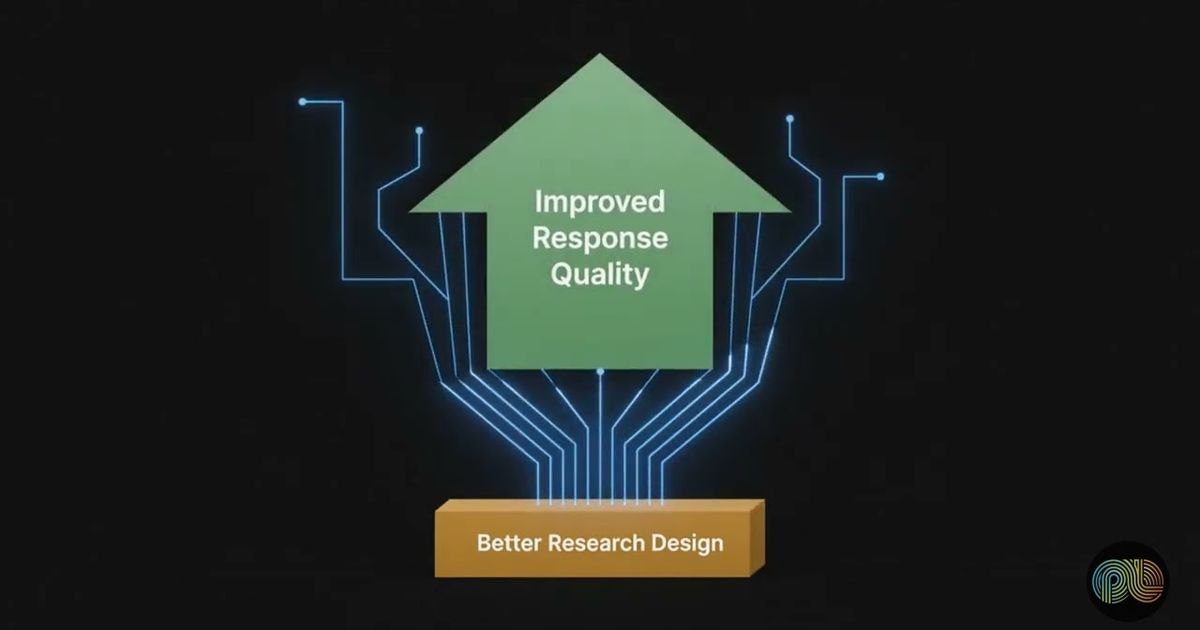
You don't have to take the model's word for it. A reviewer can go to the evidence and decide: does this support the claim, or has the answer made a leap? Could someone read it differently? Those questions make the output open to inspection and verification, and its claims accountable to their sources.
If a colleague disputes a conclusion, you both have somewhere to go: back to the same sources. The disagreement needn't stay trapped in an opaque model response. And if the analysis needs refining later, doing so doesn't require you to rebuild the full study.
What should happen when studies disagree? The disagreement should appear in the answer. So should a narrow evidence base or gaps in the material. Grounding gives uncertainty a place in the response; a good answer won't replace those limits with confidence it hasn't earned.
Someone still has to exercise judgment. Grounding doesn't do that job for researchers; it gives them a visible chain of evidence to judge. We'd choose that over an assertion whose support cannot be traced every time.
How PulseLake helps
PulseLake keeps objectives, methodology, evidence, analysis and decisions in one persistent study context. Its research knowledge graph, cross-study search, deep research and natural-language questions with evidence provenance help teams tie outputs to the material behind them. Specialized agents can help with analysis and reporting, while researchers keep the judgment and the approvals. To talk through your research system, talk to our team.
Frequently asked questions
Can grounded AI responses still hallucinate?
Yes. Retrieval gives the model evidence to work within, which cuts down unsupported generation. It can still get a source wrong, miss something relevant or state a finding too strongly. Nor does a citation prove that the cited material backs the claim. Read the answer with its sources, checking the connections as well as the output.
What types of evidence can ground an AI response?
It depends on the question. A research report might fit; so might interview excerpts, documents, structured knowledge objects, datasets or prior findings. Other trusted material can be suitable too. Ask whether the source is specific and current, and whether enough context remains for someone reviewing the answer to judge the support.
Is a response grounded just because it includes citations?
No. What if the reference is irrelevant? What if it is incomplete, or was added after writing and never constrained the answer? In a grounded workflow, retrieval comes before the response is written. The evidence helps build that response, and a reviewer can follow each major claim to material that genuinely supports it.
How should researchers review a grounded AI answer?
Start a little earlier than the answer: look at what was retrieved. Is it relevant, and is anything important absent? Then read the major claims against their evidence to check that they represent it accurately. Keep an eye out for dropped context, conflicting findings and more certainty than the material allows. Finding that all the references exist barely begins the job; it's the whole chain you're verifying.