Machine Readable Research
Machine readable research structures evidence, findings, and decisions so AI can retrieve, compare, verify, and synthesize knowledge across studies.
In the full article
Read the video transcript
This transcript was generated from captions and may contain recognition errors.
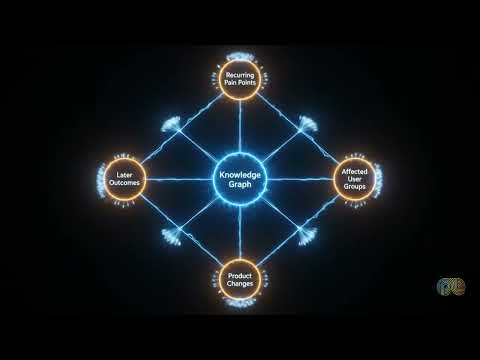
Research has traditionally been written for people to read. That approach works well for communicating findings, but it becomes limiting when AI systems need to retrieve, compare, verify, or synthesize knowledge across hundreds of studies. Machine readable research addresses this challenge by representing research in forms that computers can understand without sacrificing human interpretation. Machine readable research organizes knowledge into structured objects with clearly defined attributes, relationships, and metadata. Instead of storing every observation inside narrative documents alone, important research elements such as questions, evidence, themes, findings, recommendations, and decisions become individually identifiable and connected. This structure allows software to interpret not just the text itself, but also the meaning and role of each research object. Imagine asking an AI to identify every finding related to customer trust that was supported by usability testing and later confirmed through interviews. If the repository contains only reports, the system must repeatedly infer those relationships from unstructured text. In a machine readable environment, those connections already exist, allowing retrieval and analysis to become faster, more consistent, and easier to verify. Machine readability also improves interoperability. Structured research can move between different tools, workflows, and analytical processes while preserving context and semantic meaning. Consistent schemas, metadata, ontologies, and stable identifiers all contribute to this capability by ensuring research objects remain understandable beyond the system that originally created them. Creating machine readable research does not replace human storytelling or interpretation. reports continue serving as valuable communication artifacts. The difference is that the underlying knowledge also exists in a structured form that supports automation, traceability, continuous learning, and AI assisted reasoning. This foundation allows research to function as an evolving knowledge system instead of remaining a collection of static documents.