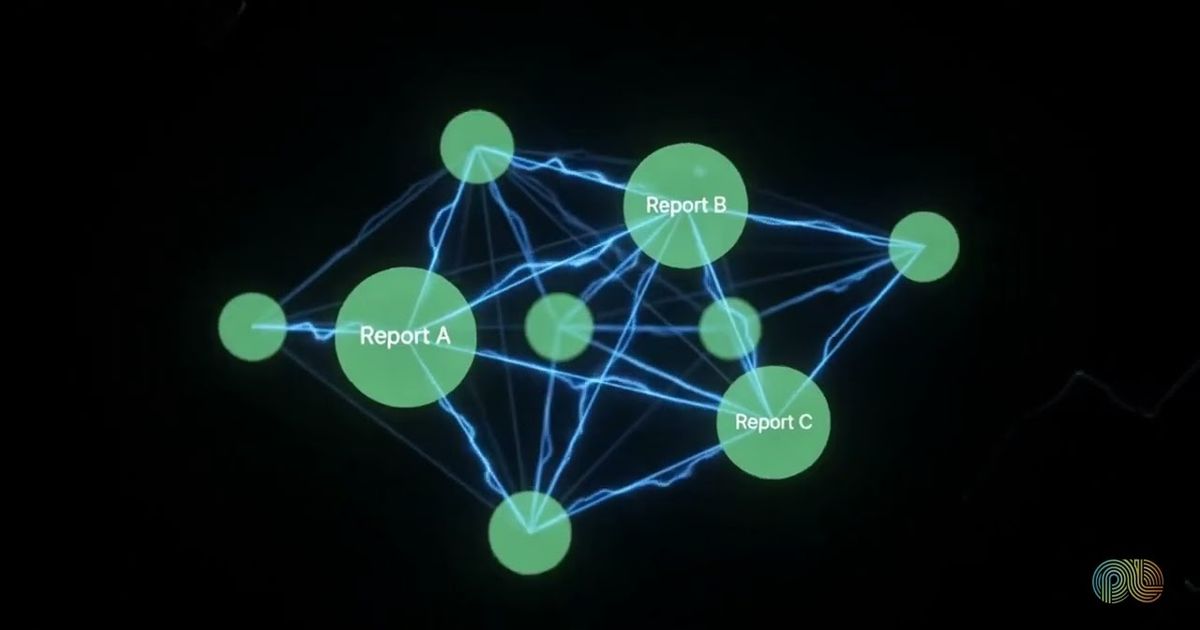
Machine Readable Research Explained
Machine readable research structures evidence, findings, and decisions so AI can retrieve, compare, verify, and synthesize knowledge across studies.

Machine readable research represents research knowledge as structured, identifiable objects with defined attributes, relationships, and metadata. It enables software to understand whether information is a question, observation, theme, finding, recommendation, or decision—not merely process the words in a document—while preserving the context people need for interpretation.
This matters because AI systems can retrieve, compare, verify, and synthesize structured knowledge more reliably than they can repeatedly infer relationships from disconnected reports. The two-minute video above walks through the core ideas.
What is machine readable research?
Machine readable research separates the important components of a study into structured objects and records how they relate. Each object has a defined role, identity, and context that software can interpret.
A traditional report may contain all the necessary information, but questions, evidence, and conclusions are embedded in narrative text. Machine readability makes those elements individually identifiable while retaining the report as a human communication artifact.
Common research objects include:
- Questions, which define what the study seeks to understand.
- Evidence, such as observations, responses, or analytical outputs.
- Themes, which organize recurring patterns across the evidence.
- Findings, which state what the evidence indicates.
- Recommendations, which translate findings into possible action.
- Decisions, which record what stakeholders chose and why.
Relationships connect these objects. A finding can link to supporting evidence, a recommendation can link to the finding behind it, and a decision can link to the recommendation it used. This approach is central to building AI-ready research data.

How does machine readable research improve AI retrieval?
It gives AI systems explicit context instead of requiring them to reconstruct meaning from prose each time. Retrieval becomes more precise because the system can filter by object type, method, topic, relationship, or provenance.
Consider a request to identify every finding about customer trust that was supported by usability testing and later confirmed through interviews. In a repository of reports, an AI system must locate relevant passages and infer whether the methods, findings, and confirmation are genuinely connected.
In a machine-readable environment, those links already exist. The system can follow the relationships among the trust topic, usability evidence, interview evidence, and resulting findings. Researchers can then inspect the supporting objects rather than accept an answer without a visible basis.
This structure supports three important outcomes:
- Retrieval is faster because relevant objects can be found directly.
- Comparison is more consistent because equivalent object types share definitions.
- Verification is easier because findings remain connected to their evidence and provenance.
What makes research interoperable across tools?
Interoperability requires consistent schemas, metadata, ontologies, and stable identifiers. Together, these mechanisms preserve the role and meaning of research objects when knowledge moves between systems or workflows.
A schema defines the fields and relationships an object can contain. Metadata records context such as the study, method, source, or status. An ontology provides shared concepts and relationships, while a stable identifier ensures that an object remains recognizable even when it appears in another application or analytical process.
Without these foundations, two tools may use the same word differently or lose the connection between a finding and its source. With them, structured research can move through collection, analysis, synthesis, reporting, and reuse without becoming detached from its original meaning.
These structures can also support knowledge graphs for research, where linked objects make relationships across studies searchable and traceable.
Does machine readable research replace research reports?
No. Reports remain valuable for explaining significance, presenting a coherent argument, and communicating findings to people. Machine readability adds a structured knowledge layer beneath or alongside the narrative.
The two forms serve different but complementary purposes. A report helps a stakeholder understand the story and implications of a study. Structured objects help software retrieve evidence, trace conclusions, automate workflows, and reason across a larger body of knowledge.
Teams can therefore publish a report while also preserving its questions, evidence, themes, findings, recommendations, and decisions as connected objects. This dual approach supports human interpretation without leaving organizational knowledge trapped in static documents. Over time, research can function as an evolving knowledge system that supports traceability, continuous learning, automation, and AI-assisted reasoning.

Key takeaways
- Machine readable research represents study knowledge as structured objects with explicit roles and relationships.
- Linked evidence, findings, and methods make AI retrieval and verification more consistent.
- Schemas, metadata, ontologies, and stable identifiers preserve meaning across tools and workflows.
- Structured research complements human-readable reports rather than replacing them.
- Machine readability helps research become a reusable knowledge system instead of a collection of static files.
How PulseLake helps
PulseLake keeps objectives, methodology, evidence, findings, and decisions in a persistent study context. Its research knowledge graph, ontology, evidence provenance, and cross-study search help teams connect and reuse research while retaining human judgment and approvals. To discuss how this could fit your research system, talk to our team.
Frequently asked questions
How is machine readable research different from tagging documents?
Document tags usually describe an entire file with broad labels such as topic, team, or study type. Machine readable research identifies the individual objects inside or behind that file and records their roles and relationships. It can distinguish evidence from a finding and connect both to a method, recommendation, or decision.
Can existing research reports be converted into machine readable research?
Yes, existing reports can be parsed into candidate questions, evidence, themes, findings, and recommendations. However, extraction alone does not guarantee accurate relationships or provenance. Researchers should review the resulting objects, confirm their meanings, and connect them to source material before relying on them for retrieval or AI-assisted reasoning.
Why do ontologies matter for machine readable research?
An ontology defines the concepts and relationships used across a research system. It helps software recognize that different studies refer to the same concept and clarifies how objects such as evidence, findings, and decisions relate. Without shared definitions, structured data can remain technically organized but semantically inconsistent.
Why are stable identifiers important for research knowledge?
Stable identifiers give each research object a persistent identity that does not depend on a document title or storage location. They allow tools and workflows to reference the same finding, evidence item, or decision reliably. This helps preserve links, prevent ambiguity, and maintain traceability as research is moved, updated, or reused.