
Short videos on running research end to end.
Two-minute explainers from the PulseLake YouTube channel, each on its own page with a link to the full article on the blog.
 2:39
2:39Strategic Research Systems
Strategic research systems connect evidence, knowledge, research planning, and decisions to organizational goals for stronger long-term direction.
Watch the video 2:29
2:29Research Intake Systems
Research intake systems turn requests into clear, prioritized evidence needs by capturing decisions, context, urgency, stakeholders, and existing knowledge.
Watch the video 2:28
2:28Research Driven Transformation
Research-driven transformation uses continuous evidence and learning to guide organizational change, reduce uncertainty, and improve decisions over time.
Watch the video 2:11
2:11Research Objects vs Research Reports
Research objects turn questions, evidence, findings, and decisions into structured, reusable knowledge, while reports communicate a project narrative.
Watch the video 2:04
2:04Research Schema Design
Research schema design organizes questions, evidence, findings, and decisions so knowledge remains understandable, connected, reusable, and adaptable.
Watch the video 2:14
2:14Semantic Relationships in Research
Semantic relationships in research connect evidence, findings, questions and decisions so knowledge is easier to trace, retrieve, synthesize and reuse.
Watch the video 2:37
2:37Research Workflow Automation
Research workflow automation coordinates repeatable processes, reduces operational friction, and frees researchers to focus on analysis and interpretation.
Watch the video 2:11
2:11Semantic Search Explained
Semantic search retrieves research by meaning, intent, and conceptual relationships, helping teams find relevant evidence even when wording varies by study.
Watch the video 2:19
2:19Standardized Research Requests
Standardized research requests capture decisions, objectives, audiences, evidence, constraints, and timelines so teams can prioritize work consistently.
Watch the video 2:19
2:19Structured Research Assets
Structured research assets keep findings, evidence, metadata, and relationships searchable, reusable, and trustworthy across studies and over time.
Watch the video 2:29
2:29Study Templates That Scale
Study templates that scale create consistent research structures, improve collaboration, support comparison, and preserve room for researcher judgment.
Watch the video 2:27
2:27Synthetic Data Validation
Synthetic data validation tests whether generated datasets preserve the distributions, relationships, behaviors, and relevance required for reliable use.
Watch the video 2:09
2:09The Future of Evidence Systems
The future of evidence systems connects questions, evidence, reasoning, and decisions so organizations can reuse knowledge and make better-informed choices.
Watch the video 2:18
2:18Validating AI Summaries
Validating AI summaries requires tracing claims to source evidence, preserving uncertainty and balance, and applying human review before publication.
Watch the video 2:18
2:18Why Ontologies Beat Traditional Tagging
Ontologies improve research repositories by modeling concepts and relationships, enabling semantic search, cross-study reasoning and confident evidence reuse.
Watch the video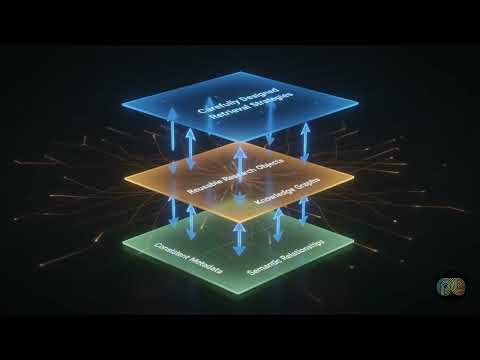 2:11
2:11Searchable Organizational Intelligence
Searchable organizational intelligence makes research easier to find, verify, and apply by connecting evidence, findings, decisions, and context.
Watch the video 2:40
2:40Scoring Frameworks
Scoring frameworks turn assessment evidence into consistent evaluations, helping organizations compare capabilities, track progress, and prioritize action.
Watch the video 2:16
2:16Rubric Based Evaluation
Rubric-based evaluation defines clear criteria for judging AI outputs, helping teams produce more consistent reviews and targeted, repeatable feedback.
Watch the video 2:12
2:12Retrieval Augmented Research
Retrieval augmented research grounds AI analysis in trusted organizational evidence, making findings more accurate, transparent, traceable, and explainable.
Watch the video 2:32
2:32Responsible AI Research
Responsible AI research keeps AI-assisted studies fair, reliable, transparent, private, and accountable through evaluation and human oversight.
Watch the video 2:20
2:20Resolving Label Disagreements
Label disagreement resolution examines conflicting annotations, clarifies guidelines, improves future consistency, and produces more reliable datasets.
Watch the video 2:25
2:25Research Version Control
Research version control tracks meaningful changes, preserves evidence history, and shows teams which research assets are current, approved, and reliable.
Watch the video 2:30
2:30Research SLAs
Research SLAs define intake, response, priority, communication, and delivery expectations so teams can plan work without sacrificing research quality.
Watch the video 2:28
2:28Research Service Models
Research service models define how research is organized, accessed, governed, delivered, and reused so organizations can scale insight sustainably.
Watch the video 2:20
2:20Research QA Checklists
Research QA checklists make quality standards visible and repeatable, helping teams catch errors, document evidence, and produce more trustworthy findings.
Watch the video 2:20
2:20Research Prioritization Frameworks
Research prioritization frameworks help teams rank requests by strategic value, decision impact, evidence gaps, effort, and available resources.
Watch the video 2:27
2:27Research Planning with AI
Research planning with AI helps teams explore methods, refine questions, find prior evidence, and build stronger plans while humans retain control.
Watch the video 2:28
2:28Research Narrative Generation
Research narrative generation turns complex findings into clear, evidence-grounded explanations that connect patterns, meaning, and decisions.
Watch the video 2:17
2:17Research Lifecycle Management
Research lifecycle management coordinates every stage of research so evidence stays discoverable, governed, reusable, and valuable beyond one project.
Watch the video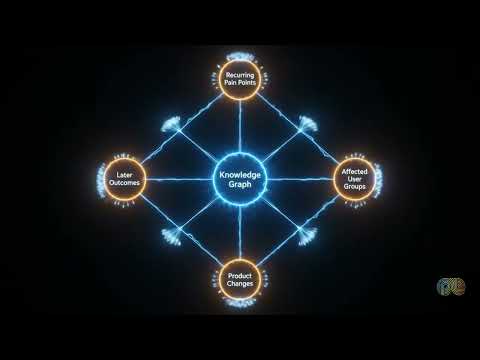 2:19
2:19Research Knowledge Graphs
Research knowledge graphs connect studies, evidence, findings, and decisions, making institutional knowledge easier to trace, retrieve, and reuse over time.
Watch the video 2:24
2:24Research Governance at Scale
Research governance at scale creates shared standards for ethical, reliable, traceable work while preserving team flexibility and professional judgment.
Watch the video 2:36
2:36Research Gap Detection
Research gap detection finds unanswered questions, weak evidence and missing perspectives so teams can prioritize research that reduces decision uncertainty.
Watch the video 2:07
2:07Research Context Windows
Research context windows preserve meaning by pairing evidence with the questions, metadata, and observations needed for accurate interpretation.
Watch the video 2:29
2:29Research Capacity Planning
Research capacity planning aligns researcher time, expertise, tools and support with expected demand so teams can prioritize valuable work sustainably.
Watch the video 2:34
2:34Research as Infrastructure
Research as infrastructure connects evidence, methods, metadata, and governance so organizations can reuse knowledge and make more reliable decisions.
Watch the video 2:33
2:33Repository Maintenance
Repository maintenance keeps research knowledge organized, current, connected, and trustworthy through metadata, governance, archiving, and review.
Watch the video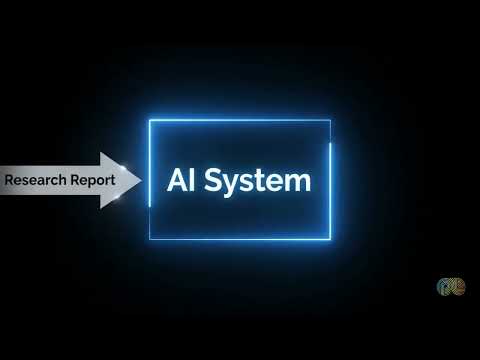 2:13
2:13Reference Based Evaluation
Reference-based evaluation compares AI outputs with trusted answers, helping researchers assess accuracy, completeness, grounding, and consistency over time.
Watch the video 2:11
2:11Question Level Traceability
Question level traceability links every finding to the research question it answers, improving evidence reuse, gap detection, decisions and AI retrieval.
Watch the video 2:31
2:31Qualitative Coding at Scale
Qualitative coding at scale combines consistent codebooks, human review and AI assistance to analyze growing evidence without sacrificing rigor or nuance.
Watch the video 2:17
2:17Pairwise Evaluation
Pairwise evaluation compares two AI outputs against shared criteria, producing more consistent judgments for prompts, models, and research workflows.
Watch the video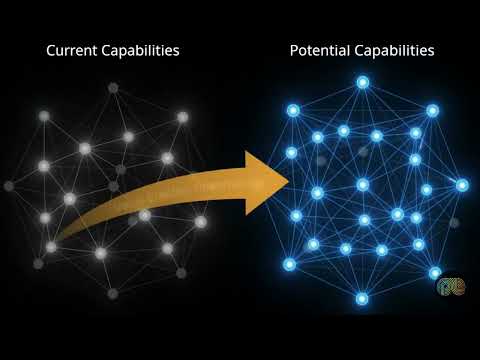 2:18
2:18Organizational Benchmarking
Organizational benchmarking compares capabilities with standards, peers, past performance, or future states to prioritize practical improvements.
Watch the video 2:32
2:32Operationalizing Insights
Operationalizing insights embeds research evidence into decisions, workflows, and ownership so findings guide action instead of remaining static reports.
Watch the video 2:28
2:28Multi Document Analysis
Multi-document analysis connects evidence across transcripts, surveys, reports, and studies to reveal patterns while preserving each source's context.
Watch the video 2:18
2:18Multi Annotator Agreement
Multi-annotator agreement measures labeling consistency, reveals unclear guidelines, and helps teams build reliable datasets for research and AI systems.
Watch the video 1:50
1:50Multi Agent Research Systems
Multi-agent research systems coordinate specialized AI agents to collect evidence, analyze patterns, review quality, and produce transparent research outputs.
Watch the video 2:11
2:11Metadata Driven Research
Metadata-driven research keeps evidence searchable, traceable, and reusable by attaching consistent context about methods, ownership, sources, and versions.
Watch the video 2:11
2:11Hybrid Search for Research
Hybrid search for research combines exact keyword matching with semantic retrieval, helping teams find both known terms and conceptually related evidence.
Watch the video 2:21
2:21Measuring AI Reliability
AI reliability measures whether systems deliver consistent, dependable results across changing tasks, data, evidence, and operating conditions.
Watch the video 2:14
2:14Maintaining Label Consistency
Label consistency keeps annotations comparable as data, teams and guidelines change. Learn how calibration, quality review and governance prevent drift.
Watch the video 2:14
2:14Machine Readable Research
Machine readable research structures evidence, findings, and decisions so AI can retrieve, compare, verify, and synthesize knowledge across studies.
Watch the video 2:10
2:10Knowledge Retrieval Precision
Knowledge retrieval precision helps research systems return relevant evidence, reduce noise, and preserve context, diversity, completeness, and traceability.
Watch the video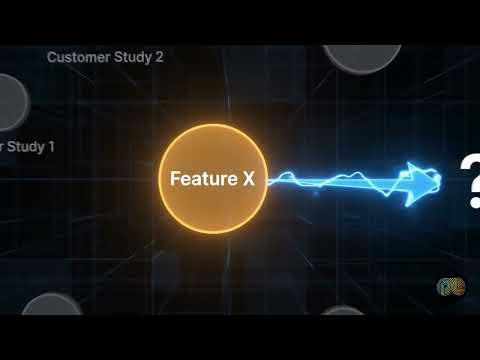 2:16
2:16Knowledge Graphs for Research
Knowledge graphs for research connect evidence, findings, themes, and decisions so teams and AI can discover context, trace sources, and reuse insights.
Watch the video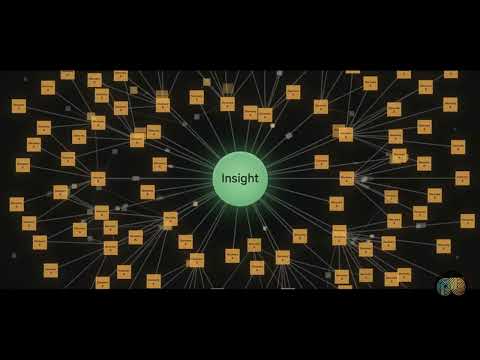 2:29
2:29Knowledge Deduplication
Knowledge deduplication connects equivalent insights without deleting supporting evidence, improving repository clarity, search, synthesis, and AI retrieval.
Watch the video 2:13
2:13Human Review Pipelines
Human review pipelines route AI-generated research through risk-based checks to improve accuracy, accountability, transparency, and decision confidence.
Watch the video 2:17
2:17Human Preference Evaluation
Human preference evaluation compares AI outputs with structured human judgment to identify responses that are clearer, grounded, useful, and actionable.
Watch the video 2:19
2:19Human in the Loop Annotation
Human in the loop annotation combines AI labeling speed with expert review to handle ambiguity, improve data quality, and keep decisions accountable.
Watch the video 2:47
2:47Human AI Collaboration Patterns
Human-AI collaboration patterns show how researchers combine machine speed and scale with human context, judgment, verification, and responsible decisions.
Watch the video 2:26
2:26Hallucination Detection
Hallucination detection identifies fabricated or unsupported AI claims by tracing statements to trusted evidence before they shape research decisions.
Watch the video 2:13
2:13Grounded AI Responses
Grounded AI responses connect important claims to verifiable evidence, improving transparency, reviewability, and trust in AI-assisted research decisions.
Watch the video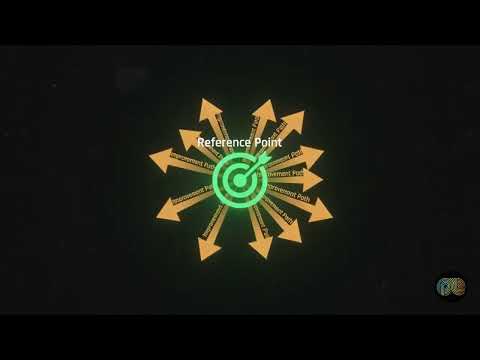 2:20
2:20Gold Standard Datasets
Gold standard datasets provide trusted, expert-reviewed reference examples for evaluating AI systems, comparing versions, and measuring real improvement.
Watch the video 2:31
2:31Future State Modelling
Future state modeling defines the capabilities, workflows, systems, and decisions needed to move from current operations toward a clear, shared target state.
Watch the video 2:17
2:17Finding Missing Evidence
Finding missing evidence reveals gaps between what is known and what decisions require, helping teams prioritize the most important unanswered research questions.
Watch the video 2:21
2:21Explainable AI for Researchers
Explainable AI for researchers makes AI-supported findings easier to inspect by showing their evidence, factors, limitations, and confidence considerations.
Watch the video 2:10
2:10Evidence Lineage Explained
Evidence lineage connects research conclusions to their sources, transformations, and analyses, making every insight transparent, auditable, and reusable.
Watch the video 2:30
2:30Evidence Based Assessments
Evidence-based assessments ground conclusions in relevant, reliable and traceable information for more consistent evaluation and better planning.
Watch the video 2:09
2:09Expert vs Crowd Annotation
Expert vs. crowd annotation matches specialists to nuanced, high-stakes labels and trained groups to clear tasks requiring consistent review at scale.
Watch the video 2:27
2:27Connected Knowledge Systems
Organizational memory connects research evidence, findings, and decisions so teams can retrieve, validate, and reuse knowledge instead of rediscovering it.
Watch the video 2:42
2:42Enterprise Learning Systems
Enterprise learning systems connect knowledge creation, sharing, reflection, and improvement so organizations can reuse evidence and make better decisions.
Watch the video 2:13
2:13Evaluating LLM Outputs
Evaluating LLM outputs requires clear criteria for accuracy, relevance, grounding, reasoning, instruction following, and uncertainty in AI research.
Watch the video 2:25
2:25Entity Extraction for Research
Entity extraction for research turns unstructured evidence into linked concepts, making patterns easier to find, analyze, verify, and reuse across studies.
Watch the video 2:23
2:23Dimension Based Analysis
Dimension-based analysis compares research evidence across user, context, journey, product, and time dimensions to reveal hidden patterns and guide decisions.
Watch the video 2:15
2:15Designing Reusable Research Dimensions
Reusable research dimensions standardize recurring evidence so teams can compare studies, preserve meaningful context, and build cumulative knowledge.
Watch the video 2:19
2:19Decision Intelligence
Decision intelligence improves choices under uncertainty by connecting evidence, models, knowledge, human judgment, assumptions, risks, and outcomes.
Watch the video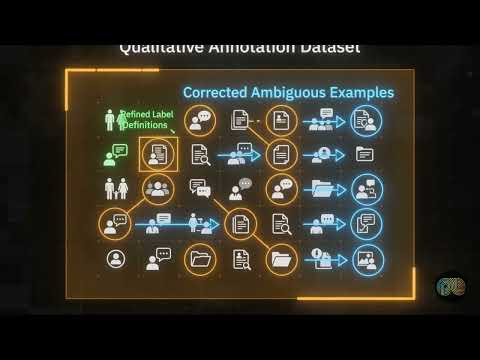 2:21
2:21Dataset Versioning
Dataset versioning preserves each meaningful data state, making AI evaluations reproducible, changes traceable, and collaboration more reliable.
Watch the video 2:17
2:17Current State Assessments
Current state assessments establish a clear baseline of capabilities, processes, systems, and constraints so teams can plan meaningful improvements.
Watch the video 2:15
2:15Cross Study Synthesis
Cross-study synthesis integrates evidence across research projects to reveal durable patterns, explain contradictions, and preserve each study's context.
Watch the video 2:16
2:16Cross Study Knowledge Linking
Cross-study knowledge linking connects evidence across projects, revealing recurring themes, changes, and contradictions while preserving source context.
Watch the video 2:05
2:05Creating Training Data
Creating training data requires clear objectives, representative examples, consistent labels, and ongoing quality control to build dependable AI systems.
Watch the video 2:36
2:36Contradiction Detection
Contradiction detection makes conflicting research evidence visible, helping teams explain differences across users, contexts, methods, and time periods.
Watch the video 2:46
2:46Continuous Intelligence Platforms
Continuous intelligence platforms connect evolving evidence, analysis, and human judgment to detect change earlier and support timely, informed decisions.
Watch the video 2:26
2:26Continuous Insight Generation
Continuous insight generation keeps knowledge current by connecting and validating new evidence, helping teams detect change and make better decisions.
Watch the video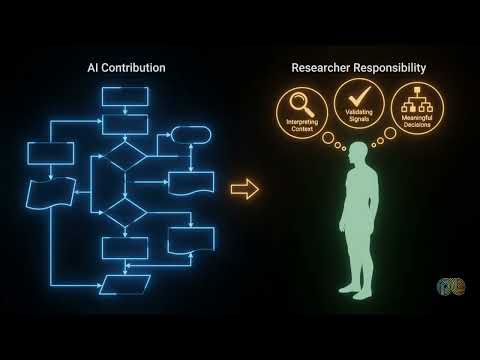 2:22
2:22Continuous Discovery Operations
Continuous discovery operations turn ongoing feedback into connected evidence, helping teams detect changing needs earlier and make better-informed decisions.
Watch the video 2:17
2:17Continuous Dataset Improvement
Continuous dataset improvement uses ongoing review, correction, expansion, and governance to make data more reliable for research, evaluation, and AI.
Watch the video 2:40
2:40Continuous AI Evaluation
Continuous AI evaluation monitors accuracy, reliability, safety, usefulness, and alignment so AI systems remain dependable as models and contexts change.
Watch the video 2:17
2:17Context Preservation in Research
Context preservation in research keeps findings tied to methods, populations, evidence, assumptions, and limits so teams and AI can reuse them accurately.
Watch the video 2:16
2:16Comparative Theme Analysis
Comparative theme analysis reveals recurring and changing patterns across studies, groups, methods, products, and time periods while preserving context.
Watch the video 2:14
2:14Comparative Evidence Analysis
Comparative evidence analysis compares sources to reveal alignment, contradictions, context, and gaps, helping researchers reach balanced conclusions.
Watch the video 2:10
2:10Chunking Research Data Correctly
Research data chunking divides evidence into meaningful, context-rich units that improve AI retrieval, grounded analysis, and knowledge reuse across studies.
Watch the video 2:25
2:25Capability Maturity Models
Capability maturity models assess current practices, define appropriate target states, and turn operational improvement into a practical, staged roadmap.
Watch the video 2:17
2:17Canonical Research Models
Canonical research models give teams a shared structure for questions, evidence, findings, and decisions, improving comparison, reuse, automation, and AI.
Watch the video 2:07
2:07Building Annotation Rubrics
Annotation rubrics improve labeling consistency by defining evidence, resolving ambiguity, and guiding reviewers through difficult or conflicting cases.
Watch the video 2:18
2:18Building an Insight Index
An insight index turns research findings into reusable knowledge by linking each insight to its evidence, context, themes, products, and audiences.
Watch the video 2:04
2:04Building an Evidence Graph
Evidence graph design links raw research evidence to findings and decisions, making every conclusion easier to trace, verify, challenge, and reuse.
Watch the video 2:46
2:46Benchmark Libraries
Benchmark libraries provide structured reference models, criteria, and maturity examples to help teams assess capabilities and prioritize improvements.
Watch the video 2:19
2:19Benchmark Dataset Design
Benchmark dataset design creates fair, repeatable AI evaluations by representing real task diversity, hard cases, ambiguity, and specific capabilities.
Watch the video 2:43
2:43Assessment Framework Design
Assessment framework design turns broad capability questions into clear dimensions, evidence-based scoring, consistent diagnosis, and action plans.
Watch the video 2:21
2:21Autonomous Research Limits
Autonomous research limits define where AI needs human supervision to protect context, ethics, evidence quality, accountability, and sound decisions.
Watch the video 2:20
2:20Auditability in Research
Auditability in research connects conclusions to evidence, methods, decisions, and AI outputs so teams can review, verify, and trust important insights.
Watch the video 2:22
2:22Annotation Quality Control
Annotation quality control keeps labeled data accurate and consistent through ongoing review, error detection, guideline updates, and human oversight.
Watch the video 2:27
2:27Annotation Operations
Annotation operations coordinate people, standards, workflows, and quality controls to keep large-scale AI data labeling consistent, efficient, and reliable.
Watch the video 2:20
2:20Annotation Guidelines
Annotation guidelines make AI evaluation consistent by defining how reviewers judge accuracy, evidence preservation, uncertainty, and performance over time.
Watch the video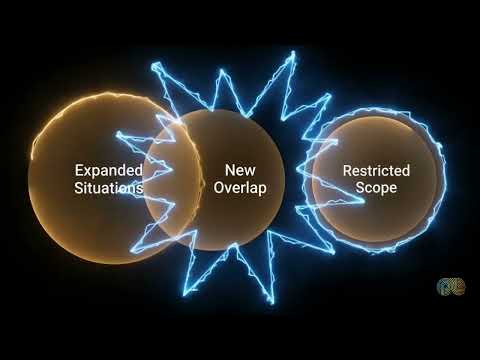 2:16
2:16Annotation Drift
Annotation drift changes label meaning over time. Learn how calibration, agreement checks, sample reviews, and human oversight preserve data quality.
Watch the video 2:24
2:24AI Research Orchestration
AI research orchestration coordinates tools, agents, evidence, workflows, and human review to make research more reliable, transparent, and efficient.
Watch the video 2:30
2:30AI Research Governance
AI research governance defines how teams use, evaluate, and oversee AI so research stays accurate, transparent, privacy-aware, and accountable.
Watch the video 2:15
2:15AI Output Verification
AI output verification checks generated answers for accuracy, completeness, grounding, context, and fitness for purpose before they influence decisions.
Watch the video 2:38
2:38AI Native Research Organizations
AI-native research organizations embed AI, connected knowledge, governance, and human judgment into one operating model for better research decisions.
Watch the video 2:15
2:15AI Native Research Architecture
AI-native research architecture turns studies into structured, connected knowledge that improves AI retrieval, traceability, synthesis, and reuse.
Watch the video 2:18
2:18AI Generated Summaries
AI-generated summaries condense research evidence while preserving context, uncertainty and source links, helping teams review findings faster and safely.
Watch the video 2:28
2:28AI Generated Research Plans
AI-generated research plans speed early planning by suggesting objectives, methods, analysis, and operations while keeping researchers in control.
Watch the video 2:21
2:21AI First Qualitative Analysis
AI-first qualitative analysis uses AI to surface themes and organize evidence, while researchers validate context, nuance, and final conclusions.
Watch the video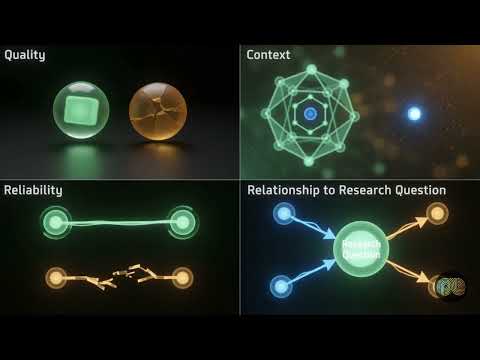 2:34
2:34AI Evidence Collection
AI evidence collection helps researchers find, organize, extract, and connect sources while preserving the lineage needed for trustworthy conclusions.
Watch the video 1:50
1:50Research Governance Without Bureaucracy
Research governance sets lightweight standards for quality, ethics, data access and documentation so teams can scale reliable research without delays.
Watch the video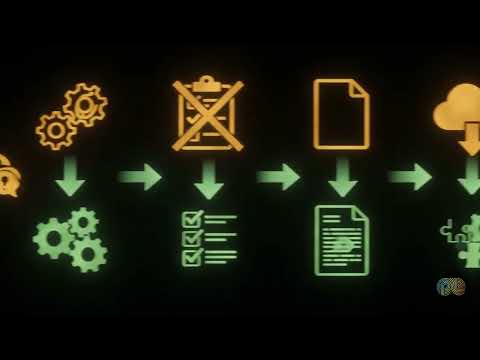 2:13
2:13AI Error Taxonomy
AI error taxonomy classifies model failures by cause, helping teams diagnose hallucinations, reasoning flaws, retrieval issues, and other recurring errors.
Watch the video 2:15
2:15AI Confidence Estimation
AI confidence estimation separates persuasive language from reliable conclusions by evaluating evidence quality, retrieval, agreement and uncertainty.
Watch the video 2:27
2:27AI Assisted Root Cause Analysis
AI assisted root cause analysis connects evidence to reveal plausible causes, test hypotheses, and guide decisions without replacing researcher judgment.
Watch the video 2:09
2:09AI Assisted Opportunity Discovery
Comparative evidence analysis uses AI to compare research sources, surface patterns and conflicts, and reach stronger conclusions without losing context.
Watch the video 2:22
2:22AI Assisted Annotation
AI-assisted annotation uses models to suggest labels and flag uncertain cases, helping human reviewers scale labeling without surrendering quality control.
Watch the video 1:56
1:56AI Agents for Research
AI agents for research plan and complete connected tasks under human oversight, helping teams gather evidence, analyze findings, and maintain accountability.
Watch the video 1:50
1:50Why Research Infrastructure Matters More Than Dashboards
Research infrastructure turns scattered evidence into connected, reliable knowledge, giving dashboards the context teams need to understand patterns and act.
Watch the video 1:49
1:49Why Enterprises Keep Repeating Research
Repeating research happens when findings are scattered, hard to discover, or stripped of context. Learn how shared knowledge systems reduce duplication.
Watch the video 1:56
1:56Van Westendorp Pricing Research
Van Westendorp pricing research maps how customers perceive price levels, helping teams identify an acceptable range without treating it as a final price.
Watch the video 1:49
1:49The Next Generation of Research Teams
Next-generation research teams combine methodological rigor, AI collaboration, technical awareness, communication, and strategy to guide better decisions.
Watch the video 1:55
1:55The Future of Research Operations
The future of research operations combines automation, connected knowledge, and human judgment to scale learning and improve organizational decisions.
Watch the video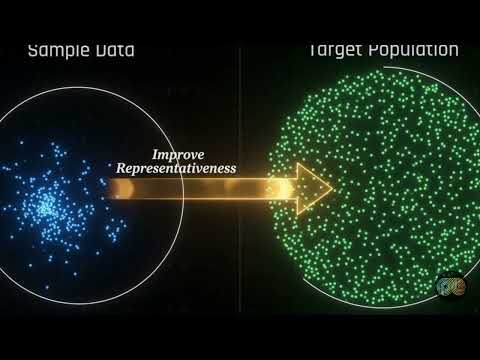 1:46
1:46Survey Weighting Without the Jargon
Survey weighting adjusts response influence so an imbalanced sample better reflects its target population, while preserving every respondent's original answers.
Watch the video 1:42
1:42Research Taxonomies Explained
Research taxonomies create a shared structure for classifying studies and insights, making findings easier to discover, compare, reuse, and understand.
Watch the video 2:01
2:01Accessibility Research Beyond Compliance
Accessibility research reveals barriers that standards miss by testing real interactions across abilities, contexts, tasks, and ways of using technology.
Watch the video 1:44
1:44Research as a Living Knowledge Base
A living research knowledge base connects past and new evidence, tracks changing assumptions, and keeps insights accessible for better decisions over time.
Watch the video 1:52
1:52Organizing Research Into Reusable Knowledge
Reusable research knowledge turns isolated findings into connected, contextual evidence that teams can discover, update, and apply across decisions.
Watch the video 2:00
2:00Measuring Time to Value Through Research
Time to value research defines meaningful user outcomes, measures how quickly people reach them, and reveals barriers that delay product success.
Watch the video 2:00
2:00Kano Analysis Explained
Kano analysis classifies features by their effect on customer satisfaction, helping product teams prioritize basic, performance, and excitement needs.
Watch the video 1:46
1:46MaxDiff Without the Math
MaxDiff analysis reveals true priorities by asking people to choose the most and least important items across balanced sets of competing options.
Watch the video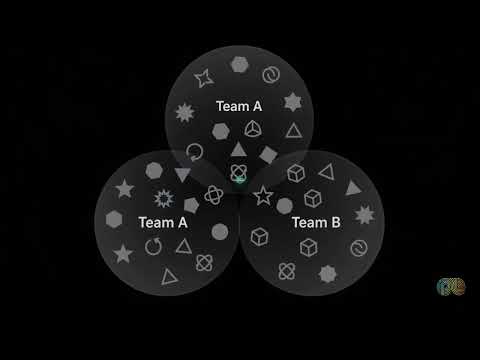 1:39
1:39Making Organizational Knowledge Searchable
Making organizational knowledge searchable requires structure, shared terminology, context, and provenance so teams can find reliable evidence when needed.
Watch the video 1:55
1:55Item Response Theory Simplified
Item response theory shows how each question measures ability or attitude, helping researchers improve item quality, assessment accuracy, and precision.
Watch the video 1:50
1:50From Research Reports to Research Systems
Research systems connect studies, feedback, observations, and behavioral evidence so teams can reuse knowledge, track change, and make better decisions.
Watch the video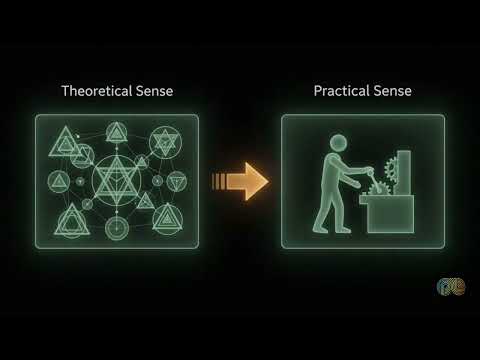 1:51
1:51Factor Analysis Explained
Factor analysis reveals hidden dimensions in related variables, helping researchers simplify complex data and build stronger measures of key concepts.
Watch the video 1:38
1:38Connecting Research to Product Roadmaps
Connecting research to product roadmaps turns user evidence into decision-ready insights that help teams prioritize meaningful problems and opportunities.
Watch the video 1:50
1:50Conjoint Analysis for Product Decisions
Conjoint analysis reveals how people trade off features, prices, and experiences, helping product teams compare concepts and make stronger decisions.
Watch the video 1:42
1:42Closing the Loop Between Research and Engineering
Research and engineering collaboration turns user evidence into practical solutions through shared context, early input, and post-launch validation.
Watch the video 1:59
1:59Building AI Ready Research Data
AI-ready research data is structured, consistent, contextualized information that helps AI systems support more reliable research analysis and insights.
Watch the video 2:01
2:01Building a Research Repository That People Actually Use
A research repository becomes useful when it organizes complete study context around how teams search, helping people find and apply evidence to decisions.
Watch the video 1:50
1:50Researching API and Documentation Usability
API usability research reveals where developers struggle with documentation and tools. Learn what to test and how to turn findings into fixes.
Watch the video 1:54
1:54Measuring Developer Experience
Measuring developer experience means researching documentation, workflows and tools, not just satisfaction, to find what slows developers down.
Watch the video 1:55
1:55Card Sorting for Better Information Architecture
Card sorting reveals how users naturally group and label content, helping teams build information architecture around real user mental models.
Watch the video 1:52
1:52Tree Testing Explained
Tree testing explained: a usability method for checking whether users can find information within a navigation structure before visual design.
Watch the video 1:51
1:51Understanding Product Friction Through Research
Product friction is what makes tasks harder for users to complete. Learn how research uncovers friction points and traces them to their root cause.
Watch the video 1:55
1:55Measuring Feature Adoption Beyond Usage Metrics
Feature adoption research looks past usage metrics to whether a feature truly helps users, since high usage doesn't always mean real success.
Watch the video 2:03
2:03Identifying Hidden Patterns Across Research Projects
Insights stay isolated when studies aren't connected. Learn how comparing findings across projects reveals patterns that single studies miss.
Watch the video 1:59
1:59Turning Text Into Structured Data
Turning text into structured data means coding interviews, comments and open-ended feedback into categories researchers can analyze reliably at scale.
Watch the video 1:47
1:47Predictive Models in Market Research
Predictive models use existing research data to estimate future behavior. Learn how they work, their limits and how to interpret them responsibly.
Watch the video 1:56
1:56Measuring What Actually Influences Behavior
Measuring what influences behavior means connecting stated preferences with real actions, not just relying on what people say they would prefer to do.
Watch the video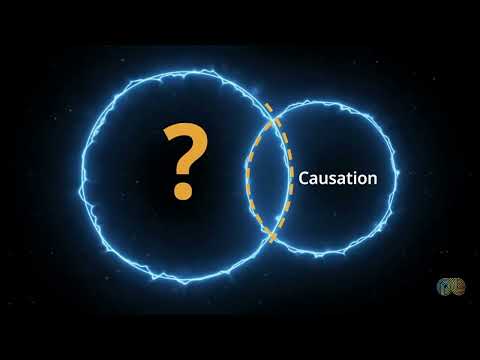 2:02
2:02Key Driver Analysis Explained
Key driver analysis identifies which factors most influence an outcome like satisfaction or loyalty, so teams can prioritize the right improvements.
Watch the video 2:04
2:04Detecting Emerging Trends Before Dashboards Do
Detecting emerging trends before dashboards do means spotting small, repeated signals early, before they accumulate into obvious standard reports.
Watch the video 1:58
1:58Topic Clustering vs Sentiment Analysis
Topic clustering finds what people discuss; sentiment analysis reveals how they feel about it. Learn how the two methods differ and work together.
Watch the video 2:11
2:11Finding Themes in Thousands of Responses
Finding themes in thousands of survey responses requires structured coding, grouping and validation, not just reading for repeated words or phrases.
Watch the video 1:56
1:56Scaling Research Without Sacrificing Quality
Growing research volume doesn't have to mean weaker insight. Learn how repeatable processes and shared standards keep scaled research reliable.
Watch the video 2:03
2:03Synthetic Respondents and Their Limits
Synthetic respondents can speed up early research exploration and question testing, but they cannot replace real participant evidence for key decisions.
Watch the video 2:03
2:03Evaluating AI Generated Research Outputs
AI speeds up research, but outputs still need verification. Learn how to evaluate AI-generated summaries, themes and interpretations for accuracy.
Watch the video 2:02
2:02AI Assisted Theme Extraction
AI-assisted theme extraction speeds up finding patterns in qualitative research data, but human review is still needed to confirm real insights.
Watch the video 1:49
1:49AI for Literature Reviews
AI speeds up literature reviews by organizing and summarizing sources, but researchers still must verify findings and judge their relevance carefully.
Watch the video 1:54
1:54AI as a Research Assistant Instead of a Decision Maker
AI works best as a research assistant that supports human judgment and productivity, not as a decision maker that replaces researcher accountability.
Watch the video 1:51
1:51Where AI Actually Fits in the Research Workflow
AI supports research planning, analysis and synthesis, but researcher judgment still drives decisions. See exactly where AI fits in the workflow.
Watch the video 2:04
2:04When Open Ended Questions Create Better Insights
Open-ended questions let participants answer in their own words, revealing motivations and context that closed-ended survey questions often miss entirely.
Watch the video 2:00
2:00Advanced Scale Design Beyond the Likert Scale
Likert scales aren't the only option. Learn when ranking, comparison and behavioral scales capture attitudes and behavior more precisely than a rating scale.
Watch the video 2:02
2:02Detecting Low Quality Survey Responses
Low-quality survey responses distort findings. Learn the warning signs, how to handle duplicates and bots, and how to combine automated checks with judgment.
Watch the video 2:02
2:02Response Quality vs Response Rate
Response quality vs. response rate: a high completion count alone does not guarantee reliable, decision-ready research evidence or findings.
Watch the video 1:52
1:52Eliminating Survey Fatigue
Survey fatigue lowers data quality when surveys demand too much time or effort. Learn what causes it and how to design surveys that avoid it.
Watch the video 1:51
1:51Measuring Cognitive Load in Surveys
Cognitive load in surveys is the mental effort a question takes to answer. Learn what causes it and how to reduce it for better data quality.
Watch the video 1:52
1:52Writing Questions That Don't Bias Responses
Biased question wording skews survey data. Learn how neutral phrasing, question format and question order produce honest, usable research results.
Watch the video 1:54
1:54Designing Research That Produces Actionable Answers
Designing research that produces actionable answers means matching the method — survey, interview, observation or experiment — to the real uncertainty.
Watch the video 1:50
1:50Avoiding Sampling Bias
Sampling bias skews findings when participants don't reflect the population. Learn what causes it and how to build a sampling plan that avoids it.
Watch the video 1:54
1:54Mixed Methods Research Done Right
Mixed methods research blends qualitative and quantitative data into one design. Learn how to sequence methods and reconcile conflicting results.
Watch the video 1:49
1:49Qualitative vs Quantitative Beyond the Basics
Qualitative and quantitative research answer different kinds of questions; matching the method to the goal produces more reliable, decision-ready evidence.
Watch the video 2:04
2:04Defining Research Problems & Objectives
Defining research problems and objectives means turning a vague business question into precise, answerable goals before any data collection begins.
Watch the videoRun research end to end. Keep the knowledge working.
One AI-native operating system for market research and insight professionals — from study design and evidence generation to agents, institutional knowledge, delivery and action.