Connected Knowledge Systems
Organizational memory connects research evidence, findings, and decisions so teams can retrieve, validate, and reuse knowledge instead of rediscovering it.
In the full article
Read the video transcript
This transcript was generated from captions and may contain recognition errors.
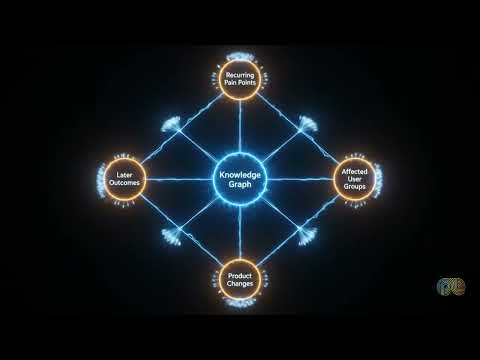
Every organization learns something valuable with every research project. Yet, many of those lessons quietly disappear over time. People change roles, priorities shift, and reports become buried inside repositories that few people revisit. The result is an organization that repeatedly pays to rediscover knowledge it once possessed. Organizational memory exists to ensure learning compounds instead of fading. Organizational memory is the structured collection of knowledge that remains available regardless of who originally created it. In research, this includes evidence, findings, decisions, assumptions, methodologies, and the relationships connecting them. Rather than depending on individual experts to remember past work, the organization preserves knowledge in forms that can be searched, understood, and reused. Building effective organizational memory requires more than storing documents. Every important research object should remain connected to its supporting evidence, business questions, related studies, and downstream decisions. These connections allow future teams to understand not only what was learned but also why those conclusions were reached. Knowledge therefore becomes easier to validate instead of being accepted only because it appears in an archived report. AI native systems make organizational memory even more valuable. Intelligent retrieval can surface relevant evidence from many years of research while preserving the context that gives each finding meaning. Instead of searching through folders, researchers explore relationships between questions, themes, products, and decisions across the entire history of the organization. Strong organizational memory also encourages continuous learning. Every new study confirms, refineses, or challenges existing understanding rather than beginning from an empty page. As this knowledge network grows, research becomes a cumulative capability instead of a sequence of independent projects. The organization gradually develops an enduring memory that improves decision-making long after individual studies have been completed.