 PulseLake
Comparative Evidence Analysis Explained
Comparative evidence analysis compares sources to reveal alignment, contradictions, context, and gaps, helping researchers reach balanced conclusions.

Comparative evidence analysis is the structured evaluation of multiple research sources against one another to identify similarities, differences, patterns, conflicts, and gaps. It asks how each finding supports, challenges, or changes the interpretation of a research question, producing conclusions that reflect evidence quality and context rather than the frequency of repeated ideas.
This matters because isolated findings can confirm assumptions while hiding important exceptions, or appear inconsistent when they actually describe different parts of the same behavior. A disciplined comparison reduces overgeneralization and makes gaps visible before decisions are made. The two-minute video above walks through the core ideas.
What is comparative evidence analysis?
Comparative evidence analysis examines relationships among findings instead of merely collecting them in one report. Researchers compare sources to determine where evidence aligns, diverges, adds nuance, or leaves a question unresolved.
A finding can play several roles in the larger evidence base:
- It can support an existing interpretation.
- It can challenge an assumption or earlier conclusion.
- It can change how researchers define the underlying issue.
- It can reveal a gap that requires additional research.
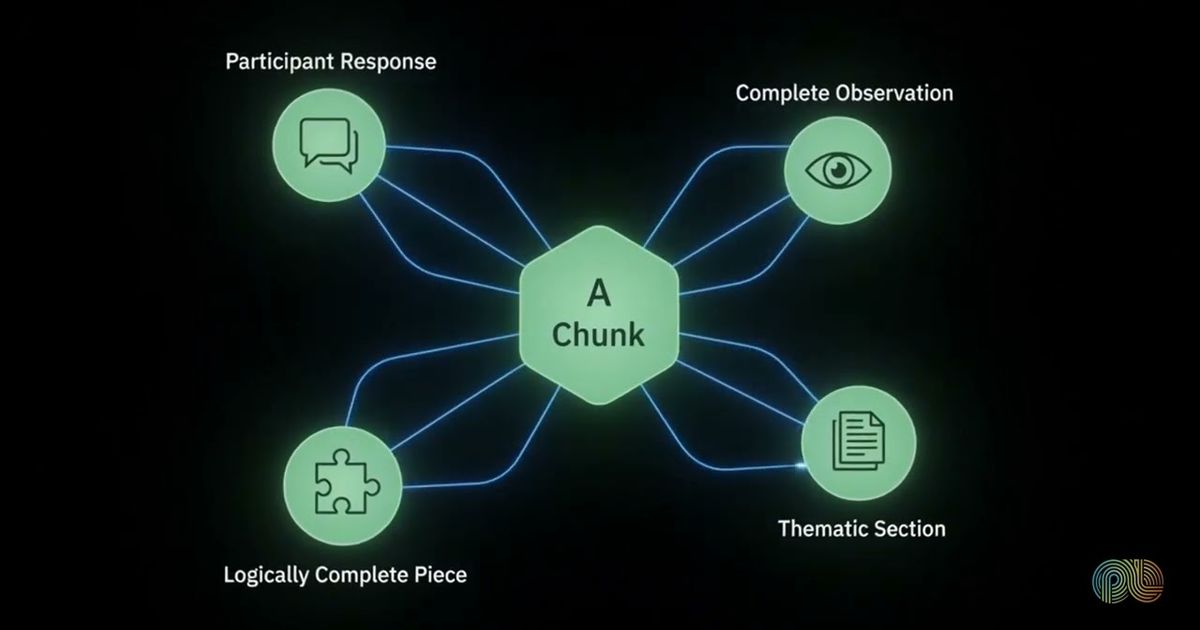
The unit of comparison may be an interview theme, survey result, behavioral metric, observation, prior study, or another research object. The goal is not to force every source into agreement. It is to build a more complete explanation of what the available evidence does and does not establish.
How do you compare evidence systematically?
Start with a clear research question or claim, then evaluate each source against the same analytical frame. Record enough context to explain why findings may agree or differ before drawing a combined conclusion.
A practical process includes four steps:
- Frame the comparison. Define the question, claim, or decision that the evidence needs to inform.
- Structure the sources. Record each finding with its method, population, time period, definitions, and source lineage.
- Map the relationships. Mark whether each finding supports, challenges, changes, or leaves gaps in the current interpretation.
- Interpret the pattern. Explain the relationships while preserving uncertainty, exceptions, and meaningful differences.
Structured evidence also makes it easier to connect findings across projects. A well-designed approach to building an evidence graph can preserve those relationships rather than leaving them buried in separate reports.

Why can evidence appear contradictory?
Evidence often appears contradictory because different methods capture different aspects of behavior. Differences in populations, definitions, settings, or time periods can also create apparent conflicts that disappear once researchers restore the missing context.
For example, interviews may indicate that customers want more customization, while usage data shows that most customers rarely change default settings. Treating this as a simple disagreement would miss a plausible interpretation: customers may value flexibility while preferring low complexity during routine use.
The interview evidence captures stated preferences and perceived needs. The usage evidence captures observed behavior under particular product conditions. Comparing them reveals a more useful design question: how can a product provide flexibility without requiring frequent configuration?
Researchers should investigate contradictions rather than automatically choosing one source. A genuine conflict may expose measurement problems, audience differences, changing conditions, or an incomplete theory of the behavior.

How can AI support comparative evidence analysis?
AI can compare large collections of research objects, identify related findings, and highlight evidence that appears aligned or inconsistent. It is most useful for accelerating discovery and organizing possible relationships for researcher review.
Automated comparison cannot rely on wording alone. Similar terms may refer to different concepts, while differently worded findings may describe the same underlying issue. AI also needs access to method, population, source, and timing information to avoid treating contextual differences as substantive contradictions.
Researchers should therefore verify AI-generated comparisons against the original evidence and preserve the reasoning behind each relationship. The principles used in AI output verification help keep automated analysis grounded in evidence rather than surface-level similarity.
What makes comparative evidence analysis reliable?
Reliable comparison depends on evidence lineage, structured research objects, and explicit links between findings and their sources. These foundations allow researchers to assess evidence quality instead of simply counting how often an idea appears.
For each finding, researchers should be able to answer:
- Where did the evidence come from?
- Which population, method, and time period does it represent?
- What definitions and assumptions shaped the finding?
- How directly does it address the research question?
- What other evidence supports, qualifies, or challenges it?
Frequent repetition is not necessarily strong support. Several findings may trace back to the same underlying source, while one carefully designed study may provide more relevant evidence than numerous weak observations. Reliable analysis preserves these distinctions and makes uncertainty visible.
Key takeaways
- Comparative evidence analysis evaluates how findings support, challenge, change, or leave gaps in an interpretation.
- Apparent contradictions often reflect differences in method, population, context, definitions, or timing.
- Evidence quality and relevance matter more than the number of times an idea appears.
- AI can surface relationships at scale, but researchers must verify meaning and context.
- Strong lineage and structured evidence make conclusions more balanced, traceable, and reusable.
How PulseLake helps
PulseLake keeps objectives, methods, evidence, and decisions within a persistent study context. Its research knowledge graph, cross-study search, evidence provenance, and specialized analysis agents can help teams compare findings while retaining source context and researcher approvals. To discuss how this can support comparative evidence analysis, talk to our team.
Frequently asked questions
Can comparative evidence analysis combine qualitative and quantitative data?
Yes. Researchers can compare interview themes, open-ended responses, survey measures, behavioral data, and other evidence when each source is interpreted according to what its method can support. The purpose is not to make unlike data identical, but to examine whether different forms of evidence converge, diverge, or explain different parts of the same question.
How do researchers decide which evidence deserves more weight?
Researchers consider relevance to the question, methodological quality, population fit, recency, directness, and source independence. A finding should not receive more weight simply because it appears repeatedly, especially when several mentions derive from the same source. Weighting evidence requires documented judgment, not a mechanical vote across findings.
Does contradictory evidence mean one source is wrong?
Not necessarily. Two sources may differ because they examine different populations, time periods, contexts, definitions, or aspects of behavior. Researchers should first test these explanations and review the original evidence. If the conflict remains, it should be documented as uncertainty or used to define the next research question rather than concealed.