Evaluating LLM Outputs in AI-Assisted Research
Evaluating LLM outputs requires clear criteria for accuracy, relevance, grounding, reasoning, instruction following, and uncertainty in AI research.

Evaluating LLM outputs means checking whether a model's response did the job it was asked to do. Good LLM output evaluation goes past accuracy to relevance, completeness, consistency, factual grounding, logical coherence, instruction following and appropriate uncertainty. You start from the original objective, then combine explicit criteria with informed human judgment.
The trap is that LLMs write well.
Fluent language can hide missing evidence, false assumptions, small misunderstandings and weak reasoning. Only a systematic check tells you where a model does well, where it struggles, and which safeguards or fixes it needs.
What does evaluating LLM outputs mean?
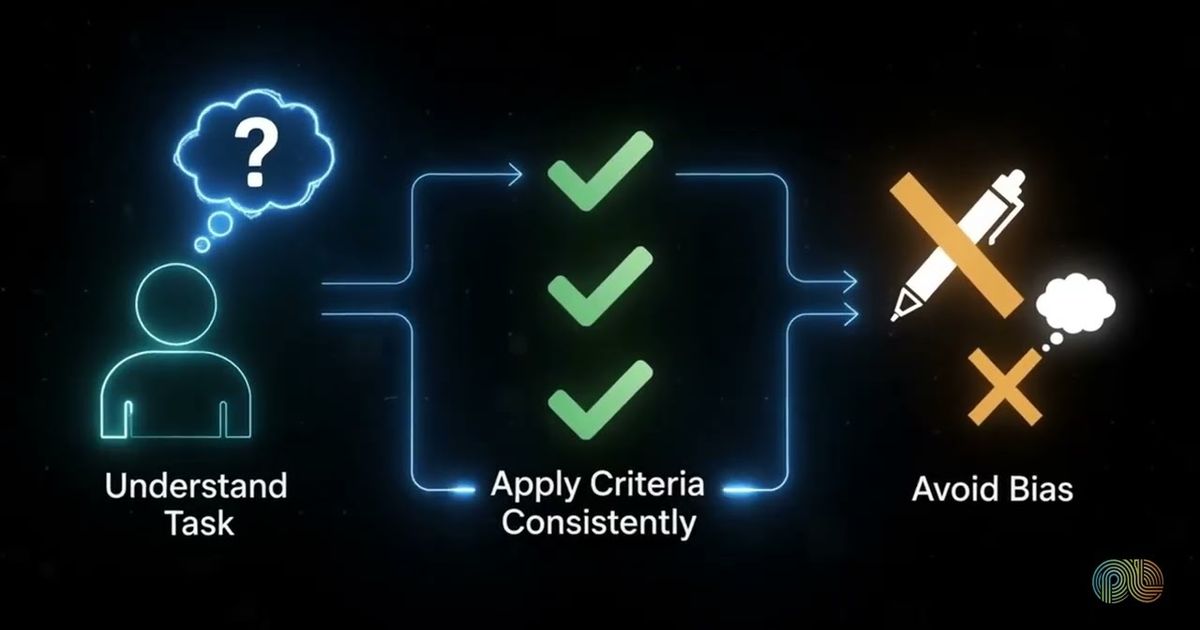
Judging how well one response satisfies one defined task, against quality criteria you wrote down beforehand. The whole response is on trial. Writing style alone isn't, and neither is factual accuracy alone.
A polished answer can still miss the question, leave out essential context or present a guess as fact. The opposite holds too: a cautious answer with no firm conclusion can be genuinely useful, provided it's honest about the limits of the evidence.
So look at the result, then look at how the model got there. Did it address the request? Did it use the available evidence properly, keep to the required format and make its reasoning easy to follow? If you work across many research tasks, the broader practice of evaluating AI-generated research outputs lets your team apply the same thinking everywhere.
How should an LLM output evaluation begin?
With the objective. Write down, in plain words, what a successful response must do. Without that, reviewers drift into rewarding nice prose over task performance.
What "good" means depends on the output type:
- Summary: faithful to the source, keeps the important qualifications, adds no unsupported conclusions.
- Analysis: observed evidence separated from interpretation, with reasoning you can trace.
- Recommendation: a conclusion tied to evidence, plus a reason the action follows.
- Structured task: requested instructions, fields, formats and boundaries respected.
Do this before you read a single output, whenever you can. Hindsight bias shrinks and your judgments get easier to repeat. Reviewers also can't quietly move the bar to fit a response they happen to like.
Which quality criteria should reviewers use?
Several, because one score can't capture quality, and each should be specific enough to guide judgment while still relevant to the task. Here are the core dimensions, phrased as the questions a reviewer asks.
On content: is it accurate (facts and calculations right)? Relevant (answers the actual question, no distractions)? Complete (necessary evidence, context and qualifications covered)?
On substance: is it consistent, with claims, definitions and conclusions agreeing throughout? Factually grounded, so important claims trace to supplied evidence or reliable sources? Logically coherent, with conclusions that follow from the premises and evidence?
On behavior: did it follow instructions, keeping to the requested scope, format and constraints? And does it handle uncertainty honestly, admitting limited or conflicting evidence instead of passing off speculation as certainty?
Teams skip instruction following most often, and structured tasks tend to break right there. A rubric can describe strong, acceptable and weak performance for each dimension that applies. Weighting changes with the task: for a literature review, factual grounding may dominate; for a research summary, completeness and faithful representation matter more.

Why does human review of LLM output still matter?
Because the worst problems are usually contextual or ambiguous, and automated checks miss them. A person notices the absent context, the misleading wording, the subtle factual slip, the argument that sounds plausible and doesn't hold up.
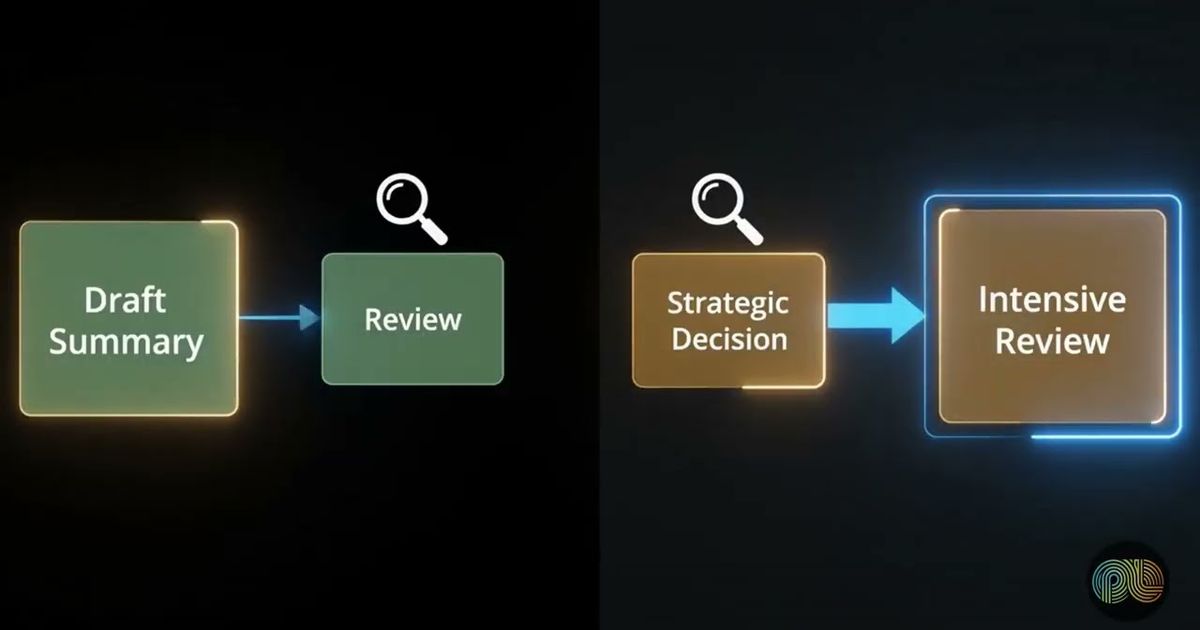
Automated checks still earn their place on repeatable requirements such as format compliance, required fields and inconsistencies you can detect mechanically. Run them next to expert review, never in place of it, and especially when an output feeds research conclusions or decisions.
Structured rubrics keep reviewers consistent, since everyone applies the same standard. Calibration sessions, example outputs and written rationales show you where two people read a criterion differently.
How do you verify LLM outputs on higher-stakes work? Your AI output verification process should include a clear way to resolve disagreements and check claims against evidence.

How can evaluation improve future LLM outputs?
A score alone teaches little. The pattern is what you want: strengths that recur, failures that repeat, places to improve. Those findings can reshape prompts, task instructions, evidence retrieval, model selection, review procedures and escalation rules.
Our cycle is short:
- Define the task.
- Evaluate against a rubric.
- Sort the failures into categories.
- Change one thing.
- Evaluate again.
Hold the task and criteria steady between rounds and you can tell whether the change actually helped. Then keep going, because quality moves across use cases and over time.
Once evaluation is part of the research workflow, the LLM stops being an unpredictable assistant. It becomes a system whose strengths and limits are documented, monitored and managed.
How PulseLake helps
PulseLake keeps objectives, methodology, evidence and decisions in a persistent study context, which gives reviewers a clearer basis for assessing AI-assisted outputs. Research intelligence answers natural-language questions with evidence provenance, and specialized agents, approvals, QA and repeatable workflows support structured review without taking away researcher judgment. To talk about how this could fit your research system, talk to our team.
Frequently asked questions
Can a single score reliably evaluate an LLM response?
It can summarize performance, but it usually hides the trade-offs. A response might be highly relevant and poorly grounded, or accurate and incomplete. Separate ratings for accuracy, relevance, completeness, reasoning, instruction following and uncertainty show you the weak spots and what to improve.
How should researchers evaluate an LLM-generated summary differently from a recommendation?
For a summary, check faithful representation, coverage of the key points, preserved qualifications and anything unsupported that crept in. A recommendation needs more: a clear line from evidence to interpretation to the proposed action. Ask whether its reasoning is explicit and supported, and not merely whether it sounds reasonable.
How often should teams review the quality of LLM outputs?
Match the frequency to the task's risk, variability and role in decisions. High-impact outputs may need review before anyone uses them; lower-risk workflows can run on sampled checks and periodic calibration. Reevaluate whenever you change a model, prompt, evidence source, rubric or workflow, since any of those can shift quality.