Hallucination Detection for AI Research Outputs
Hallucination detection identifies fabricated or unsupported AI claims by tracing statements to trusted evidence before they shape research decisions.

Hallucination detection for AI research outputs is the process of finding AI-generated claims that are fabricated, unsupported or inconsistent with the available evidence. It asks whether the important statements can be verified from trusted sources or the provided context. How fluent, confident or well written the answer sounds doesn't count.
That's the trap. Convincing language can hide invented facts, false quotations, unsupported citations and conclusions with nothing underneath them.
What is hallucination detection?
In plain terms, the hallucination detection meaning is this: checking whether an AI response is factually grounded in the information the system actually had. A hallucination is generated content that adds claims the supplied evidence doesn't support, or that contradict reliable information.
The answer can still look logical, detailed and professional. In research that polish is exactly what makes hallucinations dangerous, because readers take confident wording for a well-supported finding. So AI hallucination detection is about factual grounding, never style. A polished answer can be unsupported, and a cautious, hedged one can be fully grounded. We'd go further: the more polished the output, the more carefully we'd check it.
What do the usual red flags look like?
- Facts, figures, events or entities missing from the evidence.
- Quotations or citations that are invented, inaccurate or unrelated to the claim.
- Interpretations dressed up as observations from the data.
- Recommendations stated confidently on thin support.
- Conclusions that conflict with the provided context or trusted sources.
How do you detect unsupported AI claims?
Pick out the statements that carry the weight first: the ones that change the answer's meaning or the action it recommends. A reported customer need, an interview quotation, an explanation of behavior, a proposed business decision.
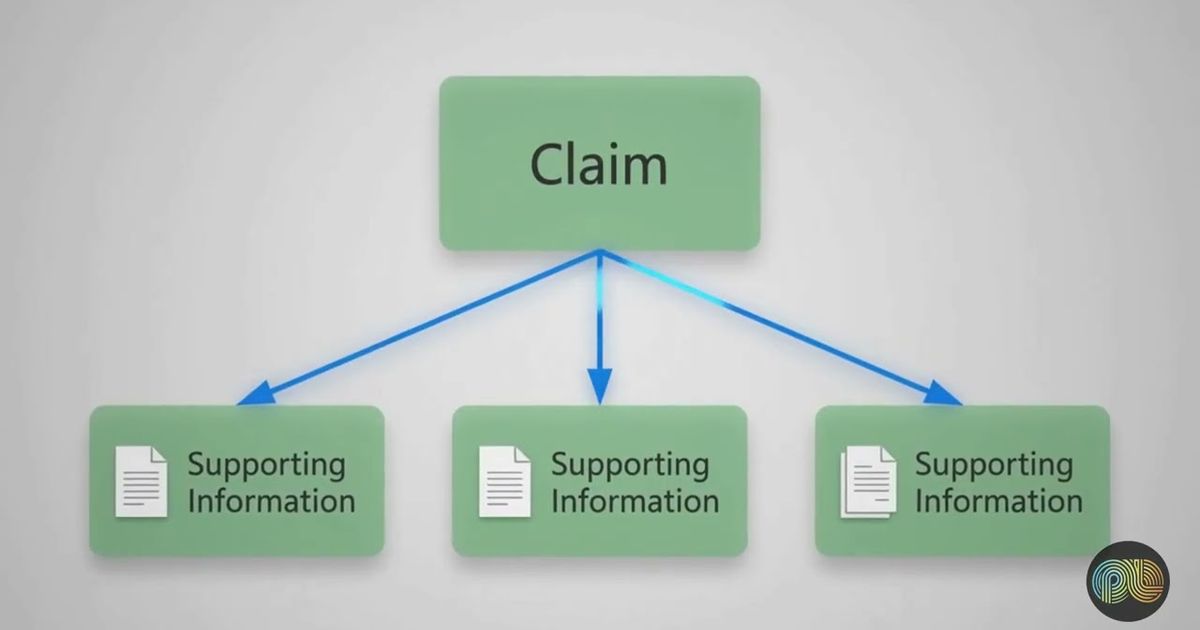
Then work through each material claim. Find the supporting evidence, whether that's a source passage, a structured record, a calculation or other trusted information. Check the relationship: does the evidence support the wording, the level of certainty and the scope of the claim? Separate observation from inference (did the statement come straight from evidence, or is it an interpretation?). And chase missing support, which means verifying, qualifying, revising or removing claims that introduce new findings, nonexistent quotations or unsupported recommendations. Whatever you can't verify gets investigated, however plausible it sounds.
Missing support often warns you better than confident language does. Say the summary claims "most participants found onboarding confusing," and you go looking for the quotes. Find two? That sentence needs rewriting. Keep the evidence lineage as you go, so others can see where a claim came from and how it was interpreted.

How should organizations manage hallucination risk in AI research outputs?
Continuously. Hallucination detection works as an ongoing quality assurance practice, with controls running through evidence retrieval, generation, evaluation, review and delivery. One last inspection before publication isn't enough.
Five things help:
- Retrieval-grounded workflows that hand the AI system relevant evidence.
- Clear lineage from source material to generated claims to final outputs.
- The same structured evaluation criteria across responses.
- Transparent review and approval for consequential findings or recommendations.
- Recorded corrections, so recurring failure patterns shape future checks.
Nobody can promise every mistake will disappear. What you can build is a system where unsupported claims are reliably caught, investigated and corrected before anyone accepts them as trustworthy organizational knowledge.
Why can't automated checks catch every hallucination?
Because a source can sit right there and still not support the exact conclusion. Automated checks can compare generated statements with retrieved evidence or structured knowledge, but they can't reliably judge every contextual or domain-specific error. People still have to handle nuanced factual relationships and expert judgment.
Where automation shines: retrieving potentially relevant passages, spotting missing citations, comparing named entities, flagging apparent contradictions. Those checks send reviewers to the claims worth a closer look, and they make a repeatable AI output verification process possible.
What they miss is subtler. A model may overgeneralize from limited evidence or skip an important qualification. It may confuse correlation with explanation, or apply technically correct information in the wrong context. Text matching won't flag any of that.
Researchers and subject-matter experts decide whether the reasoning fits the study, whether the evidence is enough and whether the conclusion respects its limits. Treat automation and human review as two controls covering each other's blind spots.

How PulseLake helps
PulseLake keeps objectives, methodology, evidence, analysis and decisions in a persistent study context, backed by a research knowledge graph and evidence provenance. Its agents can help with analysis and reporting, while approvals, QA workflows and researcher judgment stay in the process. To talk through how this could support grounded research outputs, talk to our team.
Frequently asked questions
How is an AI hallucination different from an ordinary factual error?
A hallucination is generated information that's fabricated, unsupported or inconsistent with the evidence available to the system. An ordinary factual error is any incorrect statement, however it came about. The two overlap, but hallucination detection asks a narrower question: does the generated claim have a valid basis in trusted sources or supplied context?
Does adding citations prove that an AI answer is grounded?
No. A citation can be invented, point to a source that doesn't exist or refer to material that doesn't support the claim. Reviewers have to confirm that the source exists, is trustworthy and supports the statement's wording, scope and certainty. Treat a citation as a useful signal, not proof of grounding.
Can hallucination detection eliminate all errors from AI research outputs?
No method can promise that every subtle error gets found. Automated checks can miss domain-specific reasoning problems, and human reviewers can overlook details or read ambiguous evidence differently. The realistic goal is a repeatable process that finds, investigates and corrects unsupported claims before they influence decisions or enter institutional knowledge.