Knowledge Deduplication Explained
Knowledge deduplication connects equivalent insights without deleting supporting evidence, improving repository clarity, search, synthesis, and AI retrieval.
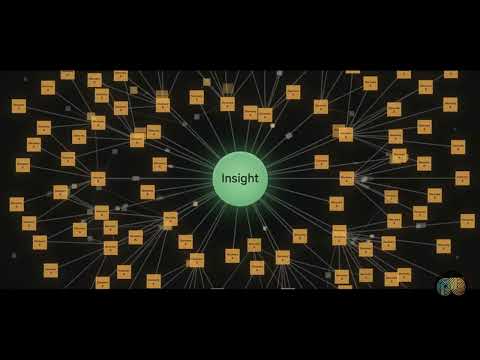
Knowledge deduplication is the process of identifying research objects that express the same underlying idea and connecting them as equivalent knowledge. It reduces repeated insights in a repository without deleting the distinct studies, observations, or findings that support them, preserving both clarity and the evidentiary value of independent confirmation.
As research accumulates, different teams often investigate similar questions, use different language for the same behavior, or document the same conclusion in multiple reports. Managing that repetition makes repositories easier to search and interpret. The short video above walks through the core ideas.
What is knowledge deduplication?
Knowledge deduplication identifies findings, themes, conclusions, or other research objects that represent an equivalent concept. Instead of treating each object as a separate discovery, it creates a relationship between them.
For example, three product studies might report that users struggle to locate account settings. One team calls the issue “navigation confusion,” another describes “poor discoverability,” and a third highlights “low menu visibility.” The wording differs, but each finding may describe the same recurring problem.
A deduplication process connects those findings under a shared concept while retaining their original language and study context. Consistent metadata and a defined vocabulary can make these connections easier to manage, as explained in research taxonomies.
The result is not a repository with fewer sources. It is a repository that distinguishes unique knowledge from multiple expressions of the same knowledge.
Why should repeated evidence be preserved?
Repeated evidence should be connected rather than automatically deleted because independent studies can strengthen confidence in a conclusion. Deduplication manages conceptual repetition while preserving the source, context, and contribution of each study.
Deleting all but one version could remove important distinctions. Studies may have involved different audiences, products, markets, methods, or time periods. Even when their conclusions are equivalent, those differences help researchers judge how broadly the conclusion applies.
Linking also makes confirmation visible. Researchers can see that a recurring issue is supported by several independent sources rather than mistaking copied wording for additional evidence. This preserves evidence lineage while preventing the repository from presenting equivalent findings as unrelated discoveries.
The key distinction is between repeated knowledge and repeated evidence. Repeated knowledge can be consolidated conceptually, while each supporting piece of evidence remains available for review.

How does knowledge deduplication work?
Effective knowledge deduplication compares meaning rather than relying only on exact text matches. It uses shared concepts, metadata, ontologies, and knowledge relationships to recognize when differently worded research objects may be equivalent.
A practical process includes four activities:
- Identify candidates. Find research objects with related topics, entities, behaviors, outcomes, or contextual metadata.
- Compare meaning. Determine whether the objects describe the same underlying concept, merely overlap, or remain genuinely distinct.
- Create relationships. Link equivalent findings to a shared concept instead of replacing every source with one flattened record.
- Preserve provenance. Retain the original study, evidence, wording, date, method, and context behind each finding.
Knowledge graphs are particularly useful because they can represent the relationship between a concept and all the evidence supporting it. This allows a system to consolidate knowledge for retrieval while maintaining traceable connections to individual studies. The same principle underpins cross-study knowledge linking.
Human judgment remains important when meanings are ambiguous. Two findings can use similar terms but refer to different problems, while two findings with very different wording can express the same idea.

What knowledge deduplication mistakes should teams avoid?
The biggest mistakes are matching only on wording, deleting supporting evidence, and counting equivalent findings as separate discoveries. Each error distorts what the organization actually knows.
Teams should avoid:
- Depending on exact text matches. Semantic duplicates frequently use different terminology.
- Merging findings too aggressively. Related concepts are not always equivalent, and meaningful distinctions should remain visible.
- Removing source context. A consolidated concept should still link to its original studies and evidence.
- Inflating apparent diversity. AI-assisted retrieval may surface the same insight repeatedly and make one recurring idea look like several distinct discoveries.
- Treating every recurrence as copying. Independent confirmation has evidentiary value even when the conclusion is familiar.
Careful deduplication reduces unnecessary repetition without producing a falsely simplified repository. The aim is cleaner synthesis, more reliable retrieval, and genuine organizational learning.
Key takeaways
- Knowledge deduplication connects research objects that express the same underlying idea.
- It preserves independent evidence rather than deleting every repeated finding.
- Semantic meaning, metadata, ontologies, and knowledge graphs help identify equivalence across studies.
- Deduplication prevents search and AI systems from presenting one insight as several unrelated discoveries.
- Source context and evidence lineage should remain available after concepts are linked.
How PulseLake helps
PulseLake keeps research objectives, methods, evidence, and decisions within a persistent study context. Its research knowledge graph, ontology, cross-study search, and evidence provenance help teams connect equivalent concepts while retaining the studies that support them. Researchers can use natural-language questions and deep research across accumulated knowledge without flattening every source into an untraceable summary. To discuss how this could support your research repository, talk to our team.
Frequently asked questions
Can two research findings be duplicates if they use different words?
Yes. Knowledge deduplication focuses on semantic equivalence rather than identical phrasing. Findings labeled “navigation confusion,” “poor discoverability,” and “menu visibility” may all describe difficulty locating account settings. Researchers should compare the underlying behavior, context, and conclusion before linking them.
Does repeated evidence make an insight more trustworthy?
Independent evidence can increase confidence when separate studies reach the same conclusion, but recurrence alone is not enough. Researchers should examine each study’s method, audience, context, and quality. Deduplication makes the confirmations visible without automatically treating every repeated statement as equally strong evidence.
How does deduplication improve AI-assisted research retrieval?
Deduplication helps an AI retrieval system recognize when several records represent one underlying insight. Without those relationships, the system may repeatedly surface equivalent findings and create a false impression that several distinct discoveries exist. Linked concepts support cleaner synthesis while preserving access to every supporting source.
Can knowledge deduplication be fully automated?
Automation can identify likely matches using semantic similarity, metadata, shared concepts, and knowledge relationships. However, researchers should review ambiguous cases because related findings are not always equivalent. Human judgment is especially important when context, audience, timing, or research method changes the meaning of an apparently similar conclusion.