Research as Infrastructure: Building Durable Knowledge
Research as infrastructure connects evidence, methods, metadata, and governance so organizations can reuse knowledge and make more reliable decisions.

Research as infrastructure means designing research capabilities, processes, assets, and systems as foundational organizational components rather than temporary project support. It connects questions, evidence, datasets, findings, methods, metadata, relationships, and governance so knowledge remains discoverable, traceable, reusable, and able to improve continuously across studies and decisions.
This approach helps organizations build on previous learning, identify knowledge gaps, and avoid restarting every investigation. The two-minute video above walks through the core ideas.
What is research as infrastructure?
Research as infrastructure is an operating model in which research supports continuous organizational learning, not just individual projects. It shifts the emphasis from producing temporary deliverables to maintaining a durable system of connected knowledge.
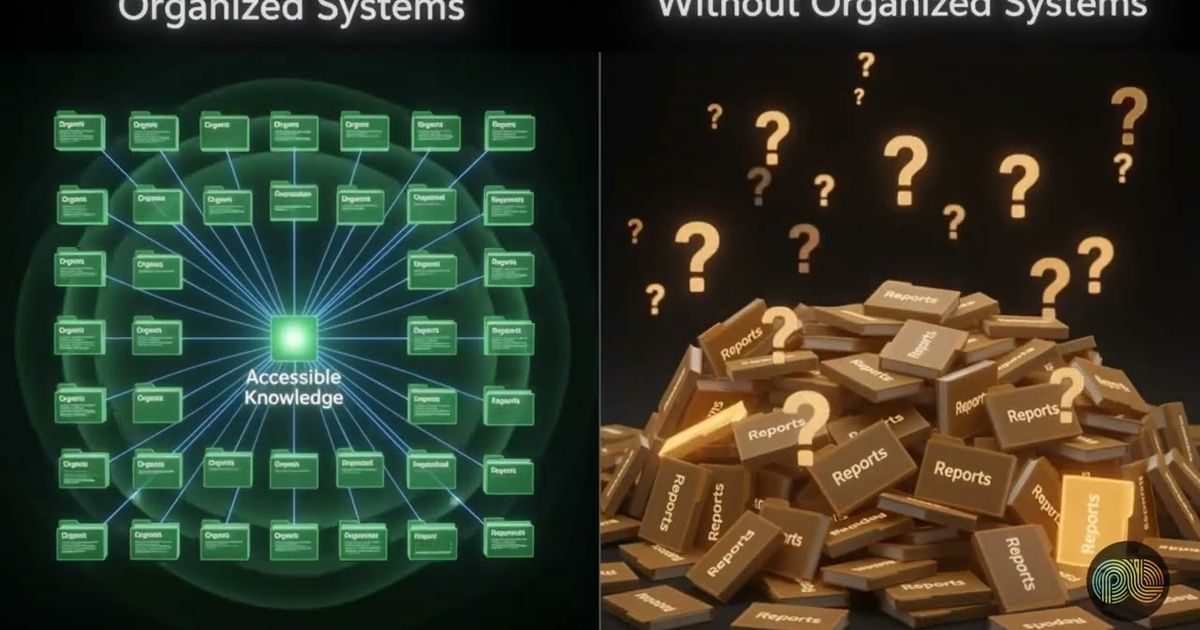
In a project-only model, a team frames a question, runs a study, presents recommendations, and moves on. The report may remain available, but its evidence, methods, assumptions, and relationship to later work can become difficult to recover.
An infrastructure model preserves those components and makes them useful beyond the original project. Like technical or operational infrastructure, it enables reliable access, repeated use, continuous improvement, and growth at scale.
Individual studies still address defined problems, but they also contribute evidence and context to a wider learning system. This represents a shift from research reports to research systems, where each output supports both current and future decisions.

What does mature research infrastructure include?
Mature research infrastructure connects questions, evidence, datasets, findings, methods, metadata, relationships, and governance practices. A repository may be one component, but storing documents alone does not create infrastructure.
The system must preserve both research assets and the context needed to interpret them:
- Questions and objectives explain what the study was designed to resolve.
- Evidence and datasets provide the underlying material behind findings.
- Findings and recommendations record what the team concluded and why.
- Methods establish how evidence was collected and analyzed.
- Metadata and relationships connect related studies, themes, audiences, products, and decisions.
- Governance practices define quality expectations, ownership, access, lineage, and appropriate reuse.
The connections among these assets create more value than isolated documents. A team investigating onboarding friction, for example, should be able to find earlier questions, interviews, survey evidence, conclusions, and unresolved gaps—not just a presentation containing the word “onboarding.”
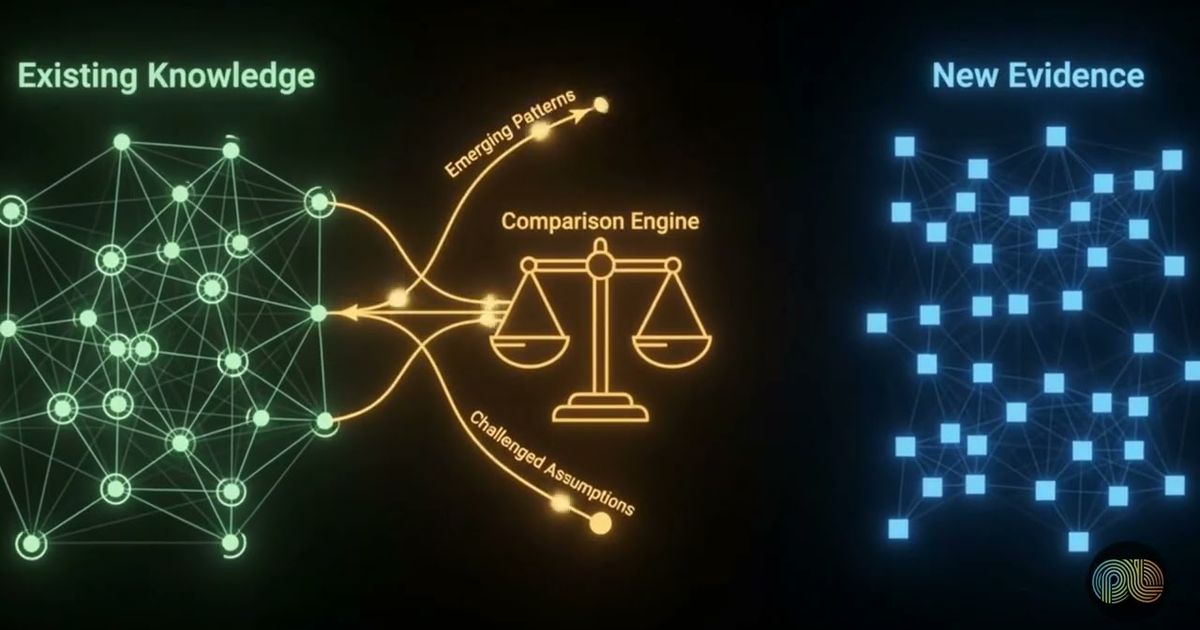
This connected model helps teams organize research into reusable knowledge. New studies can reference what is known, identify missing evidence, test whether earlier conclusions still apply, and contribute additional understanding.
Why does AI depend on research infrastructure?
AI needs organized, contextualized, and traceable knowledge to produce useful research outputs. Processing information quickly cannot compensate for evidence that lacks context, provenance, or clear relationships.
An AI system might retrieve a statement from an old report without knowing the population studied, method used, collection date, or whether later evidence contradicted it. The statement may sound relevant while being unsuitable for the current decision. Infrastructure reduces this risk by preserving context and evidence lineage.
Strong foundations support three important activities:
- Retrieval: Structured assets and metadata help AI find evidence relevant to the question.
- Analysis: Connected context supports comparisons, pattern detection, and separation of evidence from interpretation.
- Evaluation: Traceability lets researchers inspect sources, methods, assumptions, and supporting evidence.
Infrastructure does not make AI automatically reliable. Researchers must still assess relevance, quality, contradictions, and limitations. It provides the foundation for meaningful retrieval and grounded analysis rather than fast processing of disconnected material.
How do you build research as infrastructure?
Building research as infrastructure requires long-term investment in governance, quality standards, knowledge models, and operational practices. The goal is not to store more material, but to create an environment where evidence continuously supports decisions.
A practical sequence is:
- Define recurring decisions. Identify the questions that repeatedly require evidence and where teams duplicate work.
- Model the research context. Establish how questions, studies, methods, evidence, findings, and decisions connect.
- Set quality and governance rules. Define required metadata, ownership, access, review, versioning, and lineage.
- Make reuse part of delivery. Ensure every study contributes structured assets rather than only a final report.
Research infrastructure also requires maintenance. Evidence can become outdated, duplicate other work, or lose meaning when separated from its assumptions. Clear ownership and routine review keep the system usable as evidence and priorities change.
Adoption matters as much as architecture. Researchers need efficient ways to contribute knowledge, while decision-makers need simple ways to find and interpret it. Infrastructure works when it becomes part of normal research and decision workflows rather than a separate archive maintained through occasional cleanup.

Key takeaways
- Research as infrastructure turns temporary outputs into a durable organizational learning capability.
- Mature infrastructure connects questions, evidence, datasets, findings, methods, metadata, relationships, and governance.
- Connected assets help teams reuse prior learning, locate gaps, and avoid repeating investigations.
- AI systems need organized context and evidence lineage for reliable retrieval, analysis, and evaluation.
- Effective infrastructure requires sustained attention to quality, governance, maintenance, and adoption.
How PulseLake helps
PulseLake keeps objectives, methodology, evidence, analysis, and decisions in a persistent study context. Its research knowledge graph, cross-study search, governance, lineage, reusable IP, agents, and workflow automation support a connected research system from execution through delivery. To explore how this model could fit your organization, talk to our team.
Frequently asked questions
How is research infrastructure different from a research repository?
A research repository primarily stores and organizes outputs such as reports, recordings, or presentations. Research infrastructure connects those outputs to questions, methods, evidence, datasets, metadata, decisions, governance, and other studies. The difference is whether the organization can reliably trace, interpret, reuse, and extend what it knows.
Can an organization build research infrastructure without replacing all its tools?
Yes. An organization can begin by defining shared knowledge models, metadata, quality rules, and contribution workflows across its existing tools. A phased approach might start with recurring research areas where fragmented knowledge causes the most duplicated work, then expand as teams establish effective practices.
What makes research knowledge suitable for use by AI?
Research knowledge is more suitable for AI when it is structured, contextualized, traceable, and governed. The system should retain the source, method, population, timing, assumptions, and relationships surrounding each finding. This context helps AI retrieve relevant evidence and helps researchers evaluate whether an output is grounded and appropriate.
Does research as infrastructure replace project-based research?
No. Organizations still conduct individual studies to answer specific questions. The difference is that each project can begin with prior learning and end by contributing structured evidence to the shared system. Project research becomes part of a continuous learning capability rather than an isolated activity whose value fades after delivery.