Label Disagreement Resolution: A Practical Process
Label disagreement resolution examines conflicting annotations, clarifies guidelines, improves future consistency, and produces more reliable datasets.

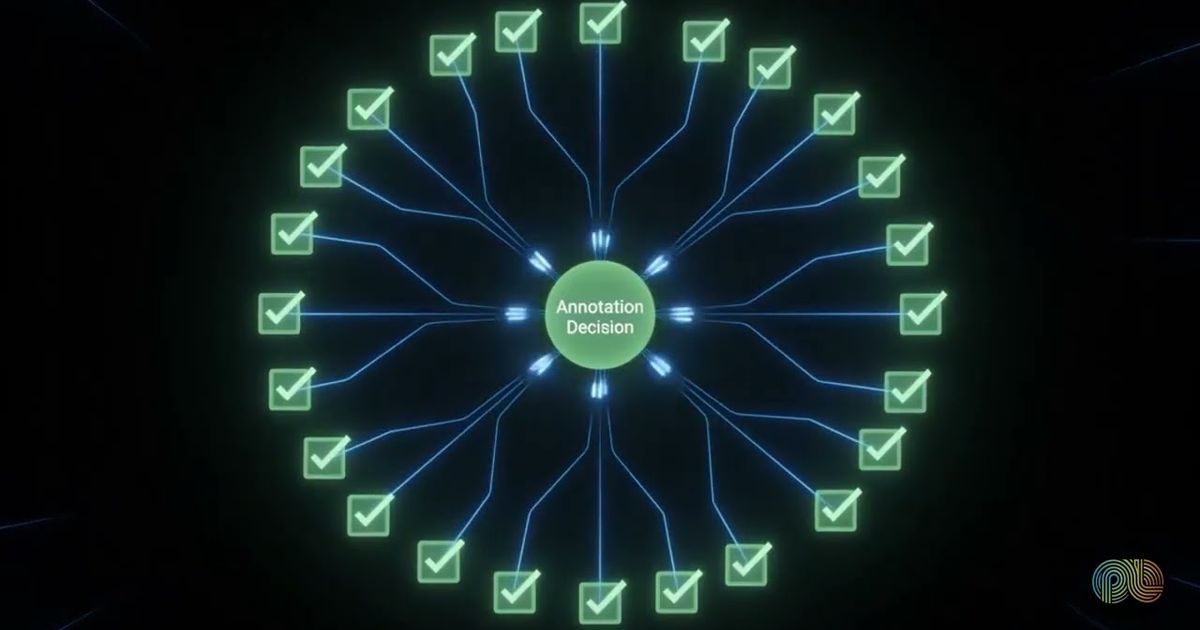
Label disagreement resolution is the structured review of conflicting annotations to determine the best-supported label and improve the labeling system. Reviewers examine the underlying evidence, explain their reasoning, compare interpretations with the guidelines, and decide whether to adjudicate the case, clarify instructions, or refine the annotation framework.
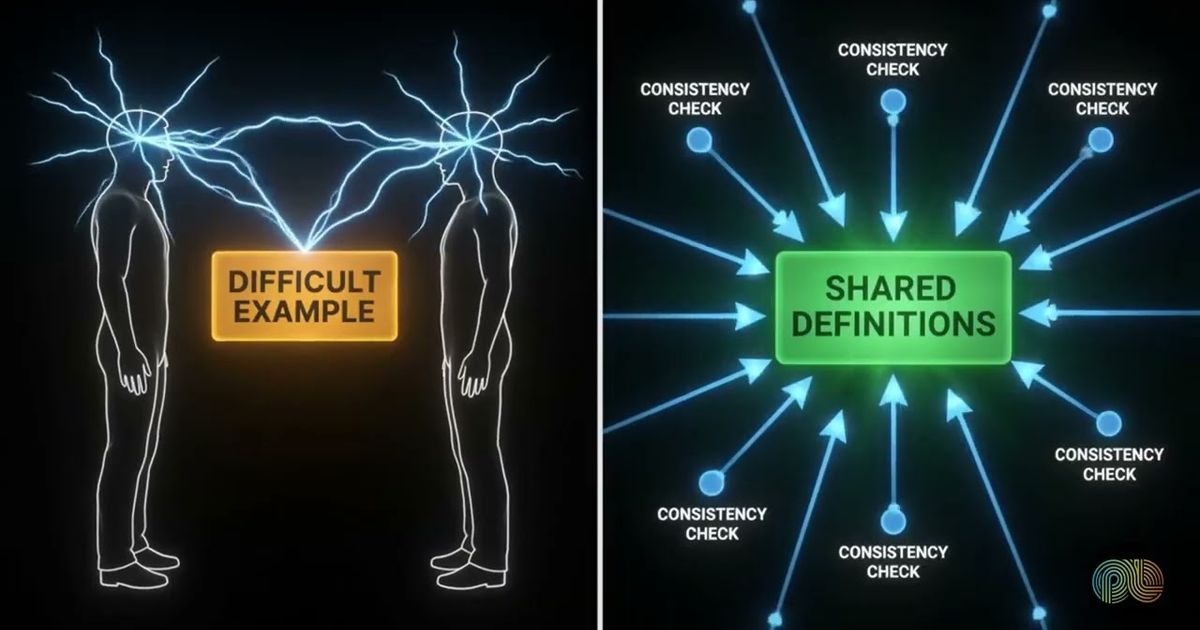
Disagreements matter because they reveal unclear definitions, hidden assumptions, ambiguous evidence, and legitimate differences in interpretation. Treating each conflict as diagnostic information strengthens both the current dataset and future annotation decisions. The video above walks through the core ideas.
What is label disagreement resolution?
Label disagreement resolution is a reasoned review process, not merely a vote to select the most popular label. Its purpose is to identify the appropriate outcome while learning why qualified annotators reached different conclusions.
Two annotators may interpret the same item differently because a category boundary is vague, an edge case is missing from the instructions, or the evidence supports more than one reading. The conflict may also expose different expectations about how much context to consider or which rule takes priority.
A useful resolution process therefore asks two questions: What label is best supported for this item, and what does the disagreement reveal about the annotation system? The second question prevents teams from resolving cases individually while leaving the underlying source of inconsistency untouched.
How should teams resolve conflicting labels?
Teams should examine the evidence before focusing on which annotator chose which label. Each reviewer should then explain the reasoning and specific guidance behind the decision.
A practical process is:
- Review the underlying evidence. Read the source item without allowing the competing labels to frame the initial interpretation.
- Explain each decision. Ask annotators to describe what they noticed, what assumptions they made, and why the selected category fit.
- Compare the reasoning with the guidelines. Identify the definitions, examples, exceptions, or priority rules that support each interpretation.
- Classify the disagreement. Determine whether it comes from unclear instructions, ambiguous evidence, a missed rule, or a legitimate alternative interpretation.
- Decide and document the outcome. Apply the best-supported label, record the reasoning, and note whether the guidance needs revision.
Majority vote can help identify a consensus, but it should not replace this investigation. A minority interpretation may reveal a category overlap or an exception that everyone else overlooked. Structured review produces a more defensible answer and gives the team information it can use to prevent similar conflicts.

When should annotation guidelines or rubrics change?
Guidelines or rubrics should change when a disagreement exposes a weakness in the framework rather than an isolated mistake. The goal is long-term dataset consistency, not simply closing the current review.
A revision may be appropriate when:
- Multiple labels are defensible under the current definitions.
- Category boundaries overlap or rely on unstated assumptions.
- A recurring edge case is not covered by an example or rule.
- Reviewers apply the same instruction in predictably different ways.
Teams should not automatically declare one annotator right and another wrong in these situations. Instead, they can clarify definitions, add representative examples, specify exceptions, or refine the rubric. Strong annotation guidelines make the intended reasoning visible and give future annotators a common reference point.
Changes should also be versioned and communicated. Otherwise, annotators may continue applying earlier interpretations, creating inconsistency between batches or across teams.
How can resolved cases improve annotation operations?
Resolved cases improve annotation operations when teams preserve both the final decision and the reasoning behind it. Difficult examples can then become training, calibration, and quality-control material.
A useful case record includes the original evidence, competing labels, interpretations considered, relevant guideline passages, final outcome, and any resulting framework change. Over time, these records create a practical library of edge cases rather than leaving important decisions inside meetings or chat threads.
Teams can use that library to:
- Train new annotators on difficult category boundaries.
- Calibrate experienced reviewers before new annotation rounds.
- Check whether updated guidance produces more consistent decisions.
- Maintain shared expectations as the annotation team grows.
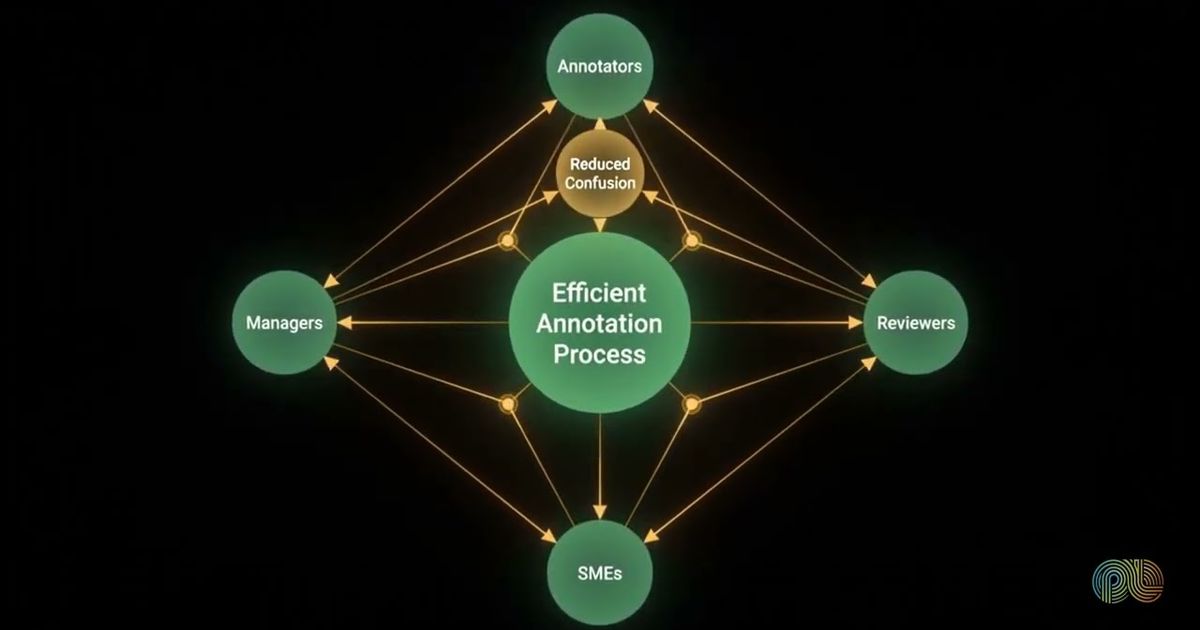
This turns conflict into a repeatable learning mechanism. It also supports maintaining label consistency by connecting daily adjudication decisions with ongoing guidance, training, and quality assurance.
Key takeaways
- Label disagreements often reveal unclear definitions, ambiguous evidence, or hidden assumptions.
- Reviewers should inspect the evidence and reasoning before choosing between competing labels.
- Majority vote alone can conceal legitimate interpretations or weaknesses in the annotation framework.
- Difficult cases and their resolutions should become reusable training and calibration material.
- The objective is more consistent future decisions, not merely completing the current review.
How PulseLake helps
PulseLake can preserve annotation evidence, guidance, decisions, and approvals within a persistent study context with governance and lineage. Its research knowledge graph, reusable methods, and workflow automation can help teams retain resolved cases, standardize review processes, and make prior decisions searchable. To discuss how this fits your research operations, talk to our team.
Frequently asked questions
Is majority vote enough to resolve annotation disagreements?
Majority vote can identify the label most reviewers selected, but it does not explain why they disagreed. A minority reviewer may have noticed ambiguous evidence, a missing exception, or an overlapping category. Teams should compare each interpretation with the guidelines before confirming the final outcome.
Who should make the final decision when annotators disagree?
The final reviewer should understand the annotation framework, relevant subject matter, and purpose of the dataset. Depending on the project, this may be a lead annotator, quality reviewer, researcher, or domain expert. The decision should be documented with its rationale rather than treated as an unexplained override.
Does every label disagreement require a guideline update?
No. Some disagreements come from a reviewer overlooking a clear rule or making an unsupported interpretation. Guidelines should change when the existing framework permits multiple reasonable readings, omits an important edge case, or repeatedly produces the same type of conflict.
How do resolved disagreements improve AI data quality?
Thoughtful resolution improves consistency by aligning labels with explicit definitions and evidence. Documented decisions also help future annotators handle similar cases in the same way. More reliable labels support better evaluation, training data, and research outputs while making the dataset’s decision process easier to audit.