Continuous Intelligence Platforms Explained
Continuous intelligence platforms connect evolving evidence, analysis, and human judgment to detect change earlier and support timely, informed decisions.

A continuous intelligence platform is an environment that continuously collects, organizes, analyzes, and delivers relevant evidence so organizations can maintain an up-to-date understanding of important questions. It connects data, knowledge structures, analytical tools, and human interpretation to reveal changing patterns and support timely decisions.
This matters because organizations often possess abundant information but lack a reliable way to turn scattered evidence into active intelligence as conditions evolve. The three-minute video above walks through the core ideas.
What is a continuous intelligence platform?
A continuous intelligence platform keeps organizational knowledge current by collecting, connecting, analyzing, and delivering evidence as an ongoing process. Unlike a static repository, it helps people understand what available information means for questions that still require attention.
The platform brings several elements into one working environment:
- Data and evidence from studies, operational systems, and other approved sources.
- Knowledge structures that describe how findings, topics, decisions, and entities relate.
- Analytical capabilities that identify patterns, relationships, and potential changes.
- Delivery mechanisms that bring relevant insights into reports, workspaces, or workflows.
- Human interpretation that evaluates meaning, importance, and appropriate action.
The objective is not simply faster retrieval. It is to keep knowledge active, connected, and useful as new evidence accumulates. This turns intelligence into a continuing organizational capability rather than the output of an isolated project.
How is continuous intelligence different from traditional reporting?
Traditional reporting usually summarizes what happened during a defined period, while continuous intelligence maintains awareness of an evolving situation. The distinction concerns both timing and purpose: one delivers a snapshot, and the other supports ongoing learning.
A report can provide a reliable answer to a specific question at a particular moment. However, its conclusions may become less relevant when customer behavior, market conditions, product usage, or available evidence changes.
Continuous intelligence extends the value of individual analyses by connecting them to later findings. It can help organizations:
- Monitor important questions after a report is delivered.
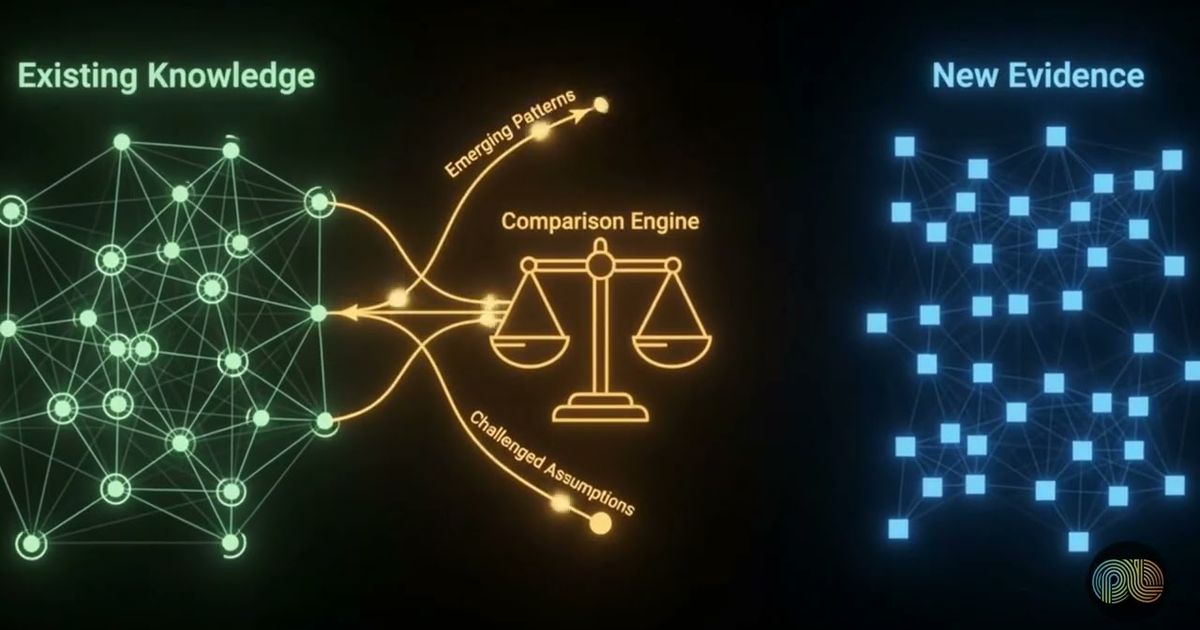
- Recognize emerging patterns and changing themes.
- Reassess earlier conclusions when new evidence appears.
- Make prior research easier to discover and apply.
This model does not eliminate reports. It places them within a broader system in which knowledge can be revisited, compared, and updated. That transition is part of moving from research reports to research systems.

What capabilities does a continuous intelligence platform need?
An effective platform needs connected evidence, analytical capabilities, reliable delivery, and strong knowledge foundations. Without structure and traceability, faster information access may create more output without producing better understanding.
Six capabilities are especially important:
- Collection: Bring relevant evidence into a shared environment without losing its original context.
- Knowledge models: Define relationships among studies, findings, themes, audiences, questions, and decisions.
- Analysis: Examine evidence for patterns, connections, differences, and potential signals.
- Traceability: Preserve the path from a conclusion back to its supporting evidence.
- Metadata and governance: Apply consistent definitions, ownership, permissions, and quality controls.
- Delivery: Surface relevant intelligence through suitable reports, workspaces, monitoring, or workflows.
These foundations also make accumulated knowledge searchable and reusable across projects. A well-designed research repository that people actually use can provide part of this foundation, but continuous intelligence also requires mechanisms for ongoing analysis and application.

What role should AI and humans play?
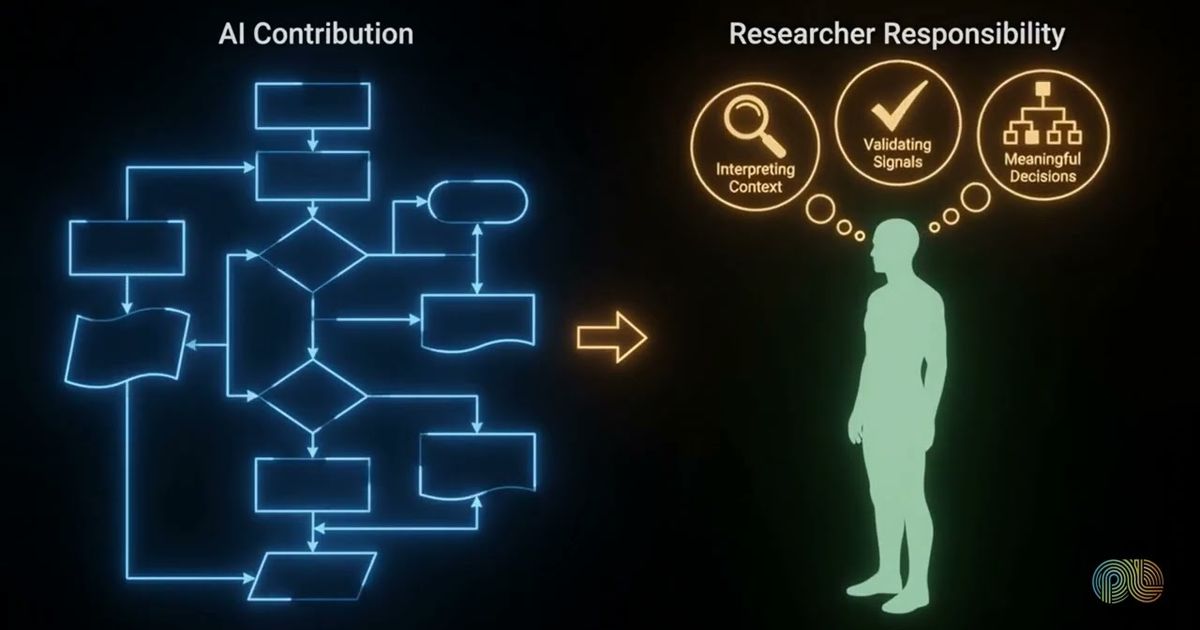
AI should process information, surface relationships, summarize evidence, and highlight potential signals, while people retain responsibility for interpretation and decisions. Automation expands the volume and pace of analysis, but it does not determine what evidence means in context.
AI can assist by reviewing large bodies of material, connecting related findings, detecting changing themes, and making relevant knowledge easier to find. These capabilities are particularly useful when evidence is distributed across many studies or arrives faster than a research team can manually review it.
Human researchers and decision-makers must still evaluate whether a signal is credible, material, and relevant. They also determine whether limitations, conflicting evidence, or changing assumptions affect a conclusion. The appropriate division of labor is therefore collaborative: AI supports continuous processing, while people exercise judgment, approve interpretations, and choose actions.
How can research teams adopt continuous intelligence?
Research teams should begin with recurring decisions and important questions, then build the evidence structure and operating practices needed to keep them current. Starting with technology alone can produce a larger information collection without creating sustained intelligence.
A practical sequence is:
- Define the questions. Identify decisions that benefit from continuing awareness rather than a one-time answer.
- Connect existing evidence. Organize relevant studies, findings, assumptions, and decisions using consistent metadata.
- Establish traceability. Make it possible to verify where findings came from and how conclusions were formed.
- Create a review rhythm. Decide when new evidence, changing themes, and potential signals require human attention.
Teams should also assign ownership for definitions, quality, governance, and approval. Over time, the system can learn from accumulated evidence while preserving the context needed to interpret change responsibly. The result is a more adaptive research function in which insights contribute beyond the life of their original projects.
Key takeaways
- Continuous intelligence platforms turn scattered evidence into an ongoing understanding of important organizational questions.
- They complement traditional reporting by monitoring change, emerging patterns, and new evidence over time.
- AI can process and connect information, but people remain accountable for interpretation and action.
- Knowledge models, metadata, traceability, and governance are essential to trustworthy intelligence.
- Research creates more lasting value when findings remain discoverable and connected across studies.
How PulseLake helps
PulseLake keeps objectives, methodology, evidence, and decisions within a persistent study context, supported by a research knowledge graph, cross-study search, and evidence provenance. Its agents can assist with analysis, deep research, reporting, and research Q&A while researchers retain judgment and approvals. Scheduled monitoring, workflow automation, dashboards, and client workspaces help turn accumulated evidence into recurring research delivery; talk to our team.
Frequently asked questions
Can a continuous intelligence platform replace research reports?
A continuous intelligence platform does not need to replace research reports. Reports remain useful for communicating a defined analysis, recommendation, or decision at a particular time. The platform extends their value by connecting them to related evidence, monitoring what changes afterward, and making their findings available for future questions.
Is continuous intelligence the same as real-time analytics?
No. Real-time analytics emphasizes the speed at which data is processed or displayed, while continuous intelligence emphasizes sustained understanding. A continuous intelligence platform may use frequently updated data, but it also needs context, connected knowledge, traceable evidence, analytical interpretation, and governance to help people decide whether a change matters.
What types of research benefit most from continuous intelligence?
Continuous intelligence is useful when questions recur, conditions change, or evidence accumulates across multiple studies. Examples include tracking customer needs, product friction, market shifts, changing themes, or the evidence supporting a strategic assumption. One-time studies can also contribute when their findings are preserved and connected to later research.
How do you know whether a continuous intelligence platform is trustworthy?
Trust depends on whether users can examine the origin, context, and limitations of its outputs. Reliable platforms preserve evidence traceability, apply consistent metadata, define governance responsibilities, and make analytical assumptions visible. Human review remains necessary for judging whether surfaced patterns are credible, important, and suitable for action.