Future of Evidence Systems: Connected, Living Knowledge
The future of evidence systems connects questions, evidence, reasoning, and decisions so organizations can reuse knowledge and make better-informed choices.

The future of evidence systems is a shift from storing isolated reports to maintaining connected, living knowledge. These systems link research questions, evidence, reasoning, and decisions so teams can retrieve prior learning, see relationships among findings, identify evidence gaps, and update what the organization knows as circumstances change.
This matters because complex decisions require reliable understanding, not merely access to scattered information. Connected evidence helps organizations manage uncertainty, adapt their thinking, and avoid treating each new question as if no prior work exists. The two-minute video above walks through the core ideas.
What will future evidence systems do?
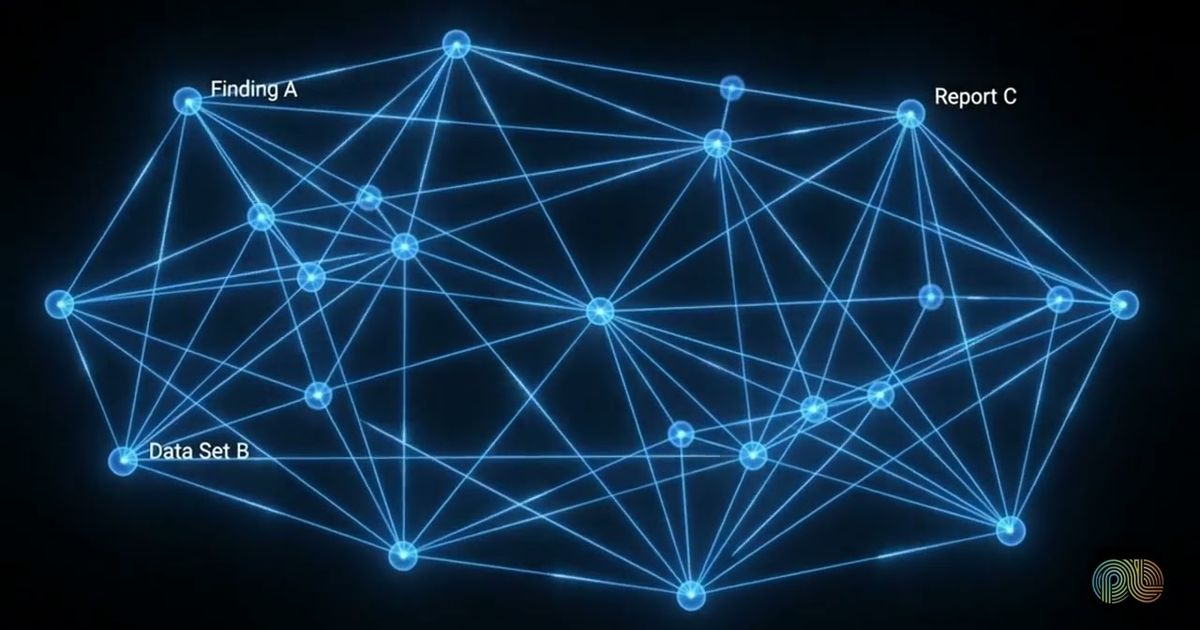
Future evidence systems will connect questions, findings, reasoning, and decisions rather than treating reports as isolated endpoints. They will make the relationships among these elements visible and reusable across studies, teams, and decision contexts.
A conventional repository can help someone locate a document. A connected evidence environment goes further by showing which question prompted the research, what evidence supported a conclusion, how that conclusion informed a decision, and whether later work confirmed or challenged it.
These connections will help researchers discover previous knowledge, compare related findings, and recognize missing evidence before consequential decisions are made. Approaches such as building an evidence graph provide a foundation for representing these relationships without reducing research to a collection of files and keywords.
The result is organizational understanding that can evolve. New evidence can update an existing knowledge asset, while prior reasoning remains available for review instead of disappearing into an old presentation.

How will AI change evidence systems?
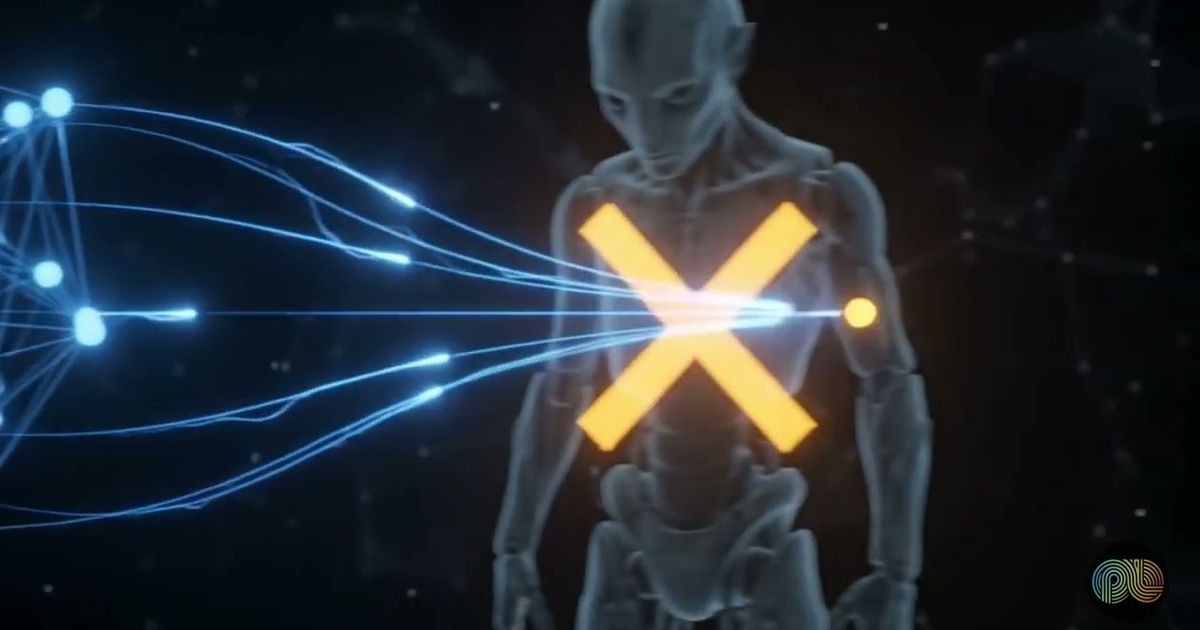
AI will assist with retrieval, analysis, synthesis, evaluation, and coordination across large research environments. Its role is to help researchers navigate complexity and work with more evidence, not to take final responsibility for interpretation or decisions.
For retrieval, AI can help people express a question naturally and locate relevant material across studies. For analysis and synthesis, it can organize evidence, surface recurring ideas, compare findings, and assemble a coherent view of what is known. It can also support evaluation by flagging unsupported claims, contradictions, or areas that need further review.
Coordination matters as evidence environments expand. Specialized assistance can help route tasks, apply repeatable workflows, and preserve context as work moves between researchers and stakeholders. However, the strongest model treats AI as a research assistant instead of a decision maker, with people retaining judgment, approval, and accountability.
The most effective systems will therefore enhance researchers’ ability to explore complex questions and interpret changing realities. Automation can reduce the effort required to find and organize evidence, while researchers decide what it means and how confidently it should be used.
What makes an evidence system trustworthy?
A trustworthy evidence system combines AI assistance with governance, traceability, quality standards, and human judgment. Intelligence without these controls can accelerate information processing without ensuring that the resulting knowledge is dependable.
Four elements are especially important:
- Governance defines who can contribute, change, approve, and reuse evidence.
- Traceability preserves the path from a claim back to its underlying source, method, and context.
- Quality standards establish how evidence and generated outputs should be evaluated before use.
- Human judgment accounts for ambiguity, limitations, competing interpretations, and decision consequences.
Continuous evaluation should accompany these foundations. As evidence, models, assumptions, and organizational conditions change, teams need to reconsider whether existing conclusions still hold. Versioning and lineage make those changes visible rather than silently overwriting prior understanding.
Trust does not come from AI alone or from adding more documents. It comes from being able to inspect how knowledge was produced, assess its quality, understand its limits, and identify who approved its use.

How can organizations build a living evidence capability?
Organizations can build a living evidence capability by combining structured knowledge models, AI assistance, continuous evaluation, and collaborative workflows. The objective is to make evidence updateable, connected, assessable, and reusable across decisions and contexts.
A practical progression is:
- Connect the core objects. Link research questions, methods, evidence, interpretations, decisions, and subsequent outcomes.
- Preserve provenance. Keep source material, study context, assumptions, and reasoning available alongside each knowledge asset.
- Introduce governed assistance. Use AI for retrieval, analysis, synthesis, evaluation, and coordination while retaining human approvals.
- Create feedback loops. Revisit knowledge when new evidence appears, conditions change, or decisions produce new learning.
Collaborative workflows help researchers and stakeholders contribute without breaking the chain of context. Instead of publishing a report and considering the work complete, teams can update the relevant evidence, record new interpretations, and connect later decisions to what was learned.
This model turns research activity into organizational intelligence. It allows knowledge assets to improve continuously, helps teams learn faster, and gives decision-makers a deeper basis for managing uncertainty and adapting to change.
Key takeaways
- Future evidence systems will connect questions, evidence, reasoning, and decisions instead of storing isolated research outputs.
- AI will support retrieval, analysis, synthesis, evaluation, and coordination while researchers retain judgment and accountability.
- Governance, traceability, quality standards, and human review are essential to trustworthy organizational knowledge.
- Evidence should function as a living capability that teams can update, evaluate, connect, and reuse across contexts.
- Structured knowledge models and collaborative workflows help turn individual findings into continuously improving intelligence.
How PulseLake helps
PulseLake maintains persistent study context and uses a research knowledge graph, cross-study search, deep research, and evidence provenance to connect what an organization knows. Specialized agents can support research design, analysis, reporting, and research Q&A while researchers retain approvals, and repeatable workflows can handle QA and ongoing updates. To explore how these capabilities could support your evidence environment, talk to our team.
Frequently asked questions
How is a future evidence system different from a research repository?
A research repository primarily stores and retrieves documents, recordings, findings, or reports. A future evidence system also represents the connections among questions, sources, interpretations, assumptions, and decisions. This structure helps users understand why a conclusion exists, evaluate its support, discover related knowledge, and update it when new evidence becomes available.
Can AI operate an evidence system without human review?
AI can assist with finding, organizing, comparing, synthesizing, and evaluating evidence, but it should not be solely responsible for consequential interpretations or decisions. Human reviewers are needed to assess context, ambiguity, methodological limitations, and competing explanations. Governance and explicit approval points keep automation useful without allowing generated outputs to become accepted knowledge by default.
What should an organization connect first when modernizing its evidence environment?
Start by connecting research questions to the evidence gathered to answer them, then link that evidence to interpretations and decisions. Preserve source provenance, methodology, assumptions, ownership, and approval status as part of the same context. This creates a useful foundation before adding more advanced AI assistance, cross-study synthesis, or automated workflows.