Next-Generation Research Teams: Skills and Systems
Next-generation research teams combine methodological rigor, AI collaboration, technical awareness, communication, and strategy to guide better decisions.

Next-generation research teams combine traditional methodological rigor with AI collaboration, technical awareness, communication and strategic thinking. They don't just run individual studies; they build continuous understanding through connected workflows and knowledge systems. Researchers stay responsible for interpretation, judgment and turning complex evidence into decisions that mean something.
Hiring managers are already describing a different job. They want people who can connect evidence across projects, understand people, work comfortably with technology and steer decisions when the picture is unclear. A great study that lands as an isolated PDF isn't enough anymore.
What defines next-generation research teams?
A capability, more than a method. It's the habit of combining human understanding, connected evidence and advanced tools, and the role reaches well past finishing individual studies and handing over standalone reports.
Old skills still carry the weight. Teams have to frame sound questions, choose appropriate methods, gather credible evidence and interpret findings carefully. What's new is the environment around that work: one where knowledge piles up instead of vanishing when a project closes.
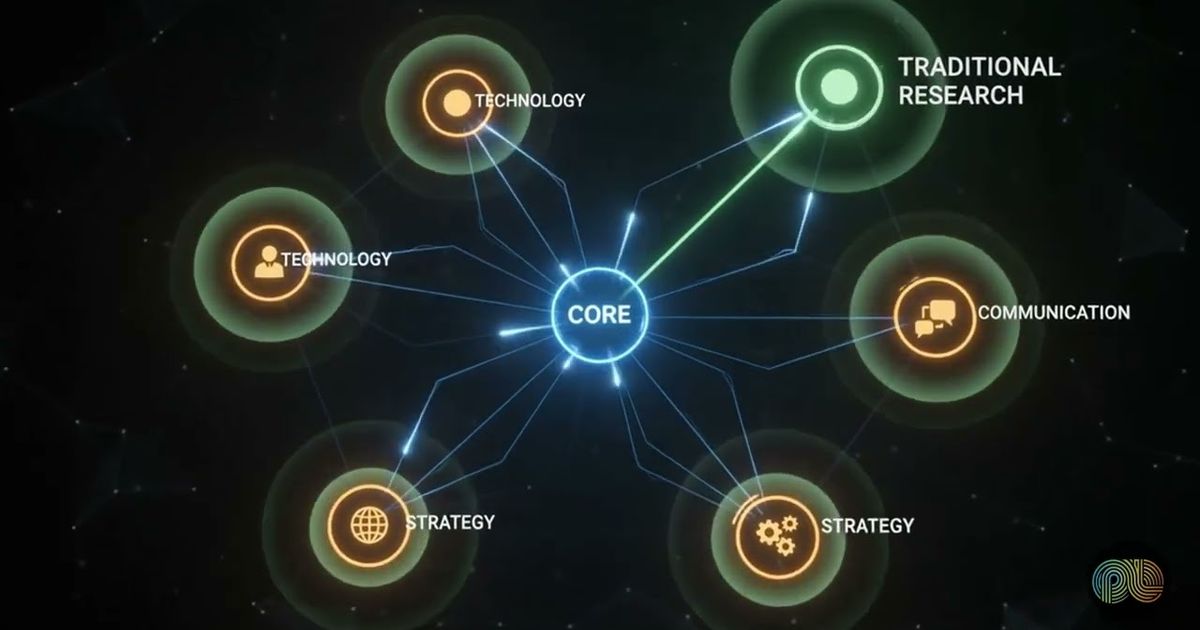
Four responsibilities sit inside the wider role. Run rigorous qualitative, quantitative or mixed-methods research. Connect findings across studies, data sources and business questions. Build repeatable workflows that support continuous learning. And translate complex evidence into guidance decision-makers can use.
Put those together and you get a research function that keeps learning and adapts fast, the shift from producing reports to building research systems that preserve context and support decisions.

How will researchers collaborate with AI?
They'll hand it the analysis, organization and exploration, and keep the judgment. Good collaboration widens what a team can look at. It doesn't pass important decisions to a tool.
Repetitive work is the obvious thing to automate: organizing material, preparing recurring outputs, flagging information for another look. Researchers then have time for the harder stuff: complex questions, human motivations, competing explanations, advice for stakeholders.
Here's a clean way to hold the split. AI helps organize evidence, speeds up analytical tasks, and helps researchers explore patterns, questions and hypotheses. Researchers judge whether outputs are accurate and relevant, and they interpret context, limitations and implications.
Having access to AI isn't the same as collaborating with it. Collaboration needs explicit review points, an understanding of model limitations and clear accountability for conclusions. Treat AI as a research assistant rather than a decision-maker and the researcher stays at the center.

How can research teams build continuous understanding?
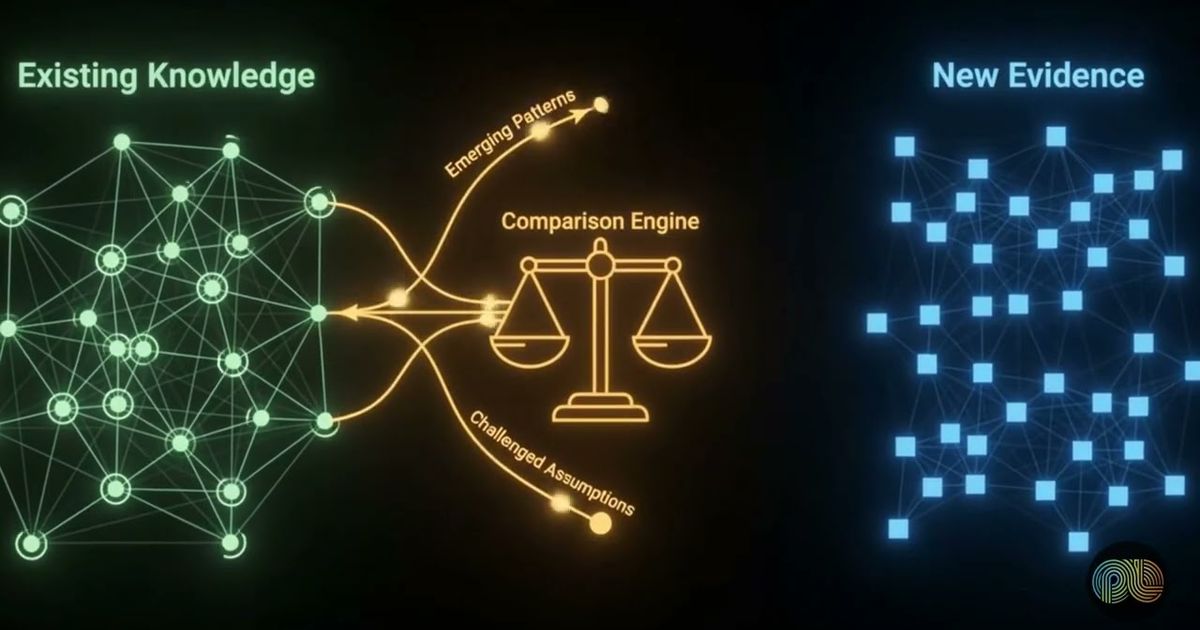
Connect questions, methods, evidence, interpretations and decisions across projects. Every study should add to a growing organizational knowledge system and not sit by itself as a deliverable.
Four habits get you most of the way:
- Frame each project around a clear decision or learning need.
- Keep the study context next to its evidence and conclusions.
- Link new findings to earlier research and open questions.
- Revisit assumptions when evidence, technology or market conditions change.
Some traps to avoid: fragmented tools and workflows that separate evidence from the reasoning behind it, automation standing in for quality control, and the belief that more data automatically means better understanding.
Systems alone won't do it, and neither will good intentions. Continuous learning takes reusable workflows, searchable knowledge and consistent governance, plus the judgment to spot meaningful patterns and revise an earlier interpretation when the evidence moves.
What skills will future researchers need?
A blend of methodological, technical, communication and strategic skills, which together move researchers from executing studies to shaping how an organization understands people and makes decisions.
Research fundamentals come first: study design, sampling, questioning, evidence quality, analysis and methodological limits, all second nature. Next is technical awareness, meaning enough grasp of data structures, research systems and the practical limits of AI to use modern tools critically. Then communication: explaining evidence clearly, tailoring recommendations to different teams, showing how findings bear on a decision. Finally strategic thinking, which is spotting the consequential questions, connecting patterns across information and helping the organization through uncertainty.
They lean on each other. Technical knowledge without rigor just speeds up weak analysis. Strong methods without communication yield findings that never change anything. Strategic thinking keeps attention on the questions and decisions that matter.
Do all researchers need to become engineers or data scientists? No. We'd set the bar at enough technical fluency to understand how information is structured, where automated outputs might fail and when to call in a specialist.
How PulseLake helps
PulseLake keeps objectives, methods, evidence, analysis and decisions in a persistent study context across traditional, AI-led, synthetic and simulation research. Its research knowledge graph, specialized agents, workflow automation, cross-study search and delivery tools support connected research while keeping researcher approvals, governance and evidence provenance in place. To see how this operating model could support your research team, talk to our team.
Frequently asked questions
Do traditional research skills still matter on AI-enabled teams?
They do, every bit as much. Study design, questioning, sampling, analysis and critical interpretation stay essential because AI doesn't remove methodological risk. Those skills are how researchers judge whether an automated output rests on suitable evidence, reflects the research context and can responsibly inform a decision.
Does AI reduce the need for human researchers?
It changes how researchers spend their time, and it doesn't remove the need for human judgment. AI can help with repetitive analysis, organization and exploration, while researchers focus on complex questions, human motivations, limitations, interpretation and strategic recommendations. Accountability for conclusions should stay with people.
How can a research team prepare for this transition?
Start by mapping your current workflows, picking out repetitive tasks and finding where study knowledge gets disconnected or hard to reuse. Then build technical awareness, set review and governance practices, and connect evidence to decisions without loosening your standards for research quality.